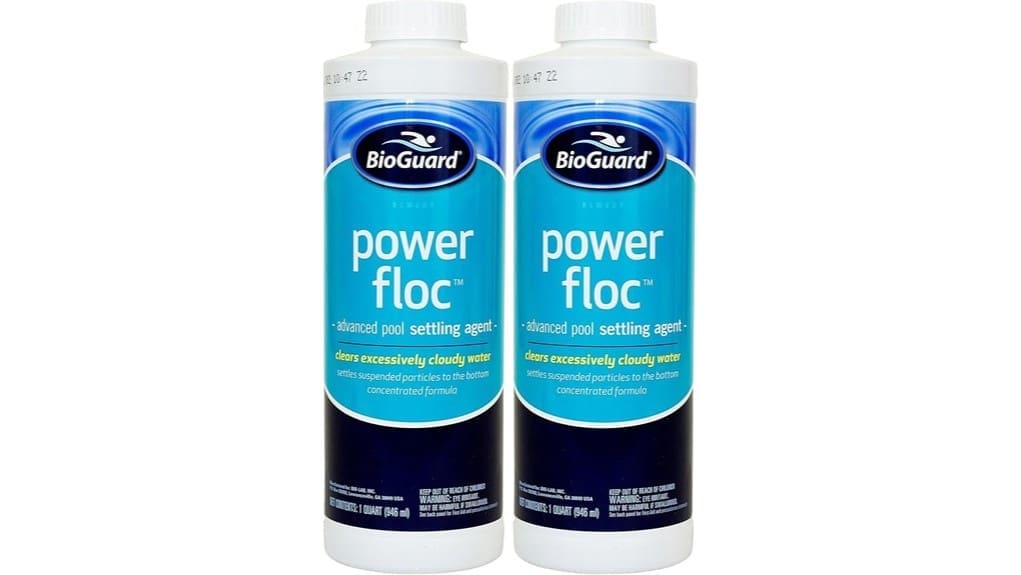
You’ll clear cloudy, fine‑particle pools fast with BioGuard Powerfloc, a concentrated liquid flocculant that neutralizes particle charge so fines aggregate and sink for vacuuming. Dose at 8 fl oz per 10,000 gallons, run circulation, let flocs settle, then vacuum to waste slowly; don’t backwash or run filter to waste until after settling. It works quickly after storms, filter downtime, or algae die‑off and pairs well with filter powder—keep reading for full dosing and removal tips.
Some Key Takeaways
- BioGuard Powerfloc is a concentrated liquid flocculant that aggregates fine suspended particles for faster settling and easier removal.
- Dose 8 fl oz per 10,000 gallons, broadcast with pump on, then wait for particles to settle before vacuuming to waste.
- Typically clears moderate to heavy turbidity within a few hours, faster than filtration alone, with temporary clouding during settling.
- Compatible with sand and cartridge systems when used correctly, but manual vacuuming to waste is required for full effectiveness.
- Best for post-storm, pump downtime recovery, or algae die-off; 2-pack offers better value for frequent or large-pool users.
What BioGuard Powerfloc Is and How a Flocculant Works
Think of BioGuard Powerfloc as a concentrated liquid flocculant that you add to pool water to make fine, suspended particles clump together and settle so you can vacuum them away. You apply a measured dose; the formula exploits colloidal chemistry to destabilize charge-stabilized suspensions. Neutralizing surface charges prompts particle aggregation into heavier flocs that sink rapidly. You’ll see clarity return as turbidity diminishes and filters capture larger debris more efficiently. Follow dosing guidelines and vacuum settled material from the floor. This technical mechanism enhances routine maintenance and complements sanitizers without altering primary chemistry when used as directed. Proper use is an important step in pool winterizing to protect equipment and maintain water quality during colder months.
When to Use Powerfloc: Common Problems It Solves
Reach for Powerfloc whenever your pool looks hazy, light-scattered, or shows slow-to-clear turbidity—especially after heavy rain, pump or filter downtime, algae die-off, or any event that stirs up fine suspended particles. You’ll use it for post storm cleanup to aggregate silt and organics that bypass the filter. It’s effective in pump downtime recovery when fines have circulated but not been trapped. Use Powerfloc during algae aftermath to bind residual dead cells and clarify water prior to vacuuming. The concentrated, fast-acting chemistry accelerates particle settling, restores visual clarity, and reduces filter load for more efficient subsequent filtration. It’s a handy product for homeowners who want to keep their pool sparkling all summer long.
How to Dose and Remove Settled Debris (Step‑by‑Step)
Now that you know when to use Powerfloc, here’s how to dose and remove the settled debris step by step. Measure 8 fl oz per 10,000 gallons; mix in a bucket with pool water if needed. Broadcast evenly around the perimeter with pump running on circulation only; do not backwash or run filter to waste immediately. Wait until particles settle to the floor—typically within hours. Turn pump off, perform skimmer maintenance, then attach a manual vacuum. Use a slow, methodical vacuum technique to lift settled floc into the filter or waste line. Repeat dosing only if significant clouding persists. For best results in maintaining crystal-clear water, consider pairing Powerfloc with an appropriate filter powder from a trusted pool care supplier.
Real‑World Performance: Speed, Effectiveness, and Limitations
When you need rapid clarification, Powerfloc usually delivers: its concentrated formula pulls fine suspended particles into heavier aggregates that settle to the floor within a few hours under normal circulation, letting you vacuum them out rather than relying solely on filter strain. You’ll see fast results when debris load is moderate to high; particle aggregation is efficient, shortening clear‑up time compared with passive filtration. Expect a temporary haze as flocculant bonds form and clouds descend. It’s compatible with standard cartridge and sand systems when you follow dosing and vacuuming instructions, but don’t expect continuous polishing—manual removal remains essential. Homeowners often pair flocculants with proper pool maintenance routines to keep water clearer longer.
Pros, Cons, and Who Should Buy the 2‑Pack (Value Verdict)
Although Powerfloc’s concentrated formula delivers fast, reliable particle aggregation and makes vacuum removal straightforward, the 2‑pack’s real value depends on how often you treat cloudy events and the size of your pool. You’ll get two quarts (64 fl oz) that cover multiple treatments at the 8 fl oz per 10,000 gallons dose, so cost per treatment compares favorably in a price comparison against single bottles. Pros: fast action, proven BioGuard chemistry, improved filter efficiency. Cons: single‑use dosing can leave leftover opened bottles; check packaging durability to avoid leaks. Buy the 2‑pack if you treat regularly or own larger pools. Many homeowners pair clarifiers with pool maintenance routines to keep water clear and filters running efficiently.
Some Questions Answered
Is Powerfloc Safe for All Pool Surface Types?
Yes — Powerfloc is generally safe for most pool surface types when used as directed; you’ll maintain safe surfaces and proper surface compatibility by following dosing and vacuuming instructions. It’s a concentrated flocculant that aggregates particles without harsh abrasion, but you shouldn’t overapply or leave settled debris to stain delicate finishes. Test a small area for unusual surfaces and consult manufacturer guidance for specialty liners or historic plaster before full use.
Can Powerfloc Be Used With Saltwater Pools?
Yes — you can use Powerfloc in saltwater pools; it’s saltwater compatibility is acceptable and it aggregates suspended particles for vacuum removal. You should monitor corrosion concerns because saline environments accelerate metal corrosion; check and maintain pool equipment, heaters, and ladders. Dose per instructions (8 fl oz per 10,000 gallons), let solids settle, then vacuum. Rinse filters and inspect metal components after treatment to mitigate corrosive concerns.
How Long After Shock Treatment Can I Apply Powerfloc?
You can apply Powerfloc after the chlorine from shock has fallen back into the normal range—typically 24–48 hours post shock timing—when free chlorine is at safe levels. Wait to avoid neutralizing the shock and to minimize bacterial regrowth risk. Test water before dosing; make certain stabilizer and pH are balanced. Dose 8 fl oz per 10,000 gallons, let particles settle, then vacuum to waste for complete removal.
Does Powerfloc Affect Pool pH or Chlorine Levels?
No — Powerfloc doesn’t noticeably alter pH interaction or consume free chlorine. You’ll find it’s engineered to aggregate fine particles without appreciable pH shifts or chlorine binding. Temporary localized turbidity changes can make test readings noisy, so wait a short time and retest water. After vacuuming settled solids, confirm pH and free chlorine are within range and adjust if needed. Follow dosage and circulation guidelines for best results.
What Is the Shelf Life Once the Bottle Is Opened?
Opened shelflife is typically about 1–2 years if you store it properly. Keep the cap sealed, avoid temperature extremes, and follow storage tips: upright, in a cool dry place away from direct sunlight and chemicals. You’ll preserve potency by minimizing air exposure and preventing contamination. If the liquid changes color, odor, or clarity, discard it. Always label with open date and rotate stock to guarantee effectiveness.