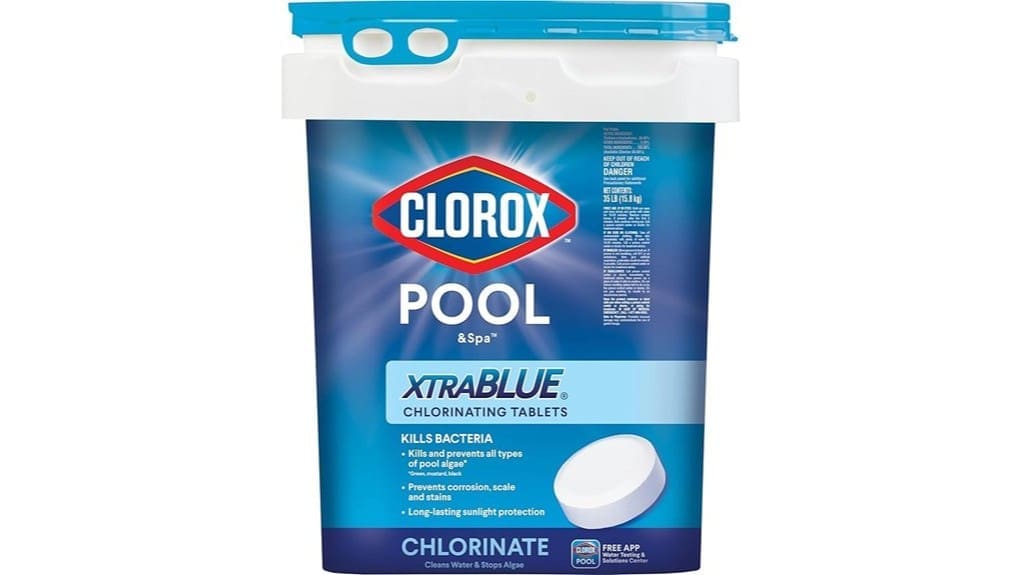
You’ll get stabilized 3″ chlorinating tablets that maintain 1–3 ppm free chlorine, resist UV loss, and provide steady weekly dosing via a floater or in-line feeder. They kill bacteria and prevent green, mustard, and black algae while conditioners improve water feel. Handle with gloves, store dry away from acids, and avoid skimmer placement to prevent surface bleaching. They’re ideal for residential and light‑commercial pools; keep testing and you’ll find guidance on alternatives and troubleshooting.
Some Key Takeaways
- Stabilized 3″ tablets provide sustained free chlorine and UV protection for longer-lasting sanitation.
- Effective against bacteria and green, mustard, and black algae when maintained at recommended dosing.
- Use a floater or in-line feeder; never drop tablets in the skimmer to avoid surface damage.
- Start with two tablets weekly per 10,000 gallons and maintain 1–3 ppm free chlorine, adjusting after testing.
- Pros include reduced dosing frequency and silky water feel; cons include possible localized bleaching and storage hazards.
Product At a Glance: What Clorox Pool&Spa XTRABLUE 3” Tablets Do and Who They’re For
Protect your pool efficiently with Clorox Pool&Spa XTRABLUE 3” Chlorinating Tablets: a stabilized, long‑lasting sanitizer that kills harmful bacteria, prevents green, mustard, and black algae, and reduces equipment corrosion, scale, and stains. You’ll deploy 3″ tablets for sustained free chlorine and UV stabilization, preserving water clarity and pool aesthetics. The product suits residential and light-commercial pools with vinyl, plaster, fiberglass, or tile surfaces. You’ll appreciate individually wrapped tablets and included conditioners for a silky feel. Integrate tablet addition into your maintenance scheduling rhythm and use diagnostic tools to monitor residual chlorine, preventing outbreaks and minimizing corrective interventions. For best results, pair tablet use with regular filter cleaning to keep your system running efficiently and your water sparkling, especially during summer filter maintenance.
How to Use XTRABLUE Tablets Safely and the Correct Dosing Schedule
Now that you know what XTRABLUE tablets do and who should use them, let’s cover how to handle and dose them so you’ll maintain safe, effective chlorine levels. You’ll wear gloves, avoid inhaling dust, and store tablets in a cool, dry, ventilated area away from acids for pool safety. Use a floater or in-line feeder for consistent tablet placement; never drop tablets directly into skimmer. For a 10,000-gallon pool, apply 2 tablets weekly as a starting weekly routine, then test and adjust to maintain 1–3 ppm free chlorine. Stabilized chlorine reduces loss from sunlight; monitor cyanuric acid. These tablets are designed for homeowners who enjoy maintaining their outdoor pool sparkling pool care and outdoor spaces.
Performance Breakdown: Sanitation, Algae Prevention, Sunlight Protection, and Water Feel
Evaluate XTRABLUE by its four core performance areas—sanitation, algae prevention, sunlight protection, water feel—since each directly affects pool safety and user experience. You’ll find sanitation robust: sustained free chlorine levels kill bacteria efficiently, aided by chlorine longevity from the stabilized formula. Algae prevention shows high algae resilience control across green, mustard, and black types when dosing is maintained. Sunlight protection relies on stabilizer effectiveness to limit UV degradation, reducing shock frequency. Water feel is noticeably improved; conditioners deliver a silky texture without residue. Overall, performance is consistent when you follow recommended dosing and monitor levels regularly. Homeowners can conveniently buy a variety of pool chlorine tablets online to maintain these benefits and ensure easy ongoing treatment with chlorine tablets.
Pros, Cons, and Common Real‑World Issues (Compatibility, Corrosion, Storage)
Although XTRABLUE delivers reliable sanitation and extended chlorine life, you’ll want to weigh specific pros and cons and address a few real‑world issues before committing to regular use. You’ll appreciate long residual protection, reduced dosing frequency, and conditioner benefits. Cons: tablets are potent—improper handling can cause surface discoloration on sensitive materials and localized bleaching. Check dispenser compatibility; some floating feeders or chlorinators require tablet size/flow adjustments. Manage odor concerns by maintaining proper free chlorine and ventilation. Prevent adverse chemical interactions by never mixing with acids or other sanitizers. Store dry, sealed, away from heat and organic materials. Consider pairing with simple pool water test kits to monitor sanitizer levels and water balance for safer ongoing use of tablets, especially when tracking free chlorine.
Alternatives and When to Choose XTRABLUE Versus Other Chlorination Options
When choosing between XTRABLUE 3″ tablets and other chlorination methods, consider your pool size, automation level, and maintenance preferences: XTRABLUE offers long-lasting stabilized chlorine and conditioners suited to weekly dosing in larger pools, but you’ll prefer liquid chlorine for rapid, unscented shock treatments, granular shock for spot dosing and immediate high chlorine levels, and saltwater chlorinators if you want continuous, low-maintenance generation without purchasing tablets regularly. You should use tablet feeders for controlled, steady dosing with XTRABLUE. Choose salt systems for automated generation, shock treatments for acute contamination, and mineral sanitizers when reducing chlorine dependence. Homeowners who enjoy their outdoor spaces often pair saltwater systems with landscaping and patio features to create a low-maintenance outdoor oasis.
Some Questions Answered
Can These Tablets Be Used With Saltwater Chlorine Generators?
Yes — you can use them, but you should proceed cautiously. You’ll maintain sanitizer levels while the salt cell continues producing chlorine, yet warranty concerns can arise if manufacturers restrict added chlorination. You’ll monitor electrolysis impact because stabilized tablets can alter cell efficiency and promote mineral buildup on cell plates. You’ll test water frequently, follow salt system and tablet manufacturer guidance, and clean the cell per recommended schedules to protect performance and warranty.
Do Tablets Dissolve Faster in Warmer Water?
Yes — temperature effects increase the dissolution rate. You’ll find warmer water raises molecular activity and diffusion, so the tablets dissolve faster and release chlorine more quickly. That accelerates sanitization but can shorten residual protection and require fewer or smaller doses. Monitor free chlorine and adjust dosing frequency accordingly. Use the Clorox Pool App or test kit to track levels, especially after temperature shifts, to maintain peak sanitizer concentration.
Are They Safe Around Pool Pets Like Fish and Turtles?
Yes — they’re generally safe if you manage pet exposure and monitor aquatic toxicity. You shouldn’t place tablets directly where fish or turtles can nibble or sit; maintain recommended dosing and test residual chlorine frequently. Avoid sudden concentration spikes during feeding or cleaning. Use the Clorox Pool app or test kits to verify safe free chlorine and stabilizer levels, and remove pets during shock treatments to prevent acute toxic exposure.
Can Tablets Discolor Swimsuits or Pool Toys?
Yes — prolonged exposure can cause color fading and fabric weakening. Chlorine in tablets oxidizes dyes and degrades fibers over time, especially with high concentrations or repeated contact. Rinse swimsuits and toys promptly after use, avoid soaking in chlorinated water, and follow dosage instructions to minimize residual chlorine. For sensitive materials, use chlorine-resistant or labeled swim fabrics and limit direct contact with concentrated tablet solutions or feeders.
How Should Spills of Individual Wraps Be Cleaned Up?
You should wipe immediately any spilled wrap contents using chemical-resistant gloves and absorbent material, avoiding skin contact. Ventilate area while containing residues to prevent inhalation. Scoop or brush up solids into a plastic container, label and dispose per local regulations. Rinse the cleaned surface with plenty of water and ventilate until dry. Launder contaminated clothing separately. Seek medical attention if irritation or exposure symptoms occur.