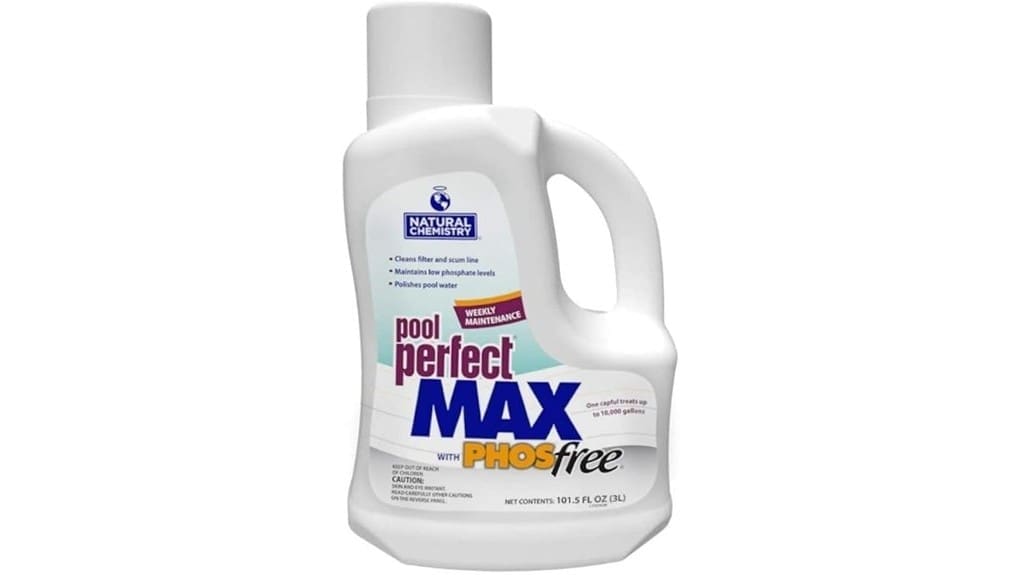
You’ll find Pool Perfect MAX with PHOSfree reduces scum-line build-up and slows filter loading by enzymatically breaking down sunscreens, lotions, and organics while lowering phosphates with weekly dosing. You’ll add one capful per 10,000 gallons via the skimmer, keep chlorine below 5 ppm, and track treatments for consistent results. It’s compatible with common sanitizers and pool surfaces but isn’t a shock replacement. Keep going to see proper timing, troubleshooting tips, and realistic expectations.
Some Key Takeaways
- Weekly enzyme-based formula reduces sunscreens, lotions, and organic debris to slow filter loading and improve clarity.
- Reduces phosphate levels with consistent use, lowering nutrient availability for algae growth.
- Compatible with plaster, vinyl, fiberglass, salt systems, bromine, and biguanide without altering routine chemistry.
- Use 1 capful per 10,000 gallons via skimmer weekly, with chlorine under 5 ppm and routine testing.
- Not a shock or filtration replacement—best as ongoing maintenance to reduce backwashes and scum-line cleaning.
What Natural Chemistry Pool Perfect MAX With PHOSfree Does and How It Works
While you run routine pool maintenance, Natural Chemistry Pool Perfect MAX with PHOSfree works continuously to keep your water clearer and your equipment cleaner. You’ll dose weekly; enzymes provide targeted enzyme action that accelerates contaminant breakdown of sunscreens, lotions, and organic debris. The formulation reduces phosphate loads, limiting nutrient availability for algae and easing sanitizer demand. It’s compatible with common systems, so you’ll integrate it without altering routine chemistry beyond ensuring balanced water and proper chlorine levels. By focusing on enzymatic degradation and phosphate sequestration, you’ll see steadier filter performance and reduced cleaning intervals, letting you manage the pool more efficiently. Many homeowners find enzyme treatments improve outdoor pool maintenance and extend time between deep cleans.
Real-World Performance: Filter Cleaning, Scum-Line Control, and Water Polishing
Having enzymes and phosphate control working in the background lets you focus on how the product performs on three front-line problems: filter loading, scum-line accumulation, and overall water polish. You’ll notice slower filter loading; captured organics break down, so backwash cycles are less frequent and filter longevity improves. Scum-line residues soften; weekly dosing reduces sticky buildup, so manual scrubbing becomes occasional rather than routine. Water polish is tangible: clarity and surface sheen increase without clouding or chemical haze. Measurements confirm lower phosphates and clearer water; results depend on baseline contamination and consistent weekly application for steady-state performance. Homeowners who value outdoor living spaces will appreciate easier maintenance and better-looking pools with clear pool water.
How to Use It Safely and Effectively (Dosing, Timing, and Troubleshooting)
When you’re dosing Pool Perfect MAX with PHOSfree, follow a consistent, measured routine: shake the bottle, run the pump, and add 1 capful per 10,000 gallons through the skimmer weekly while chlorine is under 5 ppm, then wait at least 24 hours before shocking. Measure water volume and phosphate levels before adding. Record doses and dates. For troubleshooting, test phosphates and clarity; if phosphates remain high, repeat weekly or perform an initial intensive treatment. Follow safety precautions: wear gloves and eye protection, avoid mixing with other chemicals. Keep product sealed; review emergency handling procedures in case of spills or exposure. Many pool owners also use phosphate removers as part of an overall strategy to keep pools sparkling and prevent algae growth.
Compatibility and Limits: Pools, Sanitizers, and Phosphate Expectations
After you’ve established a weekly dosing routine and handled any initial phosphate reductions, check which pool types and sanitizers you’re working with so you can set realistic expectations and avoid incompatibilities. You’ll find Pool Perfect MAX is formulated for plaster, vinyl, and fiberglass and lists salt compatibility with salt chlorine generators, bromine, and biguanide systems. Confirm water is balanced and chlorine under 5 ppm before dosing. Manage expectations: it reduces phosphates but won’t replace shocking or filtration upgrades. Increase testing frequency during shifts and after heavy bather loads. Track phosphate trends, adjust dosing, and don’t expect instant elimination of all organics. Keep your pool alkalinity balanced with regular testing and adjustments to support overall water health and product effectiveness, including proper use of alkalinity increasers.
Who Should Buy It and Where It Fits in Your Pool-Care Routine
If you want to cut down on filter cleanings, scum-line scrubs, and visible organic haze without changing sanitizers or equipment, Pool Perfect MAX with PHOSfree fits neatly into a weekly maintenance plan; it’s particularly useful for owners of plaster, vinyl, or fiberglass pools who run salt chlorine generators, bromine, or biguanide systems and already monitor basic water balance. You should buy it if you manage family pools, want predictable weekly dosing, and need phosphate control during seasonal shifts. It’s best as ongoing maintenance after an initial phosphate knockdown; use alongside routine testing and normal sanitizer practices. It also helps homeowners maintain proper cyanuric acid levels as part of overall pool stabilizer care.
Some Questions Answered
Is This Product Safe for Vinyl and Fiberglass Liners?
Yes — you can use it on vinyl and fiberglass; it’s vinyl safe? Yes, the formula’s enzymes and non-corrosive ingredients are designed for liner friendly maintenance. You’ll still balance water chemistry, keep chlorine under 5 ppm before dosing, and avoid shocking for 24 hours. follow weekly dosing through the skimmer and monitor phosphates for initial PHOSfree MAX reductions to protect filters and preserve liner surfaces over time.
Can I Store It Outdoors During Summer Months?
Yes — you can store it outdoors during summer months, but avoid direct heat exposure. Keep the container upright, sealed, and shaded to prevent temperature extremes and UV degradation. Store on a stable, elevated surface away from children, pets, flames, and pool chemicals. Check the label for temperature limits and inspect the bottle periodically for swelling or leaks. If you see changes, move it to a cool, ventilated indoor area immediately.
Does It Affect Pool pH Over Time?
No, it won’t cause significant pH drift if you use it as directed. You’ll still need to monitor pH and total alkalinity because enzyme-based phosphate reduction doesn’t replace alkalinity buffering. Maintain proper alkaline levels to prevent pH swings, add weekly doses through the skimmer with circulation running, and avoid shocking for 24 hours after treatment. Regular testing and balanced alkalinity will keep pH stable over time.
Is It Safe for Pools With Aquatic Plants or Fish?
Yes — it’s generally safe for pools with aquatic plants or fish when used as directed; aquatic toxicity risk is low because the formula uses enzymes and reduces phosphates rather than adding harsh biocides. You should monitor plant compatibility by avoiding overdosing and keeping chlorine and chemical levels within normal ranges. Test water regularly, follow dosing instructions, and prevent direct concentrate exposure to fish or plants during application to minimize any harm.
How Long After Opening Is It Effective?
You’ll get reliable efficacy duration for about 12 months after opening when stored properly; the product’s shelf stability supports that. Keep the cap tight, store it cool and out of direct sunlight, and shake before each use. After 12 months efficacy may decline as enzymes lose activity, so test performance and phophate control; if results falter, replace the bottle to maintain consistent filter-cleaning and phosphate-reduction results.