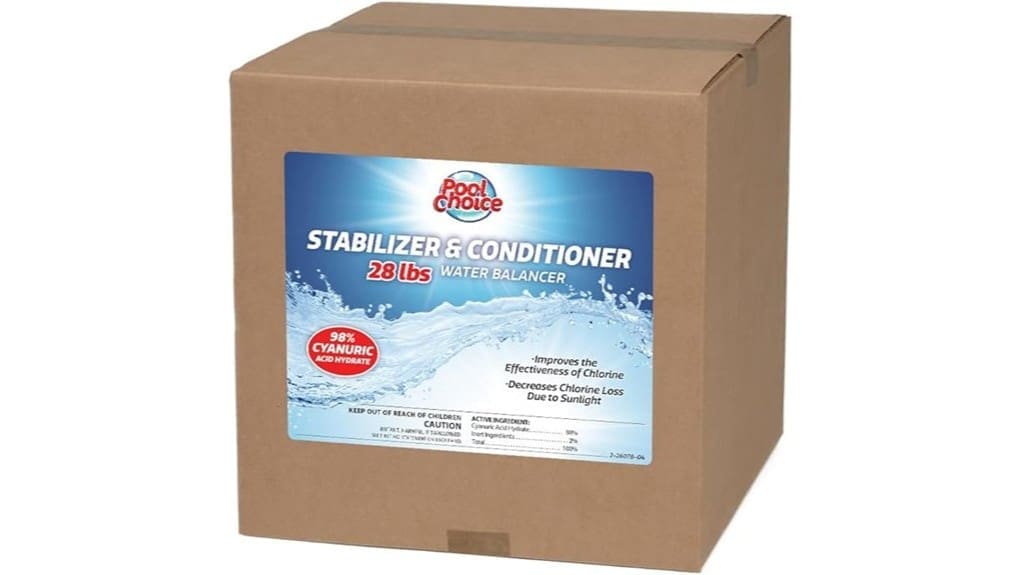
SpaChoice 28‑Pounds Premium Pool Stabilizer is a concentrated cyanuric acid you’ll use to slow chlorine loss in sunny pools. It raises CYA predictably (6 oz per 5,000 gallons ≈ 10 ppm), so you can hit a 40–100 ppm target to cut chlorine consumption up to about 25%. You’ll dissolve and broadcast near return jets, stagger large doses, then retest in 24–48 hours. Keep pH balanced to avoid clarity issues, and read on for dosing and troubleshooting tips.
Some Key Takeaways
- Concentrated 28‑lb bag supplies cyanuric acid to stabilize chlorine and reduce UV-driven loss for large pools.
- Dosage: 6 ounces raises CYA ~10 ppm per 5,000 gallons; scale proportionally and retest after 24–48 hours.
- Best results when target CYA is 40–100 ppm, yielding steadier free chlorine and up to ~25% less chlorine usage.
- Apply dissolved slowly near return jets and stagger large increases to avoid cloudiness or local settling.
- Risks: avoid over‑stabilization (reduced oxidizer efficiency) and maintain proper pH for optimal performance.
Is SpaChoice 28‑Pounds Pool Stabilizer Worth Buying?
If you want a straightforward, cost-effective way to make your chlorine last longer, SpaChoice 28‑Pounds Pool Stabilizer is worth considering. You’ll find it delivers concentrated cyanuric acid that raises CYA predictably — 6 ounces per 5,000 gallons equals about 10 ppm — so you can hit the 40–100 ppm target without guesswork. In a cost comparison, one 28‑pound bag treats large volumes, lowering weekly chlorine purchases and labor. You’ll also assess environmental impact: by reducing chlorine usage you cut disinfection byproducts and transport frequency, though you must avoid over-stabilization to prevent operational issues. For homeowners who enjoy their outdoor spaces, using a stabilizer can help maintain pool chemistry with less frequent dosing and upkeep, supporting long-term pool care.
How SpaChoice Works: Cyanuric Acid, Chlorine Protection, and Expected Results
Because SpaChoice delivers concentrated cyanuric acid, it binds with free chlorine in your pool to form a protective reservoir that slows photodecomposition, so chlorine endures longer under sunlight. You’ll observe improved cyanuric dynamics as stabilizer molecules reversibly complex hypochlorous species, reducing UV-driven photolysis. That photolysis protection lowers chlorine loss and maintains effective free chlorine for longer periods, so you won’t need as frequent shock dosing. Expect measurable reductions in chlorine consumption (manufacturer cites up to 25%) and steadier sanitizer levels when you monitor and keep cyanuric acid within recommended ranges for balanced performance. For homeowners, maintaining proper levels of stabilizer is key to keeping your pool water balanced and protecting outdoor enjoyment with pool stabilizers.
Dosage Guide: How Much to Add for 5,000–25,000 Gallon Pools
Start by determining your pool’s volume and current cyanuric acid (CYA) level, then calculate the required increase to reach a target between 40–100 ppm. Use the product rule: 6 ounces raises CYA 10 ppm per 5,000 gallons. For 5,000 gallons, add 6 oz per 10 ppm increase; for 10,000 gallons, double that; for 25,000 gallons, multiply by five. A dosage calculator simplifies these conversions and helps you plan. If required increase is large, employ staggered dosing over several days to avoid cloudiness and guarantee full dissolution. Retest CYA 24–48 hours after final addition to confirm levels. Homeowners who enjoy managing their outdoor spaces often pair stabilizer use with digital test kits for ongoing pool maintenance.
Real‑World Performance: Chlorine Savings, Ease of Use, and Common Issues
While cyanuric acid won’t eliminate the need for regular chlorine checks, you’ll typically see measurable chlorine savings—often up to the claimed ~25%—once CYA is in the recommended 40–100 ppm range, because stabilized chlorine degrades more slowly under sunlight. In real use you’ll notice improved chlorine retention, fewer top-up doses and steadier free chlorine readings. Application tips: dissolve slowly in a bucket, broadcast near return jets, and retest after 24–48 hours. Common issues include over-stabilization (reduced oxidizer efficiency) and local settling if added undissolved. Monitor CYA periodically and adjust dosing to avoid performance loss. Keeping your pool pH balanced helps maintain clearer, safer water and complements cyanuric acid’s role in preserving chlorine effectiveness, especially for homeowners who enjoy their outdoor spaces keep your pool pH.
Who Should Buy It and How to Choose the Right Stabilizer Size
If you manage a residential or small commercial pool and want steadier chlorine levels under sunlight, SpaChoice 28-Pounds is a good fit because its concentrated cyanuric acid raises CYA efficiently without frequent reapplication. You should buy it if you run family pools, want to cut chlorine consumption up to ~25%, or need longer-lasting sanitization during sunny months. Choose size by pool volume and target CYA: 6 ounces per 5,000 gallons raises CYA ~10 ppm. Aim for 40–100 ppm; calculate existing CYA, determine needed ppm, then dose accordingly. Include stabilizer checks in seasonal maintenance to avoid overstabilization. Stabilizer effectiveness depends on proper dosing and sunlight protection to reduce chlorine loss.
Some Questions Answered
Is Spachoice Safe for Vinyl or Fiberglass Liners?
Yes — it’s vinyl safe? You’ll find liner compatibility is generally fine because cyanuric acid doesn’t directly attack vinyl or fiberglass. You’ll want to dissolve and add the stabilizer as directed, avoid concentrated contact on liner surfaces, and maintain recommended CYA levels (40–100 ppm). If you’ve got a delicate or older liner, test a small area or consult the liner manufacturer before use to prevent any potential discoloration or wear.
Can I Use This Stabilizer in a Hot Tub or Spa?
You can use this stabilizer in a hot tub, but spa suitability depends on cyanuric acid buildup and water volume. You’ll need much smaller, carefully measured doses because hot tubs hold far less water than pools. Maintain cyanuric acid between 40–100 ppm; avoid repeated additions that can over-stabilize and reduce sanitizer effectiveness. Test frequently, adjust chlorine levels, and follow manufacturer dosage guidance to guarantee safe, effective sanitization in your spa or hot tub.
Will It Affect Pool Water Clarity or Cause Cloudiness?
It generally won’t affect water clarity if you use the stabilizer correctly; it raises cyanuric acid to protect chlorine without causing cloudiness. You’ll avoid problems by dissolving and distributing it evenly, dosing per pool volume, and monitoring cyanuric acid levels. Watch for chemical interactions with metals or imbalanced pH/alkalinity, since those can cause haze. Test regularly and adjust other sanitizer and water balance parameters to maintain clear water.
How Should I Store the 28-Pound Bag After Opening?
Store the opened bag in an airtight container to prevent moisture absorption and clumping. Keep the container in a cool location, away from direct sunlight and heat sources, and label it with the product name and opening date. Avoid storing near acids or chemicals that could react. Use clean, dry scoops to measure, and reseal promptly after each use. Inspect before adding to water to confirm it’s dry and free of lumps.
Is It Compatible With All Types of Chlorine (Liquid, Granular, Tablets)?
Yes — it’s compatible with liquid, granular, and tablet chlorine; you won’t see adverse chlorine compatibility when you use it as directed. The stabilizer interactions simply add cyanuric acid to protect chlorine from UV, so chlorine’s effectiveness extends without chemical conflict. Monitor combined chlorine and maintain recommended 40–100 ppm CYA; follow dosage guidelines and avoid overdosing to prevent reduced free chlorine activity and guarantee consistent sanitization.