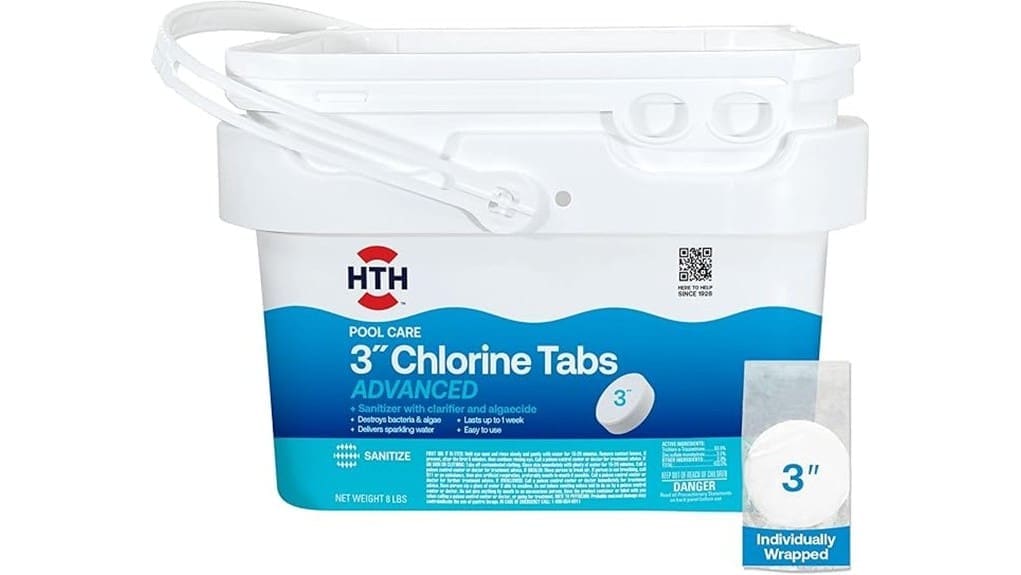
You’ll get slow‑dissolving 3″ trichloroisocyanurate tablets that maintain 1–4 ppm free chlorine for routine sanitization, with a UV‑protected stabilizer to extend residual life. You’ll dose by pool volume using a floater, in‑line feeder, or approved skimmer basket and monitor twice weekly with test strips. Handle with gloves and eye protection, store locked and separate from acids, and avoid direct liner contact to prevent localized overchlorination. Continue for full usage, dosing, and safety guidance.
Some Key Takeaways
- HTH 42053W are slow-dissolving 3″ trichloroisocyanurate tablets formulated for steady residential pool sanitization.
- Individually wrapped tablets and sun-protection additives extend chlorine longevity and reduce moisture ingress.
- Designed to maintain free chlorine between 1–4 ppm when dosed by pool volume and current ppm.
- Use in floaters, in-line feeders, or approved skimmer baskets; avoid direct liner contact to prevent localized bleaching.
- Pros: consistent week-long residuals; cons: slower shock response, storage hazards, and need for regular testing and occasional shock.
What the HTH 42053W 3 Chlorine Tabs Actually Are
Think of these as concentrated sanitizing tablets designed for routine pool maintenance: HTH 42053W Pool Care 3″ Chlorine Tabs are slow-dissolving, individually wrapped trichloroisocyanurate tablets (3-inch) formulated to kill bacteria, control algae, and clarify water while offering a sun-protected composition to extend chlorine longevity. You’ll handle an 8-pound unit containing single 3″ tablets; packaging details note individual wraps reduce cross-contamination and moisture ingress. You should store them locked, dry, and separate from acids. Follow safety precautions: avoid direct contact, use gloves and eye protection, and prevent tablet insertion into pool skimmers without approved feeders to control dosing and corrosion risk. These tablets are commonly used for routine maintenance of residential pools to help keep outdoor spaces enjoyable and safe, especially when paired with regular shock treatments.
How These Chlorine Tabs Perform: Sanitizer, Algaecide, and Clarity
Although designed primarily as a sanitizer, HTH 42053W 3″ tablets also deliver measurable algaecidal and clarifying effects when used to maintain free chlorine between 1–4 ppm, so you’ll need to monitor levels regularly and dose via a floater or feeder rather than directly in the skimmer. You’ll achieve reliable bacterial control: stabilized trichlor provides sustained residuals that oxidize organics and destroy pathogens. For algae prevention, maintain target ppm and address phosphates separately. Water clarity improves as particulates break down and coagulate. The sun protection additive extends effective chlorine life but doesn’t replace routine testing, shock treatment, or proper circulation for safe pools. These tablets are commonly sold alongside other pool maintenance supplies for homeowners who enjoy their outdoor spaces, so consider stocking complementary items like test kits and floaters for complete care pool maintenance.
Using HTH 42053W: Dosing, Compatibility, and Best Application Methods
Keeping free chlorine in the 1–4 ppm window and relying on the sun-protected formulation sets you up for predictable performance, but proper dosing and placement of HTH 42053W tablets are what maintain that residual safely and effectively. You’ll calculate dose with a dosing calculator or by charting pool volume and current ppm, then choose placement: float feeder, in-line feeder, or skimmer basket. Use individually wrapped 3″ tablets to avoid direct tablet contact with surfaces. Monitor twice weekly with test strips. For saltwater and vinyl pools compatibility is confirmed; always follow label safety, keep stabilizer and pH balanced, and wear PPE. Many homeowners also benefit from routine filter maintenance to ensure optimal circulation and clarity, especially when using pool clarifiers like those sold for residential pools.
Pros, Cons, and Real-World Longevity (8 Lb Package, Slow-Dissolving up to One Week)
Because these 3″ tablets dissolve slowly—typically lasting up to one week—you’ll get steady chlorine release that simplifies maintenance while reducing spike risks. You benefit from predictable residuals, reduced handling frequency, and an 8 lb package longevity that supports multi-week stocking. Pros: consistent sanitization, sun-protected formula, compatibility with floaters/feeders, and lower acute dosing errors. Cons: slow ramp-up during heavy contamination, potential localized high concentration if tablets contact liner, and storage safety requirements for concentrated chlorine. Consider usage economics: fewer replacements offset higher upfront weight, but monitor supply cadence to avoid depletion. Follow label storage and handling precautions precisely. Closing your pool properly also requires attention to proper chemical selection and safe procedures to ensure secure pool closing.
Who Should Buy HTH 42053W and How to Maintain Chlorine Levels (Test Strips & 1–4 Ppm Guidance)
If you liked the steady-release behavior and reduced handling from the 3″ slow-dissolving tabs, here’s who should consider HTH 42053W and how to keep free chlorine in the target 1–4 ppm range: pool operators seeking predictable residuals—homeowners with weekly maintenance cadence, seasonal pools, or facilities using automatic floaters/feeders—will benefit from the individually wrapped, sun-protected tablets, while users with heavy bather loads or frequent contamination should supplement with shock treatments. You’ll monitor twice weekly with HTH 6-Way test strips, adjust tablet feed to maintain 1–4 ppm, follow maintenance tips for dosing, observe safety precautions, and make certain proper chemical storage. This product is marketed alongside other pool water test kit supplies for homeowners who enjoy outdoor spaces, making it easy to pair with pool test kits for routine monitoring.
Some Questions Answered
Are These Tablets Safe to Store Indoors Near Other Household Chemicals?
Yes — you can store them indoors, but you shouldn’t. You’ll want indoor storage with cool, dry, well-ventilated conditions and tight chemical compatibility controls: keep chlorine tablets separated from acids, ammonia, pool shock, and combustible materials. Use original, sealed packaging and a dedicated, labeled cabinet or bin to prevent cross-contamination. Monitor humidity and temperature, avoid metal contact, and follow local regulations; improper storage raises corrosion, off-gassing, or fire risks.
Do the Individual Wraps Biodegrade or Require Special Disposal?
No — the individual wraps aren’t biodegradable; they’re designed to protect tablets from moisture and UV and will require disposal per local disposal regulations. You should treat opened or unused wrapped tablets as chemical waste: keep them sealed, avoid mixing with other household chemicals, and consult municipal hazardous-waste guidelines for drop-off or disposal. For packaging recycling, check local recycling rules; if uncertain, contact waste authorities to guarantee compliant, safe handling.
Can I Use These Tablets in a Hot Tub or Spa?
No — you shouldn’t use these in a hot tub or spa. Hot tub compatibility is limited because 3″ slow-dissolving pool tabs raise chlorine too slowly and too high for small volumes, risking over-chlorination and corrosion. For spa dosing, use granular or small-dose spa-specific sanitizers and follow manufacturer ppm targets (1–3 ppm for spas) with frequent testing. Always ventilate and store tablets separately from spa chemistry.
Are There Any Materials (Metals, Plastics) They May Corrode Over Time?
Yes — concentrated chlorine can corrode certain materials over time. You should avoid prolonged contact with stainless steel fixtures and hardware, as pitting and stress corrosion may occur if high chlorine concentrations persist. Vinyl lining is safe when tablets are used properly (in floaters or feeders), but direct, prolonged tablet contact can bleach or degrade vinyl. Rinse any surfaces after spills, maintain 1–4 ppm free chlorine, and test frequently for safety.
Is Shipping Restricted or Are There Extra Fees for Chlorine Products?
Yes — shipping restrictions and extra fees commonly apply to chlorine products. You’ll encounter hazardous-material regulations for transport, limited carriers, and destination restrictions. Carriers may charge hazmat handling, packaging, or residential-delivery surcharges, and some regions prohibit air shipment. You should verify carrier policies, Material Safety Data Sheet details, and seller disclosures before purchase. Plan for additional transit time, special packaging, and potential compliance documentation to guarantee safe, legal delivery.