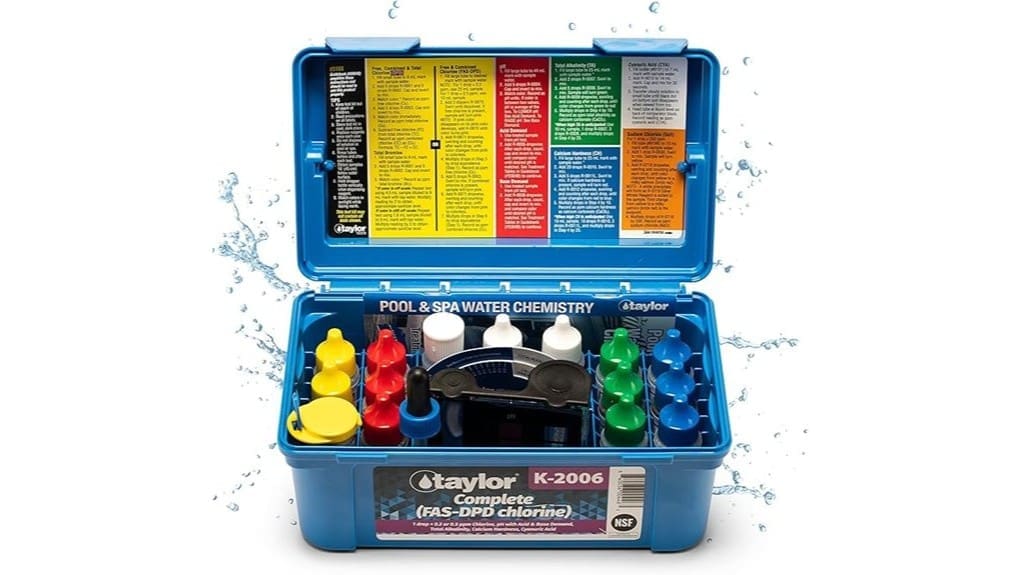
You’ll get lab‑grade free and total chlorine, pH, alkalinity, hardness, and CYA readings if you follow the Taylor K‑2006’s titration and comparator procedures precisely. The kit supplies labeled reagents, a dropper titration tube, a color comparator, and a water‑balance guide; you’ll rinse, sample at elbow depth, run comparator tests first, then perform FAS‑DPD titrations with exact volumes and endpoints. It’s best for methodical users; continue for setup, stepwise procedure, and troubleshooting.
Some Key Takeaways
- Delivers lab-grade free and total chlorine results using FAS‑DPD titration for accurate, reproducible measurements when procedures are followed precisely.
- Includes complete reagents, titration tube, comparator, and waterproof guide, enabling full chemistry tests (pH, alkalinity, calcium, CYA).
- Offers superior accuracy over test strips but requires careful technique, timing, and reagent storage to avoid operator error.
- Slower than strips but more diagnostic; ideal for homeowners wanting precision or pros validating service work.
- Consider photometers for faster, easier reads or automated systems for high-volume commercial testing if speed and simplicity matter.
Quick Verdict: Is the Taylor Pool Water Test Kit Worth Buying?
Cut to the chase: if you need precise, laboratory-style readings for free and total chlorine, pH, alkalinity, calcium hardness and cyanuric acid, the Taylor K-2006 delivers. You’ll follow systematic sampling, titration, and color-matching steps that minimize operator error and yield reproducible results. For routine pool maintenance, its balance of analytical scope and reagent longevity supports clear decision thresholds, so you’ll correct chemistry confidently. Consider cost effectiveness: upfront reagent quality and durability justify the price versus disposable strips. The user experience is efficient if you’re methodical; novices will need careful adherence to instructions to match lab-like accuracy. Homeowners who enjoy maintaining their outdoor spaces will appreciate the kit’s accuracy and durability, making it a solid choice for pool test strips and broader pool care needs.
What’s Included and How the K-2006 Kit Works
The K-2006 kit lays out everything you need to perform titration-based and comparator color tests: labeled reagent bottles (FAS‑DPD for free/total chlorine, acid/base demand, total alkalinity, calcium hardness, and cyanuric acid reagents), a dropper-cap titration tube, a color-matching water comparator, a water balance calculator, color-coded instructions and treatment tables, a waterproof chemistry guide, and a fitted carrying case. You follow the instruction manual for reagent sequence, sample volume, and endpoint criteria. Components are arranged for procedural flow: comparator readings first, titrations next. Note storage tips: keep reagents sealed, cool, away from light, and replace expired bottles to maintain accuracy. The kit is ideal for homeowners maintaining outdoor pools who want reliable digital testing options and easy-to-use reagents for accurate results, especially when using digital pool testers.
How to Run the Core Tests (Chlorine, pH, Alkalinity) : Step‑by‑Step
Start by rinsing the titration tube and comparator cell with pool water, then collect samples at elbow depth away from returns to avoid surface skimming; you’ll run the comparator color tests first (pH and cyanuric acid if desired) and perform FAS‑DPD titrations for free and total chlorine followed by alkalinity titration, following the exact sample volumes, drop counts, and endpoint colors indicated in the K‑2006 instruction card. Use consistent sample handling: label tubes, avoid bubbles, and test immediately. Follow safety precautions: wear gloves, eye protection, and avoid reagent contact. Maintain timing accuracy when adding drops. Store reagents per reagent storage guidelines. For proper long‑term performance, keep your skimmer and related equipment clean and well‑maintained to support accurate testing and overall pool health pool skimmer maintenance.
Accuracy, Speed, and Real‑World Performance (FAS‑DPD Results, Cyanuric and Hardness)
Although the FAS‑DPD titration requires a few careful steps, you’ll get laboratory‑grade distinction between free and total chlorine when you follow the K‑2006 procedure precisely. You prepare samples, add FAS‑DPD drops, and titrate to the endpoint while recording drops; that yields repeatable FAS‑DPD results. Cyanuric acid and calcium hardness tests run slower but use straightforward reagent additions and color comparison. For consistent field calibration, verify comparator lighting and reagent dates; document ambient temperature. Note interference factors—metals, recent shock treatments, or high stabilizer levels alter endpoints. Follow procedural controls and log results to validate real‑world performance. Many homeowners pair clarifiers and clarifying best practices with regular testing to maintain clear pool water and optimal equipment performance, including pool clarifiers.
Who Should Buy This Kit and Alternatives to Consider
Having confirmed that the K‑2006 yields lab‑grade FAS‑DPD separation and reliable cyanuric and hardness readings when procedures are followed, you can now assess whether its capabilities match your testing needs. You should buy the kit if you’re a homeowner who wants diagnostic precision beyond strip tests and can follow titration steps. Pool professionals will value its FAS‑DPD resolution for service validation and problem-solving. If you need rapid, minimal‑skill checks, consider electronic photometers or colorimeter consoles. For bulk commercial testing, explore automated analyzers or reagent systems with higher throughput and certification for regulatory reporting. Homeowners who enjoy maintaining outdoor pool spaces may also benefit from learning proper shock treatment techniques to keep results consistent.
Some Questions Answered
Is This Kit Safe to Travel With on Airplanes?
Yes — you can travel with the kit, but you’ll follow airline restrictions and liquid limits. Pack reagents in checked baggage when possible; small reagent bottles in carry‑on must comply with 100 mL (3.4 oz) limits and fit a quart‑size bag. Label containers, secure caps, and place reagents in sealed plastic bags inside a sturdy case. Declare any batteries or chemical tablets to the carrier and check specific airline and TSA rules before departure.
How Long Do the Reagents Remain Effective Unopened?
Unopened reagents typically remain effective for about 2–3 years if you follow labeled shelf stability and storage temperature guidelines. Store bottles tightly sealed, upright, in a cool, dark place (ideally 15–25°C). Avoid freeze–thaw cycles and direct sunlight. Inspect expiration dates on each reagent; discard if expiration is reached, seals are broken, reagent color changes, or precipitates form. Log lot numbers and purchase dates for traceability.
Can Children Use the Kit Safely Under Supervision?
Yes — children can use the kit safely under child supervision with clear age guidelines. You’ll restrict handling of reagents to older children (generally 12+) and let younger kids observe. You’ll enforce PPE (gloves, goggles), work on a stable surface, keep reagents capped, and store chemicals out of reach. You’ll supervise every step, follow color-matching procedures, and dispose of waste per instructions to minimize ingestion or contact risks.
Are Replacement Reagents Sold Individually by Reagent Type?
Yes — replacement availability is offered for individual reagents. You can purchase FAS-DPD, pH, alkalinity, calcium hardness and cyanuric acid reagents separately. When ordering, verify reagent compatibility with your K-2006 kit by matching part numbers and test method (FAS-DPD drop method, comparator volumes). Follow manufacturer guidance for lot, expiration and storage. Replace only one reagent at a time, document date opened, and calibrate procedures to maintain accurate results.
Does the Kit Include Instructions in Languages Besides English?
Yes — the kit includes multilingual instructions and international symbols. You’ll find color-coded, stepwise procedures in English plus supplementary language panels; pictograms and international symbols clarify reagent dosing, safety, and interpretation. Follow the numbered steps, match colors in the comparator, and consult the waterproof chemistry guide for cross-referenced metric conversions. If you need additional language support, contact Taylor’s customer service for replacement guides or digital manuals.