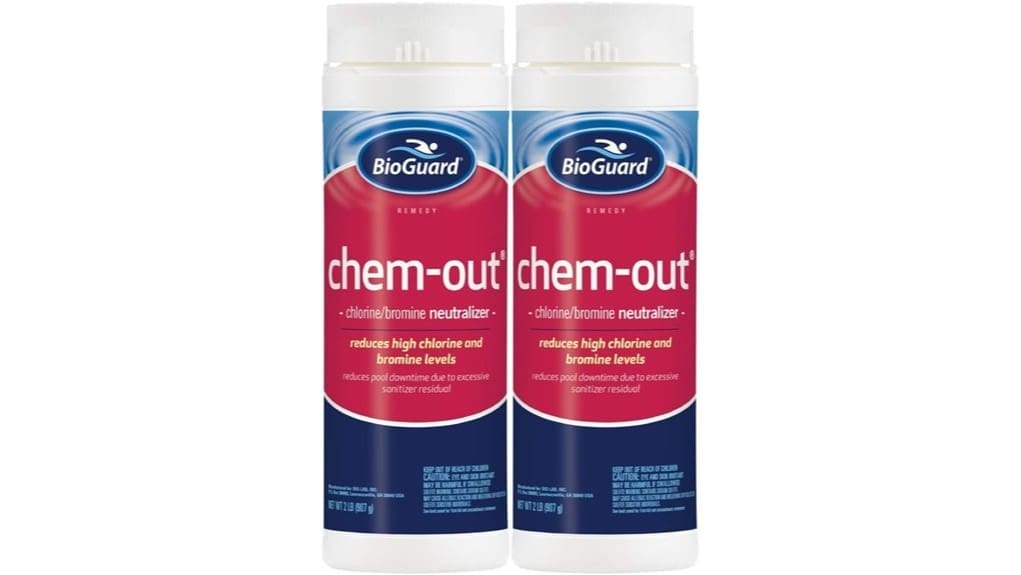
You’ll get a concentrated, instant‑dissolving granular neutralizer that reliably drops about 3 ppm free chlorine per 4 oz/10,000 gal without altering pH. Use it 8–12 hours after shock or peroxide therapy, broadcast with the pump running, then retest within 10–60 minutes and again at one hour. It’s fast in well‑circulated systems, safe when handled properly, and not a metal sequestrant. Keep reading for full dosing, limits, and purchase details.
Some Key Takeaways
- Rapid, instant‑dissolving granular formula neutralizes free chlorine, bromine, or hydrogen peroxide within minutes to an hour.
- Dose guideline: 4 oz per 10,000 gallons removes about 3 ppm free chlorine for predictable results.
- Works without altering pool pH, making it suitable after shock treatments or peroxide therapies.
- Safety: wear gloves/eye protection, keep product dry, and retest oxidizer levels after dosing.
- Single‑purpose neutralizer (no metal sequestrant); repeat or staged dosing may be needed for very high residuals.
What BioGuard ChemOut Is and Who Should Use It
When you need to quickly neutralize excess oxidizers in pool water, BioGuard ChemOut is a concentrated, instant‑dissolving granular reducer designed to lower free chlorine, bromine, or hydrogen peroxide to target levels without altering pH. You’ll use it when oxidizer residues exceed safe recreational ranges after shock treatments or peroxide therapies. The product suits residential and commercial pools, installers converting to Soft Swim, and technicians treating metal-related oxidizer issues. ChemOut speeds return to service, simplifies pool maintenance, and reduces downtime. By precisely restoring residuals to recommended ppm, you protect swimmer safety while avoiding pH adjustment steps or prolonged closures. It’s a practical option for homeowners looking to keep their pool sparkling after shock treatment.
How to Use ChemOut: Dosage, Timing, and Step-by-Step Procedure
Because precise dosing and timing cut pool downtime, follow a measured procedure: test free chlorine with a BioGuard kit or 4‑way strip, confirm the post‑shock oxidizer level, then calculate ChemOut dose at 4 oz per 10,000 gallons to remove 3 ppm free chlorine. You’ll wait recommended 8–12 hours after superchlorination for oxidization. For application timing, broadcast granular ChemOut evenly with the pump running and return jets on; dissolve instantly. Retest free chlorine after 10–30 minutes and again after 1 hour. Observe safety precautions: wear gloves and eye protection, avoid inhalation, store sealed and dry, and keep children and pets away. BioGuard products are designed for homeowners who enjoy their outdoor spaces and often include clear usage guidance for pool opening tasks like this, making maintenance easier for outdoor pool care.
Real-World Performance: How Quickly and Effectively It Lowers Chlorine
Although granular ChemOut dissolves instantly and acts rapidly, you’ll typically see free chlorine drop within minutes and reach the target range (about 3 ppm removed per 4 oz/10,000 gal) within 10–60 minutes depending on circulation and initial oxidizer load. You’ll dose per volume, then monitor free chlorine with test strips or a kit. In well-circulated systems with moderate oxidizer loads neutralization completes near the low end; stagnant or heavily shocked pools take longer. The concentrated, instant-dissolving formula provides rapid neutralization while maintaining chemical stability, so you’ll observe predictable reductions and long lasting effects on chlorine residuals. Homeowners who maintain their pools regularly will find the product integrates easily into standard pool maintenance routines.
Pros, Cons, and Use Cases (Including Metal Stain Treatment and Soft Swim Conversions)
If you need fast, predictable removal of excess oxidizers, ChemOut gives reliable, dose‑based control—4 oz per 10,000 gallons removes about 3 ppm free chlorine—and dissolves instantly for rapid action without shifting pH. You’ll appreciate pros: precise dosing, instant dissolution, pH-neutral outcome, compatibility with all pool types, and suitability for metal remediation and Soft Swim conversions. Cons: single‑purpose neutralizer (no sequestrant), requires proper testing, and limited capacity per dose for very high residuals. Use cases: post‑shock neutralizing, metal stain treatment when combined with sequestrant, and staged Soft Swim conversion where conversion timing is planned and measured. For homeowners maintaining balanced water chemistry, pairing stabilizer advice with ChemOut treatments helps keep pools safe and clear, especially when managing stabilizer levels.
Buying Details, Packaging, and Final Recommendation
Having covered performance and use cases, let’s look at buying specifics and packaging so you can match product size to need. You’ll find BioGuard ChemOut sold as a 2 lb pack-of-2 (unit count equals 64 fl oz equivalent), item 23647BIO, UPC 017541002882. Packaging aesthetics are utilitarian: labeled polyethylene tubs with technical instructions and dosage chart; tamper-sealed. Retail availability is broad—pool specialty stores, major online retailers, and OEM channels—so sourcing is straightforward. Buy based on pool volume and frequency; one pack treats multiple shock events (4 oz/10,000 gal per 3 ppm). Final recommendation: efficient, concentrated, and cost-effective. Many homeowners who enjoy outdoor living pair treatments like this with automated maintenance tools such as automatic pool vacuums to keep their spaces relaxing and low-effort.
Some Questions Answered
Is Chemout Safe for Saltwater Pools and Chlorine Generators?
Yes — you can use ChemOut in saltwater pools and with chlorine generators. Its concentrated, instant-dissolving formula neutralizes free chlorine without altering pH, so it’s compatible with saltwater compatibility requirements and won’t require pH correction. Use recommended dosing and test free chlorine beforehand to avoid generator interference; lower residuals to target levels before restarting the generator. Follow manufacturer instructions and retest chlorine after treatment.
Can Chemout Be Used in Indoor Pools With Poor Ventilation?
Yes — you can use ChemOut in indoor pools, but you should account for indoor air quality and ventilation impact. You’ll add the granular neutralizer per recommended dosage after oxidization, monitor free chlorine, and avoid overdosing. In poorly ventilated spaces, limit exposed personnel during dosing and allow additional air exchange before swimmers enter. Use continuous air monitoring if available and follow local occupational and pool safety guidelines to mitigate fumes and chloramine accumulation.
Does Chemout Affect Pool Algae Treatment Effectiveness?
No — ChemOut won’t reduce algae treatment effectiveness when used correctly. You’ll neutralize excess free chlorine without altering pH, so algaecide activity remains intact. Mind treatment timing: test and wait the recommended 8–12 hours after shock so oxidants dissipate, then dose ChemOut to desired free chlorine. If you treat algae immediately after neutralization, confirm residual oxidizer levels are appropriate to avoid algae reactivation or diminished biocide contact time.
Are There Any Long-Term Effects on Pool Plumbing or Surfaces?
No, you shouldn’t see long-term plumbing corrosion or surface discoloration when using ChemOut as directed. Its neutralizing reaction is rapid and doesn’t alter pH, minimizing corrosive stress on metal fittings and piping. Granular residues dissolve instantly, reducing deposit-related staining on plaster or liners. Follow recommended dosages and post-treatment flushing/testing; excessive or repeated overdosing could increase localized risk, so monitor free chlorine and adhere to manufacturer guidance.
How Should Chemout Be Stored and What Is Its Shelf Life?
Store ChemOut in a cool storage area, tightly sealed and away from heat, moisture, direct sunlight, acids and organic materials. Keep it in its original, labeled container on a stable shelf above floor level and out of reach of children and pets. Follow local regulations for hazardous materials. Expect an expiration timeline of about 2–3 years if unopened and properly stored; once opened, use within 12–24 months for best potency.