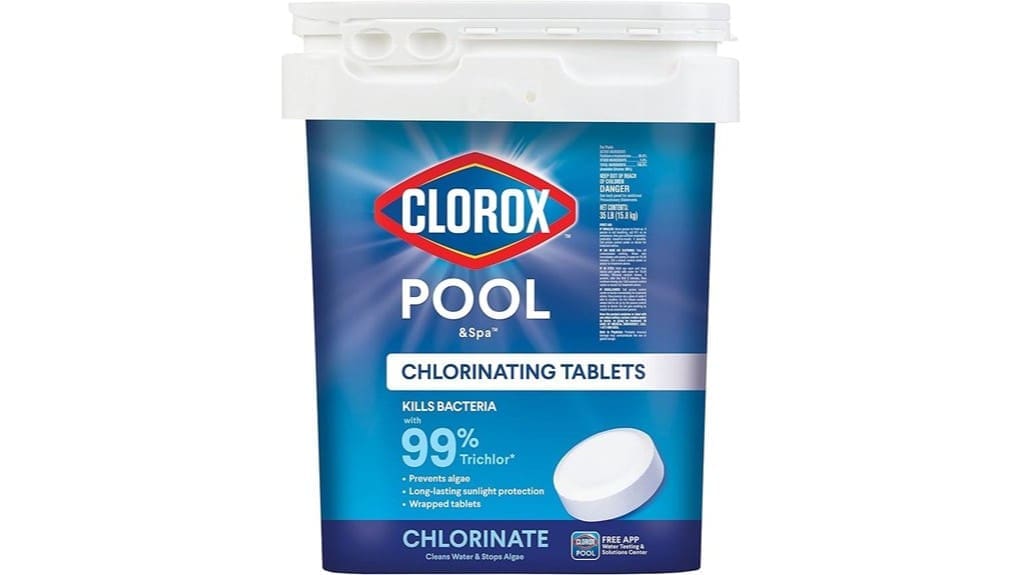
You’ll get a stabilized 3″ trichloroisocyanuric acid tablet that delivers predictable free chlorine and cyanuric acid for routine disinfection and algae prevention. Use single tablets in contained feeders, skimmers, or floaters; wear gloves and eye protection and avoid pump contact. Monitor free chlorine (1–3 ppm) and CYA to prevent buildup, and adjust feeder flow or floater aperture to avoid overdosing. It’s robust for outdoor pools in sun, and further details explain placement, dosing, and troubleshooting.
Some Key Takeaways
- Stabilized trichloroisocyanuric acid tablets provide steady chlorine release and cyanuric acid for effective outdoor pool sanitization.
- Best used in contained feeders, skimmers, or floaters to control dissolution and prevent pump/equipment contact.
- Typical dosing: one 3″ tablet per skimmer/feeder/floater, adjusted by pool volume and equipment flow.
- Monitor free chlorine (1–3 ppm) and cyanuric acid regularly to avoid overdosing and stabilizer buildup.
- Wear gloves/eye protection, store dry and ventilated, and shock or brush if algae or cloudy water appear.
Quick Verdict: Is CLOROX Pool & Spa Active99 3” Chlorinating Tablet Right for Your Pool?
Wondering if CLOROX Pool & Spa Active99 3” Chlorinating Tablets suit your pool? You’ll find them effective for routine disinfection, algae prevention, and stabilized chlorine retention. You should use contained feeders, skimmers, or floaters and follow single-tablet handling to minimize exposure risks. Compare cost comparison metrics per treatment: longevity often offsets higher per-tablet price versus unstabilized options. Evaluate environmental impact: stabilized trichlor reduces frequent dosing but introduces cyanuric acid buildup and residual halogen release; monitor levels and avoid overdosing. Wear gloves and eye protection during handling, store in a cool, dry ventilated area, and follow label instructions precisely. They are commonly used by homeowners who enjoy maintaining their outdoor pools and patios, and proper use supports routine maintenance.
What’s Inside the Tablet and How Trichlor Kills Bacteria
When you drop a CLOROX Pool & Spa Active99 3″ tablet into water, its primary active ingredient—trichloroisocyanuric acid (trichlor)—dissolves and releases free chlorine (hypochlorous acid/hypochlorite) along with cyanuric acid stabilizer; the tablet also contains inert binders to control dissolution rate. You’ll see Trichlor chemistry produce a controlled, predictable chlorine residual. Free chlorine attacks microbial cell walls and intracellular components via Oxidation mechanisms: electron transfer, protein chlorination, and membrane lipid peroxidation. These reactions denature enzymes and disrupt transport, yielding rapid bactericidal effect. Follow labeling to maintain safe concentrations; excessive exposure risks irritation and corrosion. These tablets are designed for convenient use by homeowners who maintain outdoor pool spaces and help maintain residual chlorine over time.
How to Use the 3” Tablet Safely in Skimmers, Feeders, and Floaters
The trichlor tablet chemistry you just read about determines how and where you should place tablets: because they release a steady chlorine dose and cyanuric acid as they dissolve, you’ll control sanitizer levels best by using skimmers, inline feeders, or floaters according to equipment and pool size. Prioritize skimmer safety: remove wrappers, place one tablet at a time, avoid direct contact with pump components. For feeder placement, secure the feeder, set bleed/flow to manufacturer specs, monitor stabilizer buildup. For floater precautions, adjust aperture to prevent over-chlorination and avoid prolonged wall contact. Follow PPE for Tablet handling and store dry. Regular maintenance of your skimmer and feeder will keep chemical distribution consistent and extend equipment life skimmer maintenance.
Real-World Performance: Algae Prevention, Sunlight Stabilization, and Longevity
Because trichlor tablets release both chlorine and a stabilizer steadily as they dissolve, you’ll see reliable algae prevention and extended sanitizer life under direct sunlight when dosing is managed correctly. You should monitor free chlorine and cyanuric acid to confirm target levels; this reduces biofilm formation on algae resistant surfaces and limits hidden regrowth. Measure stabilizer depletion rates periodically, especially after heavy rain or splash-out, to avoid under-protection. Use calibrated test kits, wear PPE when handling tablets, and avoid over-chlorination which can damage liners and equipment. Consistent, controlled dosing preserves longevity and maintains safe, compliant pool chemistry. Homeowners who enjoy their outdoor spaces should also prioritize keeping pH balanced to ensure clearer, safer water.
Dosage Tips, Common Problems, and When to Use the Clorox Pool App
If you want reliable results, follow precise dosing and monitoring: add one 3” trichlor tablet per skimmer, floater, or feeder according to your pool volume and manufacturer guidance, then verify free chlorine and cyanuric acid (stabilizer) levels with a calibrated test kit within 24 hours. Space subsequent additions based on measured free chlorine and manufacturer-recommended dosage intervals to maintain 1–3 ppm free chlorine. Address common problems—low chlorine, cloudy water, or tracer stains—by shock dosing, brushing, and confirming stabilizer limits. Use the Clorox Pool app for app troubleshooting, personalized dosing recommendations, and stepwise remediation instructions. Maintain regular testing with pool test strips to keep your water clear and balanced.
Some Questions Answered
Are These Tablets Safe Around Vinyl Liners and Pool Plumbing?
Yes — you can use them with vinyl liners and standard pool plumbing if you follow instructions. Their trichlor formulation is generally vinyl compatible when tablets aren’t placed in direct prolonged contact with liners; use floaters, feeders, or skimmers to avoid surface damage. Maintain proper dilution and monitor free chlorine and pH to minimize plumbing corrosion risks. Regular testing and following manufacturer dosing prevents excessive chlorine concentrations and corrosion.
Can I Combine These Tablets With Bromine or Other Sanitizers?
No — you shouldn’t combine these tablets with bromine or other sanitizers directly. Trichlor is not bromine compatible; mixing different halogen systems or alternative oxidizers can cause chemical reactions, reduced efficacy, or hazardous byproducts. You should maintain one sanitizer system, allow complete dissipation before switching, and follow label and pool chemistry guidance. Use the Clorox Pool App or test strips to verify residuals and assure safe shifts between sanitizers.
How Should I Store Unopened and Opened Tablet Containers?
Store unopened containers in a cool, dry, airtight storage area away from sunlight and heat; keep them in the original packaging inside a childproof locked container. Once opened, reseal packaging promptly, maintain cool, dry, airtight storage, and return tablets to the childproof locked container. Don’t mix with other chemicals, avoid moisture exposure, and label containers with date opened. Inspect regularly for deterioration and follow local hazardous storage regulations.
Do These Tablets Affect Pool pH Long-Term?
Yes — they can cause gradual pH drift downward because trichlor is acidic and releases cyanuric-stabilized chlorine. You should monitor pH and carbonate hardness regularly; low carbonate hardness reduces buffering capacity, so pH will swing more. Adjust total alkalinity or add baking soda to maintain carbonate hardness and stabilize pH. Follow safety protocols when handling tablets, wear gloves/eye protection, and dose per manufacturer guidelines to minimize long-term imbalance.
Are They Suitable for Indoor Pools or Heated Spas?
Yes — you can use them, but you’ll need precautions. You’ll monitor chlorine and pH closely, assure good indoor ventilation to disperse chloramine fumes, and avoid placing tablets directly in hot spa jets or against heater elements to reduce heater corrosion risk. Use a floating feeder or inline feeder, follow manufacturer dosing, and test frequently. If you run a heated spa, consider alternate sanitizers or consult a pro for corrosion mitigation.