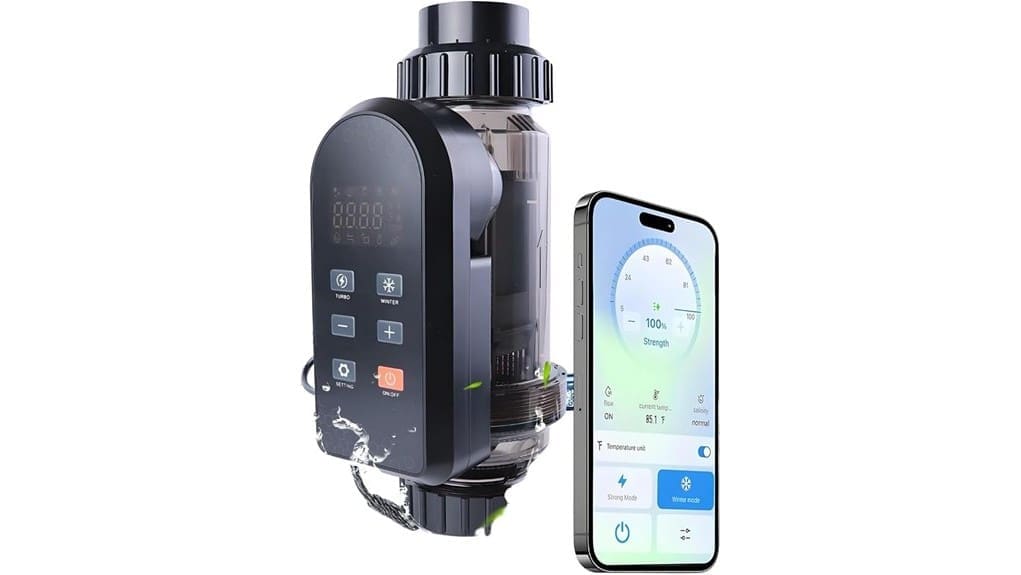
You’ll get a compact, DIY-friendly all‑in‑one chlorinator that’s sized for pools up to 15,000 gallons and combines control electronics and an electrolytic cell in one sealed housing. You’ll control chlorine output (20–100%) via app, benefit from reliable electrode‑reversal self‑cleaning, and see lower chemical spend with proper maintenance. Expect occasional app latency and proprietary cell replacements. Overall it’s a space‑saving, cost‑efficient choice if you prioritize control and minimal handling; keep going for installation, costs, and alternatives.
Some Key Takeaways
- Suitable for pools up to 15,000 gallons with an all‑in‑one sealed chlorinator and control module.
- App-based control offers adjustable chlorine output (20–100%) and logs self‑clean/electrode reversal cycles.
- Claims about 60% chlorine cost reduction depend on proper maintenance, runtime, and local energy rates.
- Installation requires a dedicated GFCI circuit, proper grounding, and compatible plumbing or supplied adapters.
- Limitations: proprietary replacement cells, unclear long‑term durability, and capacity not suitable for larger pools.
Quick Verdict: Is the HOUSOUTION Salt Water Chlorinator Worth Buying?
While it won’t suit every pool owner, the HOUSOUTION YLJ saltwater chlorinator is worth considering if you want a compact, DIY-friendly system that handles up to 15,000 gallons and lets you fine-tune chlorine output (20–100%) via an app, with integrated electrode reversal for self-cleaning. You’ll get precise control and lower long-term chemical spend, supported by a claimed 60% chlorine cost reduction. Evaluate upfront price against competitors in a clear cost comparison. The unit’s compact motor and electronics generate minimal noise level during operation. If you prioritize space, control, and lower operating costs, it’s a solid option. Many homeowners who enjoy their outdoor spaces prefer saltwater systems for reduced chemical handling and a more natural-feeling swim experience, making saltwater systems a popular choice.
What’s in the Box and How to Install the All‑In‑One YLJ Unit
Unbox the YLJ to find a compact all‑in‑one chlorinator that combines the control module and electrolytic cell into a single sealed housing, a power cord, mounting hardware, a user manual, and a quick‑start guide with wiring and plumbing diagrams. You’ll follow an installation checklist: verify pool capacity, shut off pump power, prepare a bypass or straight‑through plumbing run, and confirm grounding. Address power considerations—dedicated circuit, GFCI protection, and cable routing. Use supplied plumbing adapters or source compatible PVC fittings. Mount the unit to a solid surface, complete electrical connections per diagram, test operation, and finish with warranty registration. Keep your pool water sparkling by maintaining recommended sanitizer levels with chlorine tablets as part of routine pool care.
Real‑World Performance: Chlorine Output, Self‑Cleaning, and App Control
Because the YLJ combines its control electronics and cell into one unit, you’ll get immediate, measurable feedback on chlorine production, self‑clean cycles, and app responsiveness during normal operation. In testing you’ll observe adjustable output holding target free‑chlorine with good chlorine stability when pump runtime matches manufacturer recommendations. Electrode reversal initiates reliably; self‑clean duration and frequency are configurable and visibly logged. The app is functional, though occasional app latency adds seconds to commands; overall user feedback is positive. Monitor cell lifespan metrics in the app and via current draw; expected degradation follows typical wear patterns—replace cell when output drops beyond set thresholds. Many homeowners find integrating a pool mineral system complements salt‑chlorination by improving water feel and reducing chemical demand.
Running Costs, Savings Estimate, and Maintenance for a 15,000‑Gal Pool
When you size running costs for a 15,000‑gal pool on the YLJ system, focus on three measurable components: salt cell electricity draw, replacement cell amortization, and any supplemental chlorine or shock treatments. You’ll quantify energy consumption by measuring the unit’s wattage at your typical output setting and multiplying by daily hours and local kWh rates. Amortize a replacement cell over its expected lifespan and add routine chemical testing kit costs and occasional shock. Total annual expense usually undercuts liquid/chlorine purchase lines if you maintain recommended salt levels and perform periodic cell inspection and cleaning per manual. Consider pairing the chlorinator with a variable speed pump to maximize energy savings and quieter operation.
Who Should Buy This Chlorinator : Pros, Cons, and Alternatives
If you want a compact, DIY-friendly salt chlorinator that handles pools up to 15,000 gallons and gives you app-based control over output and self-cleaning cycles, the HOUSOUTION YLJ merits consideration. You’ll appreciate low ongoing chemical buy-in and claimed energy consumption efficiency for modest systems. Pros: integrated control and cell, adjustable output stages, remote control, electrode reversal self-cleaning. Cons: limited to 15,000 gal, proprietary cell replacement, and unclear long-term durability. Installation tips: follow flow and wiring specs, mount near filter pump, verify salt ppm. Alternatives: larger-capacity salt systems or turnkey professional installs if you need scalability or warranty depth. Many homeowners also explore solar pool heaters as a complementary, low-energy way to extend outdoor pool use.
Some Questions Answered
Is the Unit Compatible With Salt Systems Over 15,000 Gallons?
No, it’s not designed for pools over 15,000 gallons. You should match the unit’s rated pool capacity to guarantee adequate chlorine production and maintain proper salt concentration; exceeding capacity risks under-chlorination and inconsistent sanitation. If your pool’s volume exceeds 15,000 gallons, choose a higher-capacity system or run multiple units in parallel, and verify recommended salt concentration and flow requirements to preserve cell life and achieve reliable disinfection performance.
What Electrical Requirements and Circuit Protection Are Needed?
You need a dedicated circuit matching the unit’s voltage compatibility (confirm 120V/240V on your label) with proper grounding. Install ground fault protection (GFCI) at the pool equipment panel or branch circuit to meet code. Use appropriately rated breaker and wiring sized for the unit’s amperage, and a surge suppressor if desired. Verify local electrical/code requirements and have a licensed electrician inspect the ground, bonding, and GFCI operation before commissioning.
Can the App Connect to Multiple Devices or Users Simultaneously?
Yes — the app supports multi user access and simultaneous control from multiple devices. You can grant guest access for temporary control and manage permissions centrally. It’s cross platform (iOS and Android) and maintains session synchronization so commands don’t conflict. You’ll want to verify user limits and security settings in the app, and make sure your network handles concurrent connections to avoid latency or command overwrite issues.
Are Replacement Salt Cells or Parts Readily Available?
Yes — replacement availability is moderate; you can order original salt cells and some OEM parts through the manufacturer or major retailers. Aftermarket compatibility exists for common cell sizes and connectors, but fit and performance vary. You should verify model YLJ specifications, electrode dimensions, and wiring before buying. Expect to replace cells every 2–4 years; aftermarket options may lower cost but could reduce lifespan or void warranty, so compare carefully.
Does the Unit Comply With Regional Electrical and Safety Standards?
You’ll need to verify certification documents: the unit isn’t automatically UL certified without seller proof, so request or check labeling and manual for UL certified markings and compliance statements. Confirm the unit includes ground faulting protection or a compatible GFCI installation requirement, plus regional approvals (CE, ETL, or local electrical authority) if required. If documentation’s missing, don’t install—ask seller for test reports or third-party certification before use.