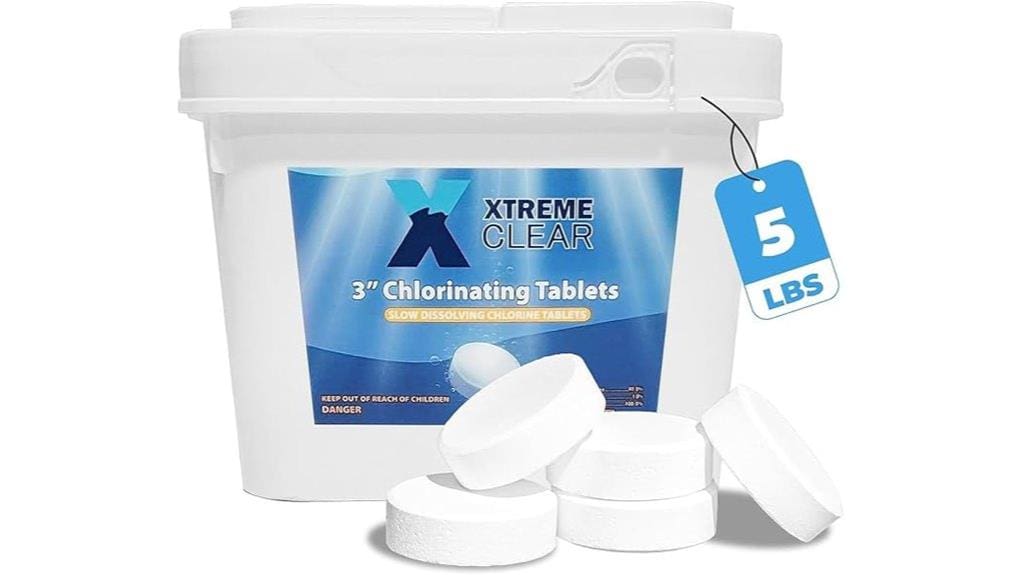
Xtremeclear 3″ chlorine tablets give you slow-dissolving, 99% trichloro sanitization that steadily releases stabilized hypochlorous acid and cyanuric acid to maintain predictable free-chlorine residuals and reduce UV loss. You’ll dose via floaters, skimmers, or compatible feeders (avoid undersized units), monitor alkalinity and CYA, and handle with gloves and eye protection. They cut shock frequency but can raise CYA over time. Keep them sealed and ventilated; more details on dosing, safety, and alternatives follow.
Some Key Takeaways
- 99% trichloro 3″ tablets provide long-lasting, slow-dissolving stabilized chlorine for steady free chlorine residuals.
- Pre-stabilized cyanuric acid reduces UV loss, lowering frequency of shocking in outdoor pools.
- Best used in floaters, skimmer or automatic feeders with >3″ openings; do not drop directly into pool.
- Risks include handling as a strong oxidizer and potential cyanuric acid buildup with frequent use.
- Good bulk value for mid-to-large pools, but consider alternatives (dichlor, bromine, salt) for specific needs.
What Xtremeclear 3 Chlorine Tablets Are and How They Work
When you add Xtremeclear 3″ chlorine tablets to your pool system, the tablets release stabilized hypochlorous acid via slow dissolution of 99% trichloro-s-triazinetrione (providing ~90% available chlorine), continuously sanitizing water and oxidizing contaminants while the triazine ring supplies cyanuric acid as a UV stabilizer to reduce chlorine loss. You’ll rely on stabilized sanitization to maintain consistent free chlorine levels with minimal intervention. Tablet dissolution is predictable and slow, enabling steady residuals, reduced shock frequency, and efficient oxidization of organics. You’ll feel assured knowing the pro-grade formula supports community water quality with straightforward dosing and compatibility guidance. Homeowners can use these tablets as part of a regular shock and maintenance routine to help keep pools sparkling and reduce maintenance time.
Who These 3 Tablets Are Best For and Pool Compatibility
If you manage a mid‑to‑large residential or commercial pool and want a low‑maintenance, stabilized sanitizer, these 3″ Xtremeclear tablets are a strong fit. You’ll appreciate pro‑grade, slow‑dissolving trichloro for consistent residual chlorine in Large pools and community facilities. They suit beginner owners who need simple dosing: use floaters, skimmers, or feeders with >3″ openings. Compatible with pools, spas, hot tubs and water parks; avoid undersized feeders and delicate vinyl surfaces without testing. The 5‑lb bucket provides bulk supply, reducing refill frequency and fostering confidence among operator teams who value predictable, low‑effort sanitation. Regular use of stabilized tablets helps maintain chlorine levels and protects against UV degradation with stabilized sanitizer.
Real-World Performance: Chlorine Strength, Longevity, and Stabilization
Moving from pool compatibility to on‑water performance, you’ll find these 3″ Xtremeclear tablets deliver a high, steady free chlorine residual thanks to 99% trichloro-s-triazinetrione (90% stabilized chlorine). You’ll notice slow, predictable chlorine decay; the pre-stabilized formulation limits UV-driven loss and supports stabilizer effectiveness over days. Longevity is evident in controlled dissolution, reducing dosing spikes. Maintain a testing frequency that matches swim load and weather: test more after heat or heavy use. Temperature impact accelerates decay, so you’ll increase checks during hot spells. Overall, the tablets give consistent sanitizer strength for community-minded pool owners. Keep your pool alkalinity balanced with regular monitoring to support sanitizer performance and water health, especially for alkalinity increasers.
How to Use Xtremeclear Tablets Safely and Effectively
Because proper dosing and placement determine safety and effectiveness, handle Xtremeclear 3″ tablets with care and follow measured, routine testing: wear chemical-resistant gloves and eye protection, add tablets only to a floater, skimmer feeder, or automatic feeder designed for 3″ tablets (do not drop tablets directly into the pool), and maintain free chlorine at recommended levels by checking sanitizer, pH, and cyanuric acid regularly to avoid over- or under-chlorination. You’ll perform systematic water testing, adjust based on ppm targets, and use clear dosage calculation: pool volume × desired ppm change ÷ tablet available chlorine. Record results, stagger additions, and store sealed. Store tablets in a cool, dry, well-ventilated area in corrosion-resistant containers away from sunlight and incompatible chemicals.
Pros, Cons, Price Value, and Alternatives to Consider
Now that you’ve covered safe dosing and placement, let’s assess what Xtremeclear 3″ tablets actually offer in practical use. You’ll appreciate pro-grade, slow-dissolving 90% stabilized chlorine that reduces UV loss and simplifies maintenance. Pros: long-lasting sanitization, broad compatibility, water-saving claim, predictable residuals. Cons: strong oxidizer handling risks, potential cyanuric acid buildup, limited feeder compatibility unless openings exceed 3″. Price value: competitively priced per pound versus smaller tablets—perform a cost comparison for ppm-per-dollar. Environmental impact: high chlorine residual and stabilizer persistence warrant mindful dosing and runoff control. Alternatives: dichlor, bromine, salt systems. Consider adding routine algaecide maintenance to your regimen to protect outdoor spaces and prevent algae growth.
Some Questions Answered
Are These Tablets Safe for Vinyl and Fiberglass Pool Surfaces?
Yes — you can use them, but you’ll want to monitor concentration and placement. Their vinyl safe formulation and surface compatibility are supported by stabilized, slow-dissolving trichloro composition that reduces localized bleaching. Don’t let tablets sit directly on vinyl or fiberglass; use a properly sized floater or feeder and maintain recommended free chlorine levels. You’ll protect finishes and feel included in pool-care best practices by testing water regularly and following manufacturer guidance.
Do Xtremeclear Tablets Affect Pool pH Significantly?
Yes — you’ll see modest pH changes. Xtremeclear tablets release stabilized chlorine that lowers free chlorine volatility, but their trichloro-s-triazinetrione formulation is acidic and can cause gradual alkalinity shifts and pH decline if dosing’s high or circulation’s poor. You’ll want to monitor pH and total alkalinity regularly, adjust with soda ash or baking soda as needed, and keep dosing even so your pool chemistry stays balanced and inclusive for everyone.
Can I Use These Tablets With Saltwater Chlorine Generators?
Yes — you can use them, but monitor your salt cell and adjust dosing. Their stabilized chlorine works with most generators, yet continuous tablet use can cause stabilizer build up, reducing generator compatibility over time. You’ll want to lower manual feed rates, test combined chlorine and cyanuric acid regularly, and clean the cell per manufacturer guidance. Do this and you’ll maintain performance while staying part of the pool-care community.
How Should I Store Unused Tablets Long-Term?
Store unused tablets in airtight containers and keep them in cool storage locations away from heat, sunlight, organic materials, and incompatible chemicals. You’ll want original packaging inside a sealed plastic or metal bin with desiccant packs to limit moisture. Label containers and maintain good ventilation in the storage area. Handle tablets with gloves and eye protection, and keep them in a locked, childproof place so your group stays safe and compliant.
Are These Chlorine Tablets Pet- and Child-Safe if Spilled?
No — they aren’t pet- or child-safe if spilled; you’ll treat any exposure as hazardous. You should perform immediate dilution with lots of water, secure the area, and remove curious animals or children. For pet exposure, follow pet exposure first aid: rinse thoroughly, contact your veterinarian, and monitor breathing. For humans, follow first aid and seek medical help. For emergency cleanup, wear PPE, ventilate, and dispose per local hazardous-waste rules.