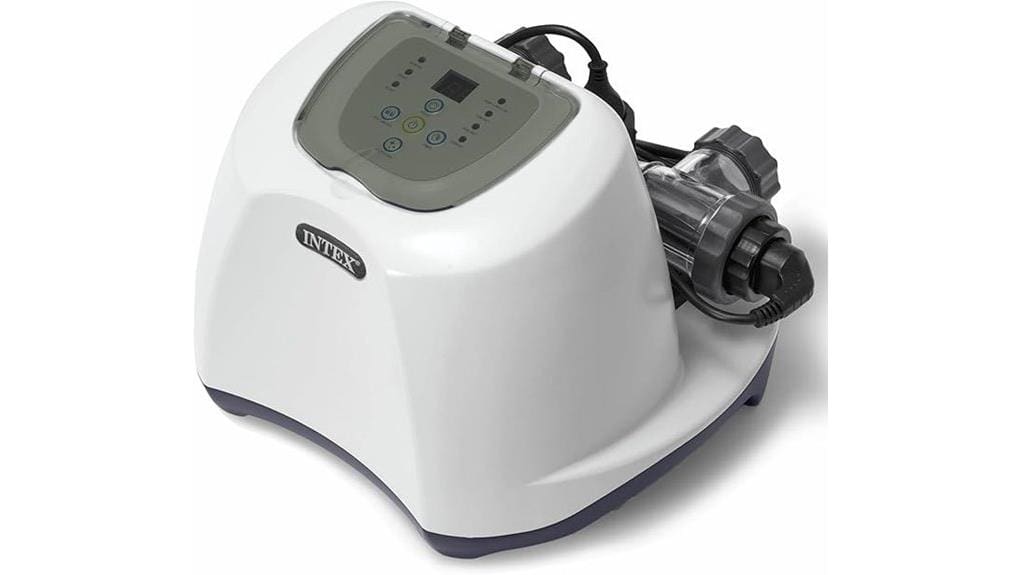
You’ll find the Intex Krystal Clear Saltwater System is a low-maintenance, pump-integrated chlorinator that converts dissolved salt into steady chlorine for above-ground pools up to 15,000 gallons. It plugs into your existing filter pump, uses HydroAeration Technology, and cuts manual chemical handling and chloramine spikes compared with weekly bleach dosing. Controls are logical and scheduling is straightforward, but you’ll still track pH, alkalinity, and cell wear; keep going to see detailed setup, costs, and maintenance.
Some Key Takeaways
- Effective for above-ground pools up to 15,000 gallons, delivering steady chlorine generation when pump runtime and salt levels are correct.
- Low-maintenance saltwater alternative reduces manual chlorine handling and stabilizes sanitizer levels compared with weekly bleach dosing.
- Installs with existing filter pump; includes cell, control box, flow switch, and hardware but no dedicated pump.
- Clear controls, scheduling, and LEDs simplify operation; cleaning alerts and timers tie sanitizer output to pump runtime.
- Ongoing maintenance: monitor pH/alkalinity/salt, clean and replace cell every 2–4 years, and account for salt and electricity costs.
Quick Verdict and Who the Krystal Clear Is Best For
While the Krystal Clear targets above-ground pools up to 15,000 gallons, its real value shows when you want a low-maintenance saltwater alternative to chlorine dosing. You’ll find it suits family pools and low maintenance owners who prioritize steady sanitizer generation and simple controls. Technically, it integrates with existing filter pumps and uses patented HydroAeration Technology to improve circulation and clarity. Compared to manual chlorination, it reduces chemical handling and scheduling tasks. You’ll belong to a cohort of pragmatic pool operators who favor predictable water quality, straightforward operation, and a compact solution tailored to smaller above-ground installations. It’s a convenient option for homeowners who want to enhance their outdoor spaces with a reliable saltwater system that minimizes day-to-day upkeep.
What’s in the Box and How to Install With Your Pump
Unpack the kit and you’ll find the Krystal Clear cell and control box, a salt cell cable, mounting hardware, a flow switch, and a detailed installation guide; it omits a dedicated pump, so you’ll connect the system to your existing filter pump. Check the box contents against the installation checklist to confirm parts and tools. Mount the control box near the pump, secure the flow switch in the return line, and route the salt cell cable to the control unit. You’ll integrate with your pump’s plumbing and electrical supply; follow torque specs and grounding instructions for safe, reliable operation. For summertime pool safety and reduced chemical use, many homeowners pair UV sanitizers with their saltwater systems to help control pathogens and maintain clearer water UV sanitizers.
Salt Conversion, Sanitizing Performance, and Water Quality Results
Because the Krystal Clear cell converts dissolved salt into chlorine continuously, you’ll get steady sanitizer production without the spikes and troughs common to manual dosing systems. You’ll notice salt conversion efficiency aligns with advertised output for pools up to 15,000 gallons, maintaining target free chlorine when pump runtime and salt levels are correct. In comparative testing, sanitizing performance remained consistent versus weekly bleach dosing, reducing sanitizer variability and easing pool chemistry balancing. Real world results show clearer water, lower combined chloramines, and fewer odor issues. You’ll still monitor pH, alkalinity, and salt concentration to sustain peak water quality. These benefits pair well with natural enzyme treatments that help keep organic load down and extend the time between deep cleanings.
Controls, Scheduling, Cleaning Features, and Usability
Having seen how the Krystal Clear cell delivers steady sanitizer output and stabilizes water quality, it’s useful to examine how the unit’s controls and maintenance features let you manage that performance day-to-day. You’ll find a logical button layout that groups power, output percentage, and scheduling controls; compared to competitors it’s straightforward. User feedback is clear via the display and indicator LEDs, so you know status and faults without guesswork. Timer options let you set daily cycles tied to your pump runtime, supporting consistent sanitization. Cleaning alerts notify when cell maintenance is due, making upkeep predictable and easier to share among household members. This makes it a practical choice for homeowners enhancing their outdoor living with an automatic pool cover.
Runtime Costs, Maintenance Needs, Warranty, and Final Buy Recommendation
When you evaluate runtime costs and upkeep for the Intex Krystal Clear, focus on measurable inputs—salt consumption, electrical draw tied to pump runtime, replacement cell frequency, and periodic cleaning labor—so you can compare total cost of ownership against chlorine or other salt systems. You’ll estimate annual cost from salt usage and power consumption; cell replacement typically occurs every 2–4 years depending on hardness and run hours. Maintenance is routine: periodic cell inspection and cleaning. Review warranty terms for coverage on the electrolysis cell and control box. Recommendation: if you value lower chemical handling and clear water, it’s a pragmatic, community-friendly choice. Consider adding a compatible pool cover reel to protect the system and reduce heat loss.
Some Questions Answered
Can the Unit Operate Without a Separate Filter Pump?
No — you can’t operate the unit without a separate filter pump. You’ll need a compatible pump for proper circulation and salt maintenance; installation requirements include connecting the chlorinator inline with your existing filtration system. Compared to self-contained sanitizers, this design relies on the pump to move water through the cell for consistent salt conversion. You’ll feel confident joining others who follow these installation requirements for reliable, low-maintenance operation.
Is This System Compatible With In-Ground Pools?
No — it isn’t designed for in-ground pools. You’ll need to match salt compatibility and installation requirements to your pool type; this unit targets above-ground setups up to 15,000 gallons and expects connection to an existing filter pump. Technically, adapting it to in-ground systems often conflicts with flow rates, plumbing dimensions, and warranty terms. You’ll feel included exploring purpose-built in-ground salt systems that better meet those specs.
How Loud Is the Unit During Operation?
You’ll hear low-level motor noise and minimal operational vibration during use. Compared to small gas or older pool pumps, the unit runs quieter, emitting a steady hum rather than sharp clatter. Vibration is slight and won’t transmit strongly to pool structure if mounted properly. You’ll appreciate that noise falls into a peaceful background range for social pool settings, making it technically acceptable and comfortable for community use.
Are Replacement Cells Widely Available?
Yes — replacement cells are generally available from multiple retailers and third-party suppliers, so you’ll find options. You’ll compare cell lifespan estimates (often 1–3 seasons) and factor warranty coverage when choosing. You’ll want genuine vs aftermarket trade-offs: genuine parts often match rated lifespan and fit, while aftermarket may be cheaper but vary in durability. You’ll join others who prioritize documented lifespan and clear warranty terms for reliable maintenance.
Does Salt Affect Pool Liners or Accessories?
Yes — salt can affect liners and accessories, but risks are manageable with proper care. You’ll see gradual liner corrosion if salt concentration, pH, or chlorine interaction aren’t controlled; metal fittings and accessories corrode faster than vinyl. Compared to traditional chlorine, salt systems reduce chemical peaks but still produce chlorine via electrolysis, so you’ll need corrosion-resistant hardware, routine monitoring, and balanced chemistry to protect materials and maintain community pool longevity.