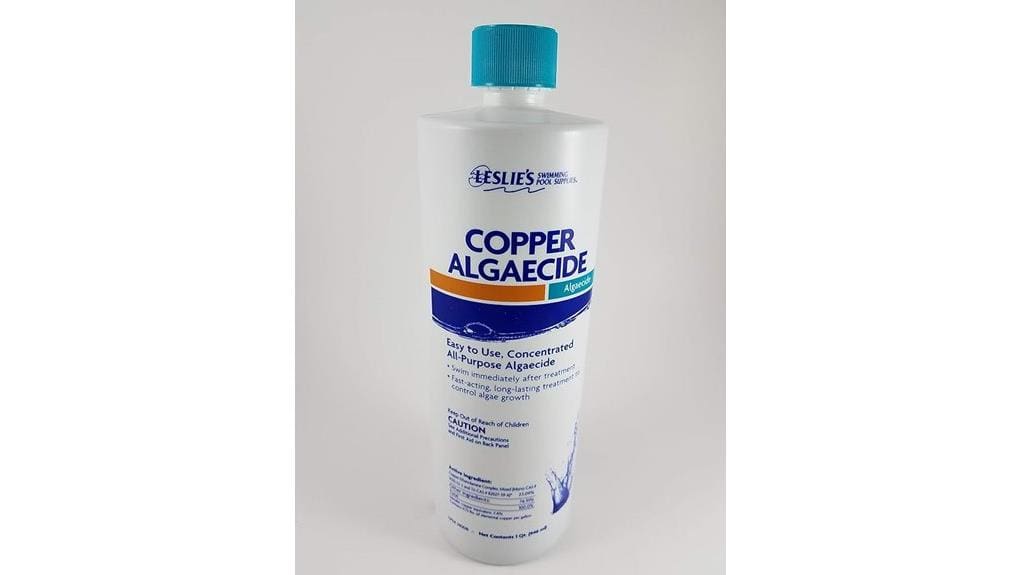
You’ll find Leslie’s Copper Algaecide fast and effective for routine pool care if you stick to the 2‑oz every‑two‑weeks dosing; it knocks down green and mustard algae in 24–48 hours and keeps regrowth low. It claims no pH shift or foaming and lets you swim right away, but don’t overuse it—copper can build up and stain. A quart gives about 16 treatments, so it’s economical for steady maintenance, and more details explain best practices and precautions.
Some Key Takeaways
- Concentrated copper formula kills green and mustard algae within 24–48 hours when dosed per label.
- One quart (32 fl oz) provides about 16 routine 2‑oz treatments, covering a season for many pools.
- Claims no pH impact, no foaming, and immediate swim safety after application.
- Risk of copper buildup and staining if overapplied; monitor metal levels and follow directions.
- Consider polyquat or peroxide alternatives for vinyl pools, staining concerns, or metal sensitivity.
Quick Verdict: Is Leslie’s Copper Algaecide Worth Buying?
If you’re battling recurring pool algae, Leslie’s Copper Algaecide is worth a close look: it’s a concentrated, fast-acting solution that kills existing algae, helps prevent regrowth, and claims no impact on pH or foaming. You’ll appreciate its clear instructions, simple dosage (2 oz every 2 weeks), and immediate swim safety. Be mindful of copper toxicity risks if you overapply and monitor metal levels; the brand’s directions help avoid buildup. Application timing matters—regular, measured doses beat sporadic dumps. If you want reliable, low-fuss maintenance that others in your pool community trust, this fits the bill. Homeowners often combine algaecide use with regular pool maintenance to keep outdoor spaces enjoyable.
How Well It Works: Real-World Algae Control and Speed of Action
You’ll notice the practical value of Leslie’s Copper Algaecide once you judge it by actual results: within 24–48 hours it typically knocks down visible green and mustard algae, and regular 2-oz fortnightly dosing keeps regrowth at bay in most residential pools. You’ll see fast acting visible clearance along walls and in corners, not just slow fading. Results feel reliable; spots that resist usually stem from poor circulation, not the product. It’s long lasting compared with single-shot shock treatments, so your maintenance frequency drops. You’ll appreciate predictable performance that makes pool care communal and confidence-building. Many homeowners pair treatments with algae brushes to scrub away residues and speed cleanup.
Usage, Dosage, and Safety: How to Apply 1 Quart for Best Results
When treating a typical residential pool with Leslie’s Copper Algaecide, plan your application so one quart (32 fl oz) covers routine maintenance and targeted cleanups without waste. You’ll dose 2 oz every two weeks for upkeep, which stretches a quart across many cycles; for visible algae, boost per label until clarity returns. Stick to application timing—early morning or evening—so circulation spreads product before sun-driven degradation. Follow safety precautions: wear gloves, avoid splashes, don’t mix with other chemicals, and store upright. You’ll feel confident managing treatments; this method keeps water clear while respecting pool chemistry and community norms. Consider pairing treatments with proper shock treatment scheduling to maximize clarity and sanitation.
Cost and Value: Price Per Treatment, Longevity, and When 1 Quart Makes Sense
Having covered how to apply a quart over multiple maintenance cycles, let’s look at what that means for your wallet and when buying one quart makes practical sense. At 2 oz every two weeks, a 32‑oz bottle yields ~16 treatments; your price per treatment equals bottle price divided by 16. That math gives a clear cost baseline. Longevity estimate: a quart covers a single season for small pools or regular upkeep for larger ones when paired with proper sanitation. Buy one quart if you want predictable, affordable maintenance, belong to a community that values straightforward care, and prefer measured, low‑waste dosing. Regular pH monitoring and proper use of pool pH decreasers help ensure clearer, safer water.
Alternatives and When to Choose a Different Algaecide
While Leslie’s copper formula works well for routine maintenance and quick knockdowns, you’d want a different algaecide if you need non-metallic options, specialty treatments, or have plaster/black surfaces: polyquat or quaternary ammonium products resist staining and suit vinyl-lined pools, oxidizing algaecides (like peroxide-based shock) handle stubborn or recurring outbreaks without adding metals, and phosphate-removing blends target nutrient-driven blooms. If you have copper sensitivity or worry about staining, choose polyquat or botanical alternatives. For recurring green or mustard algae, use oxidizers plus mechanical cleaning. Match treatment to surface, algae type, and sensitivity for reliable results. For regular upkeep and clearer water, consider using pool clarifiers alongside algaecides to improve filtration and reduce cloudiness.
Some Questions Answered
Does It Stain Pool Surfaces or Swimsuits?
No — you shouldn’t see metal staining or swimsuit fading if you follow directions. The concentrated copper formula can cause metal staining on poorly maintained pools or with overdosing, so you’ll want to dose 2 oz every two weeks and keep chemistry balanced. Rinse swimsuits after use; fading is unlikely from correct application but prolonged contact with treated water and chlorine can dull fabrics. You’re part of a careful pool community.
Is It Safe for Vinyl Liners and Plaster Pools?
Yes — you can use it on vinyl and plaster; it’s vinyl compatibility is generally good and plaster interaction is minimal when dosed correctly. You’ll want to follow the 2 oz every 2 weeks guideline and avoid overdosing or spot-treating concentrated areas. That said, join fellow pool owners who double-check manufacturer guidance for specific liners and test a small area if you’re nervous; treating responsibly keeps your surfaces and community pool-friendly.
Can It Be Mixed With Other Pool Chemicals?
Yes — you can mix it cautiously, but don’t pair dosing at random; follow label instructions and test compatibility first. You’ll want to avoid combining it directly with chlorine shock or acidic products; add algaecide after main treatments settle. Check chemical compatibility and wait recommended times between additions. If you’re unsure, consult Leslie’s or your pool pro — you’ll feel safer knowing you handled dosing correctly and protected your pool.
What Is the Shelf Life Once Opened?
You can expect about 1–2 years once opened if you keep it cool and sealed. Store at moderate storage temperature (away from freezing or extreme heat), tightly in its original plastic container type to preserve potency and prevent contamination. You’ll want to cap it after each use, keep it upright, and store it where family members feel safe. If it changes color or smells off, don’t use it.
Is It Safe for Pools With Fish or Pets Nearby?
No — you shouldn’t use it around ponds with fish and you’ll want to avoid pet exposure. Copper algaecide is effective against algae but copper residues can harm aquatic life and sensitive pets if they drink treated water. If you care for fish or have pets near the pool, keep them away during treatment, rinse any splashes, and consider fish-safe alternatives or consult the manufacturer for guidance so everyone stays safe and included.