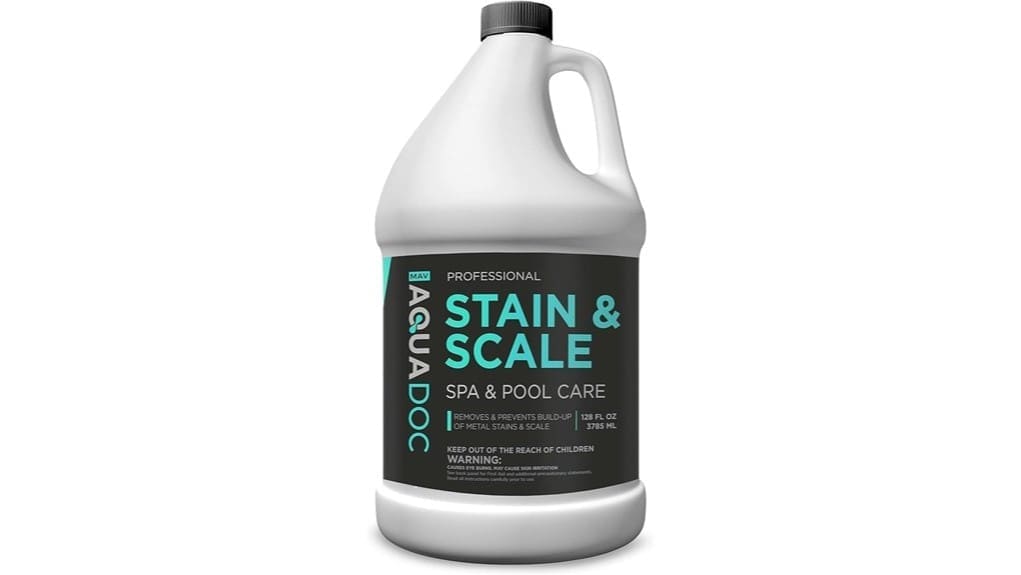
You’ll find AquaDoc Pool & Hot Tub Stain and Scale Remover effective when you follow label dosages and control pH and circulation. It targets iron, copper, manganese and calcium deposits and is formulated safe for plaster, vinyl, fiberglass, quartz, pebble and gunite when used as directed. Apply evenly with the pump running, maintain pH 7.2–7.6, circulate 4–24 hours, then vacuum or filter debris. Continue below for detailed dosing, limits and troubleshooting.
Some Key Takeaways
- Effectively removes iron, copper, calcium, and manganese stains when used per label and with proper circulation.
- Safe for common pool surfaces (plaster, vinyl, fiberglass, quartz, pebble, painted finishes, gunite) if directions followed.
- Requires pre-testing and pH adjustment to 7.2–7.6; dosage varies by pool volume and stain severity.
- Works quickly on moderate deposits; severe or long-term stains may need repeats or mechanical cleaning.
- One-gallon concentrate offers economical multiple treatments for homeowners, technicians, and small maintenance businesses.
Quick Verdict: Does AquaDoc Pool & Hot Tub Stain and Scale Remover Work?
While results can vary with water chemistry and severity of buildup, AquaDoc’s Stain and Scale Remover generally works as intended: it removes metal stains and mineral scale, helps restore surface appearance, and supports equipment operation when used per directions. You’ll find it works quickly on moderate deposits when applied per label, integrating with standard pool/spa treatments and routine maintenance. Objective evaluation of user testimonials shows consistent reports of improved clarity and reduced discoloration; severe or long-term deposits may need repeat treatments or mechanical intervention. You should follow dosage and safety guidelines to guarantee compatibility with finishes and equipment. This product is aimed at homeowners who enjoy their outdoor spaces and want to restore their pool without professional help.
What Stains, Metals, and Surfaces Does It Remove Safely?
Given the product’s effectiveness on common metal stains and mineral scale, you can expect AquaDoc to target calcium, iron, copper, and manganese deposits as well as mixed-metal discoloration and general mineral buildup. You’ll remove metal stains from pool and spa surfaces while reducing rust and particulate deposits that impair water clarity. The formulation is compatible with plaster, vinyl, fiberglass, quartz, pebble, painted finishes, and gunite, preserving surface integrity when used correctly. It’s safe for liners and walls per label directions. For routine maintenance, incorporate AquaDoc to manage mineral scale and extend equipment life without compromising plaster compatibility. The product is designed for homeowners who value maintaining their outdoor spaces and pool surface cleanliness.
How to Use AquaDoc Effectively (Dosage, Timing, Step-by-Step)
When you add AquaDoc to your pool, follow a measured, stepwise procedure to guarantee effective stain and scale removal without harming surfaces or equipment. First, perform pre treatment testing of pH, alkalinity, and metal levels; adjust pH to 7.2–7.6. Calculate dose from volume and stain severity per label; typical maintenance dose is small, shock treatment higher. Apply product evenly around perimeter with pump running; avoid concentrated pours on liners. Maintain circulation 4–24 hours depending on severity and application timing. Vacuum or filter debris, recheck chemistry, and repeat only if residues persist or label recommends. Homeowners who enjoy their outdoor spaces often combine stain removers with clarifiers to keep water clear and inviting, and you can learn more about pool clarifiers to complement your treatment.
Real-World Performance: Results, Limitations, and Troubleshooting
Although results vary with water chemistry and stain type, AquaDoc generally removes common metal stains and mineral scale effectively when applied per label instructions. You’ll see visible reduction of iron, copper, and calcium deposits within days on plaster, vinyl, and fiberglass surfaces when circulation and pH are controlled. Limitations include heavy, old staining requiring repeat treatments and occasional spot brushing. For troubleshooting, test water parameters, adjust pH, and increase application frequency for persistent spots; use targeted spot treatments rather than whole-volume overdosing. Before winterizing, follow recommended seasonal storage procedures for unused product and secure containers per label. Homeowners who use test strips can maintain clear water and diagnose issues faster by regularly monitoring pool water.
Value and Buying Advice: Size, Price Considerations, and Who Should Buy
If you’re managing routine pool or spa maintenance, AquaDoc’s 1‑gallon stain and scale remover offers a practical balance of coverage and cost: its concentrated formula treats multiple applications for typical backyard pools and hot tubs, reducing the per‑use price compared with single‑use packets. You’ll find the gallon size suits regular maintenance schedules; it’s more economical than buying frequent replacement bottles or budget packs for comparable coverage. Consider purchase if you maintain medium to large pools, manage rental properties, or service multiple client sites. Buyer demographics include homeowners, pool technicians, and small maintenance businesses seeking efficient, predictable descaling performance. For those focused on long-term care, pairing treatments with proper filter cartridges helps maintain water clarity and reduce buildup.
Some Questions Answered
Is This Product Safe for Saltwater Pools and Chlorine Generators?
Yes — you can use it in saltwater pools with chlorine generators, but monitor saltwater compatibility and electrolysis effects. The formulation is designed to remove metal deposits without harming common surfaces, yet metals liberated by treatment can increase electrolysis-driven corrosion at cell plates or metallic fittings. You should follow dosage instructions, run the generator at reduced output during treatment, and test water chemistry frequently to mitigate potential accelerated corrosion risks.
Can Aquadoc Be Mixed With Other Pool Chemicals During Treatment?
Yes — you can’t mix AquaDoc directly with other pool chemicals during treatment; observe chemical compatibility and treatment sequencing. You should add AquaDoc separately, circulate, and allow recommended contact time before reintroducing chlorine, algaecide, acid, or metal sequestrants. Check pH and stabilizer levels beforehand. Follow label instructions for dosage and wait intervals to prevent reactions and guarantee efficacy. If unsure, test a small area or consult a pool professional.
How Long Is the Shelf Life Once the Bottle Is Opened?
You should expect an opened longevity of about 1–2 years; the expiration timeframe depends on storage. Keep the bottle sealed tightly, store it cool and out of direct sunlight, and avoid contamination to maximize life. Regularly inspect for changes in color, odor, or separation; discard if observed. Label the opening date and rotate stock to guarantee peak performance within the recommended 12–24 month period.
Is Personal Protective Equipment Required When Handling the Liquid?
Yes, you should use PPE when handling the liquid. Use glove protection and eye protection to prevent skin and ocular exposure to the descaler. Wear chemical-resistant gloves and safety goggles or a face shield, and work in a well-ventilated area. Avoid inhalation and prolonged contact; rinse immediately if contact occurs. Follow label instructions for dilution, application, and disposal to minimize risk and protect pool surfaces and equipment.
Can Aquadoc Be Used on Pool Plumbing and Heaters Without Harm?
Yes. You can use AquaDoc on pool plumbing and heaters without harm when applied per instructions. It treats metal surfaces to remove mineral scale and metal deposits while being formulated to avoid degrading rubber seals and common plumbing materials. You should follow dilution and contact-time guidelines, monitor compatibility with specific heater alloys, and rinse or circulate as directed. Periodic use supports system performance and prevents scale-related impairment.