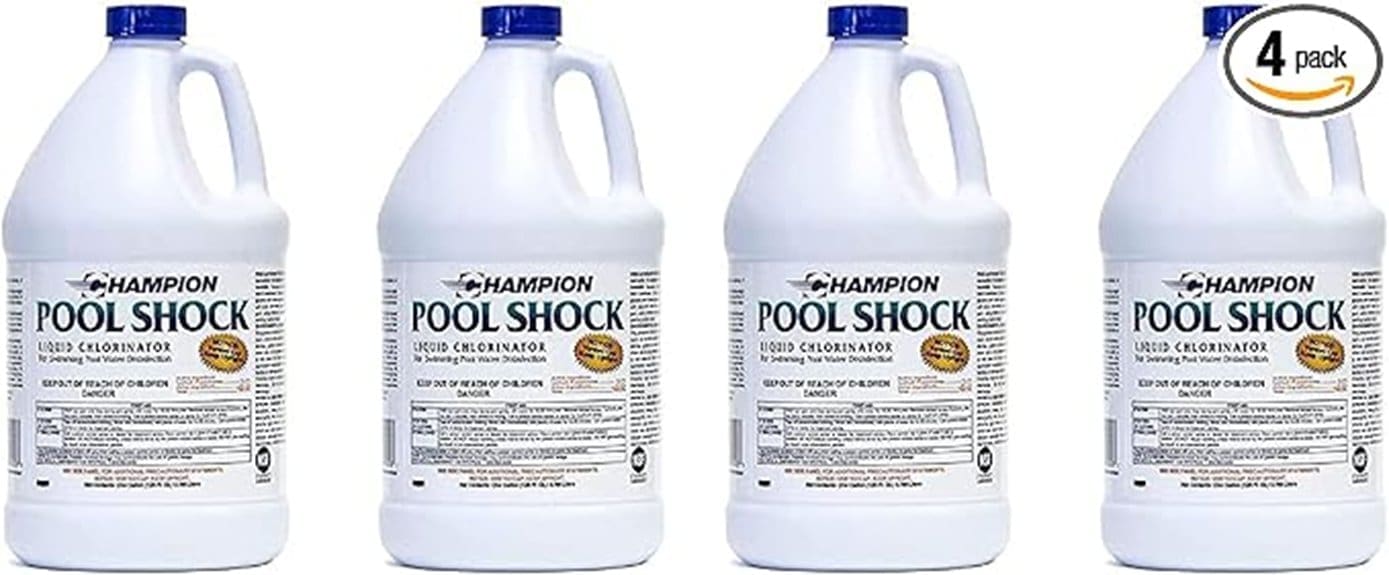
You’ll get commercial-strength shock in four 1‑gallon jugs of 12.5% sodium hypochlorite that’s fast at oxidizing organics, knocking down combined chlorine, and recovering cloudy or algae‑prone water. You can pour directly or dose precisely with a peristaltic pump, and it’s great for heavy bather loads or routine shock. Handle with gloves and goggles, store cool and upright, and avoid acids or incompatible metals. Keep going to see detailed dosing, safety, and alternatives.
Some Key Takeaways
- Commercial-strength 12.5% sodium hypochlorite delivers rapid shock treatment and fast recovery from cloudy or algae-prone pool water.
- Sold as four 1-gallon jugs, offering competitive per-gallon value and reduced single-use plastic waste.
- Can be poured directly or dosed via peristaltic metering pump for precise, repeatable chlorine addition.
- Effective at quickly oxidizing organics and reducing combined chlorine, but repeat dosing may be needed for persistent algae.
- Requires PPE, cool shaded storage, and avoidance of acids or incompatible metals; use HDPE-compatible fittings and follow disposal rules.
Champion Pool Shock Liquid Chlorinator : Quick Verdict and Who It’s Best For
Although it’s a commercial-strength product, Champion Pool Shock Liquid Chlorinator is straightforward to use: you get four one-gallon jugs of 12.5% sodium hypochlorite that disinfect and shock pools quickly. You’ll appreciate fast results when you need immediate disinfection or to recover a cloudy swim environment. It’s best for operators who want commercial-grade effectiveness without complex setup; you can pour directly or use a peristaltic metering pump for precise dosing. Consider pool suitability—residential and public pools with heavy bather load or algae issues benefit most. You’ll find it efficient, concentrated, and practical for routine shock treatments. For homeowners who enjoy their outdoor spaces, pairing liquid chlorine with proper maintenance and chlorine tablet care can help keep your pool sparkling longer.
How the 12.5% Sodium Hypochlorite Formula Performs in Real Pools
When you dose a pool with Champion’s 12.5% sodium hypochlorite, you’ll see fast reduction in free chlorine demand and rapid oxidation of organic contaminants, making it effective for shock treatments and quick recovery from cloudy or algae-prone water. You’ll notice strong oxidation efficiency—bathers and debris don’t slow its action—and measurable drops in combined chlorine after treatment. It delivers consistent algae control when used at recommended levels, though persistent blooms may need repeat dosing. Residual stabilization chlorine demand is moderate; you should monitor residuals and adjust stabilizer or booster doses accordingly to maintain ongoing protection and clear water. Homeowners should pair shock treatments with regular maintenance routines to keep outdoor pool areas sparkling.
Step-by-Step Use and Dosing Tips (Pouring vs. Metering Pump)
Before you treat the water, decide whether you’ll pour directly or use a peristaltic metering pump, since each method changes how you measure, dilute, and distribute the 12.5% sodium hypochlorite for effective shock treatment. If you hand dose, calculate gallons and add evenly around the deep end, then brush to aid distribution; this is fast for spot shocks and algae prevention. If using a metering pump, set flow rate and perform pump calibration with a test run, noting mL/min and runtime to match target ppm. Recheck free chlorine after dosing and adjust future doses based on results. For routine monitoring and choosing the right test supplies, consider simple at-home test kits to keep your pool water safe and balanced test kits.
Safety, Storage, and Chemical Compatibility You Must Know
Now that you’ve chosen pouring or metered dosing for the 12.5% sodium hypochlorite, focus on handling and storage to keep yourself and the pool safe. Wear personal protective gear—chemical-resistant gloves, goggles, and apron—whenever you pour or service pumps. Store upright in a cool, shaded area; maintain recommended storage temperature to slow decomposition and off-gassing. Check material compatibility: avoid aluminum, brass, and certain plastics; use HDPE containers and compatible tubing for metering pumps. Keep containers sealed, ventilated, and away from acids or organics. Follow local disposal regulations for leftover solution and rinsates to prevent environmental harm. Consider using proper storage and labeling practices recommended for pool chemical storage containers.
Price, Packaging (4×1 Gal), and Buying Alternatives for Similar Needs
Although prices vary by retailer and region, you can expect the Champion Pool Shock Liquid Chlorinator (4×1 gal) to be priced competitively with other commercial 12.5% sodium hypochlorite pool shocks, often offering better per-gallon value than single-gallon retail bottles. You’ll appreciate the four 1-gallon jugs for immediate use and easy storage; the packaging balances portability and reduced plastic waste versus many single units. For affordability comparison, check unit cost, shipping, and bulk discounts. Consider bulk alternatives—larger drums or concentrated formulations—if you manage multiple pools, but weigh handling, dosing equipment, and storage requirements. Homeowners who value low-maintenance outdoor spaces will find it pairs well with automatic pool vacuums for effortless pool care.
Some Questions Answered
Is This Safe for Saltwater Pools With a Chlorine Generator?
Yes — you can use it, but you should be cautious. Saltwater compatibility is generally acceptable because it’s standard sodium hypochlorite, yet Generator interaction can raise chlorine levels quickly and stress cell components. You’ll want to add it while the generator’s off, monitor free chlorine, and avoid overdosing. Test and stabilize levels before restarting the generator, and follow manufacturer guidance to prevent corrosion or warranty issues.
Will It Bleach Swimsuits or Pool Liners?
Yes — there’s a bleach risk to swimsuits and pool liners if you overuse it. You’ll avoid fabric discoloration by following dosage instructions, allowing full dilution before swimming, and rinsing suits after exposure. For liners, maintain proper total chlorine and pH to prevent concentrated contact. Use controlled dosing (a metering pump helps) and store jugs properly. Regular testing and conservative treatment lower the chance of permanent staining or fading.
How Long After Dosing Can Pets Access Treated Water?
You should wait until chlorine levels return to a safe range before allowing pets access; typical waiting time is 24 hours after dosing. Test the pool water and confirm free chlorine is near normal (1–3 ppm) and pH is balanced. If you used higher shock doses for algae or contamination, extend waiting time and retest. When readings are safe, you can confidently let pets access treated water without undue risk.
Can I Mix It With Other Pool Chemicals During Treatment?
No, you shouldn’t mix it directly with other pool chemicals. Chemical compatibility matters: sodium hypochlorite can react violently with acids, ammonia, algaecides, and some stabilizers. Practice careful treatment sequencing: add the chlorinator separately, allow full dispersion and measured residuals before introducing other products. If you’re unsure, test free chlorine and pH, wait recommended dwell times, or consult product labels and a pro to avoid dangerous reactions and reduced effectiveness.
Does It Void Pool Equipment Warranties?
It can, depending on your equipment and manufacturer compliance; check your warranty implications before widespread use. Using a 12.5% sodium hypochlorite shock like this may be allowed if you follow manufacturer compliance guidelines for concentration, dosing, and application. If you ignore instructions or mix incompatible chemicals, you risk voiding warranties on heaters, pumps, or liners. Always document procedures and consult both equipment manuals and the chlorinator’s directions to protect coverage.