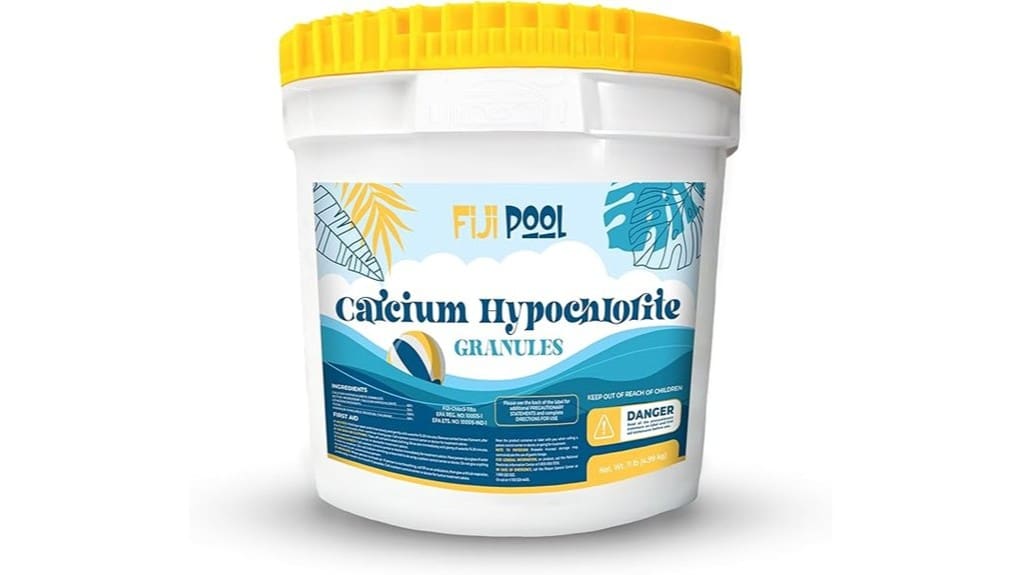
Fiji Pool’s 68% calcium hypochlorite granules give you fast, high‑strength shock for reliably raising free chlorine by about 5–10 ppm in medium to large pools. You’ll get rapid microbial kill and good algae control when you broadcast granules with the pump running and brush settled areas. Monitor pH, alkalinity, and calcium hardness to prevent corrosion, scale, or staining. Use PPE, keep granules dry, and avoid mixing with other chemicals; continue for detailed dosing, compatibility, and troubleshooting.
Some Key Takeaways
- High-strength 68% calcium hypochlorite offers fast, powerful shock treatment and rapid free-chlorine elevation for routine and emergency sanitization.
- Granules dissolve quickly with pump circulation but must be broadcast or used in skimmer carefully to avoid localized bleaching.
- Effective against algae and biofilm when combined with mechanical brushing and proper super-chlorination dosing.
- Adds calcium hardness and is a strong oxidizer; monitor hardness, pH, and use PPE while avoiding mixing with acids or ammonia.
- Best for medium-to-large pools and weekly shocks; store dry in a cool, ventilated area and check material compatibility.
Quick Verdict and Who Should Buy Fiji Pool Calcium Hypochlorite Granules 68
If you need a fast-dissolving, high-strength pool sanitizer for routine shock treatments and algae control, Fiji Pool Calcium Hypochlorite 68% delivers concentrated available chlorine in an easy-to-use granular form. You’ll get rapid free-chlorine elevation, effective algae and bacterial control, and predictable decay when water chemistry is balanced. You should buy it if you manage medium-to-large pools, perform weekly super-chlorination, or need a compact 11 lb supply for periodic shocks. Check pool compatibility for plaster, vinyl, and metal fittings and maintain pH/alkalinity to avoid corrosion. Expect a faint chemical scent profile; not perfumed, just functional. Homeowners who enjoy their outdoor spaces will appreciate products designed for shock treatments and routine pool maintenance.
How to Dose and Apply 68% Calcium Hypochlorite for Regular Shock and Skimmer Use
When dosing Fiji Pool Calcium Hypochlorite 68% for routine shock or skimmer application, run the filter pump and calculate the required amount—typically 10–20 oz per 10,000 gallons for a super‑chlorination target of ~5–10 ppm—and distribute granules evenly to avoid localized high concentrations. For direct dosing, perform evening dosing to reduce UV loss, broadcast granules around perimeter with pump on, and brush areas where granules settle. For skimmer dosing, clean skimmer first, then pour granules slowly into skimmer throat using gradual addition to prevent accumulation and gas spikes. Test free chlorine before allowing swimmers; adjust per readings. These calcium hypochlorite granules are an essential part of your pool opening chemical kit and help ensure water is safe and clear for the season, especially when addressing pool opening.
Performance: Sanitation, Algae Control, Dissolution Speed, and Water Effects
Having covered dosing methods, let’s examine how Fiji Pool Calcium Hypochlorite 68% performs for sanitation, algae control, dissolution speed, and effects on water chemistry. You’ll get rapid microbial kill due to high available chlorine; chlorine stability depends on correct pH and regular dosing. Granule uniformity guarantees predictable dosing and consistent dissolution kinetics, minimizing localized overdosing. For algae control, combine super-chlorination with mechanical brushing to improve surface interaction and remove biofilm. Dissolution is fast when distributed with pump circulation; settled granules should be brushed to avoid bleaching or focal high-chlorine zones. Expect calcium contribution; monitor hardness and adjust accordingly. For maintaining optimal filter performance, also select the appropriate sand filter media for your system and pool use.
Safety, Handling, Storage, and Compatibility With Pool Equipment and Chemicals
Because calcium hypochlorite is a strong oxidizer and delivers high available chlorine, you must handle it with care: wear chemical-resistant gloves, eye protection, and a dust mask; avoid inhalation and skin contact; keep granules dry and never mix with acids, ammonia, or other pool chemicals in concentrated form. You should store containers upright in a cool, well-ventilated, segregated area away from organics and combustibles. Use dedicated, corrosion-resistant tools and label secondary containers. Follow Personal protective equipment protocols during dosing. In case of exposure, implement Emergency first aid procedures and seek medical attention. Inspect equipment compatibility; avoid rubber seals and incompatible metals. Store pool chemicals in segregated storage and use purpose-built containers designed for outdoor use.
Common Problems and Troubleshooting: Cloudy Water, Stains, Over-Chlorination, and Monitoring
If your pool turns cloudy, shows stains, or tests high for chlorine, start with targeted diagnostics: check free and combined chlorine, pH, total alkalinity, and calcium hardness, then inspect the filter, circulation, and recent chemical additions. Determine cloudy causes: organic load, particulate, high calcium, or metal precipitate. For over-chlorination, aerate, run the filter, and use sodium thiosulfate only if immediate reduction is required. For stains, test for metals and chelate or acid-wash localized areas; brush after shock to aid stain prevention. Monitor with reliable test kits daily after treatment and adjust dosing per water balance. Also consider regular testing with pool test strips to maintain clear, balanced water.
Some Questions Answered
Is This Product Safe for Vinyl or Fiberglass Pool Liners?
Yes — you can use it with vinyl or fiberglass liners if you follow precautions. You’ll protect surface compatibility and minimize color fading by dissolving granules fully, avoiding concentrated contact, keeping free chlorine within recommended shock ranges, and balancing pH/alkalinity/calcium hardness. Don’t pour into skimmer near liners or let granules sit on surfaces. Test chlorine before swimming and brush surfaces after treatment to prevent staining and localized bleaching.
Can It Be Used in Saltwater Pools With Salt Chlorinators?
Yes — you can use it, but cautiously: Saltwater compatibility is limited because added calcium hypochlorite raises free chlorine without interacting with the salt cell. You’ll create high available chlorine that may cause accelerated electrolytic effects on the chlorinator’s cell and metal components. Reduce dosage, monitor chlorine and cyanuric acid, and pause feed to the salt chlorinator until residuals normalize. Test water frequently to prevent corrosion and preserve cell life.
How Long Do Opened Granules Remain Effective?
Opened granules remain effective for about 6–12 months if stored properly. For best shelf stability, keep the container tightly sealed, dry, and cool; avoid humidity, heat, and organic materials. Store in original opaque packaging or an airtight, labeled container in a ventilated, shaded area away from combustibles. Use storage tips like silica desiccant packs and minimal air exposure; discard if you notice caking, odor, or discoloration.
Does Granule Residue Affect Pool Filter Cartridges?
Yes — granule residue can cause cartridge clogging if undissolved particles reach the filter. You should avoid pouring undiluted granules directly onto cartridges or into skimmer baskets where buildup can accumulate. Run the pump during dosing, dissolve granules in a bucket when possible, and brush settled areas to prevent transport of solids. Regularly inspect and backwash or replace cartridges to remove granule buildup and maintain peak filtration performance.
Are There Shipping Restrictions for This Chlorine Concentration?
Yes — you’ll face shipping restrictions. Hazmat transport rules classify 68% calcium hypochlorite as a hazardous oxidizer; carriers require proper packaging, labeling, SDS, and limits per Regulatory limits (DOT, IATA, IMDG). You’ll need authorized carriers and may be barred from air cargo or limited by quantity-per-package rules. Check current federal and international regulations and carrier policies before shipment to guarantee compliance and avoid refusal or penalties.