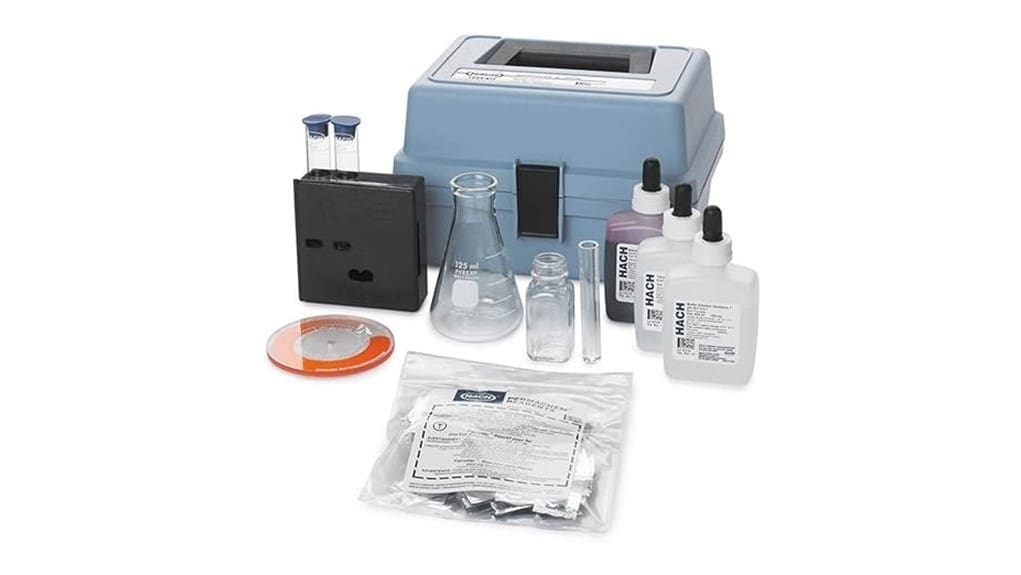
You’ll find the Hach HA-77 a practical, portable color-disc kit for measuring total hardness and dissolved iron, sized for about 100 tests. It’s meant for homeowners and field techs who need routine verification rather than lab-grade precision. Setup is simple: check reagents, calibrate with standards, collect a clean sample, add reagents in order, then match colors. Results are reliable with careful timing and lighting; continue for full usage tips, limits, and comparisons.
Some Key Takeaways
- Reliable color-disc assays for total hardness and dissolved iron, suitable for routine homeowner and field checks.
- Kit includes reagents and apparatus for about 100 tests, lowering per-test cost versus single-use strips.
- Accuracy is good for field screening but not laboratory-grade; precise timing, mixing, and color matching matter.
- Calibration with supplied standards and replicates helps detect drift and improve result consistency.
- Reagents shelf life 1–2 years sealed, shorter once opened; store cool, dry, and follow disposal guidelines.
What This Kit Tests and Who Should Use the Hach HA-77
While it measures only two parameters, the Hach HA-77 gives you targeted, reliable results for total water hardness and dissolved iron concentration using a color-disc method. You’ll find the kit suited for routine homeowners maintenance and for field technicians needing portable verification. It contains reagents and apparatus sufficient for 100 tests, presented in a compact plastic case for transport. You’ll follow color-matching procedures to quantify calcium/magnesium hardness and soluble iron with repeatable accuracy. The device isn’t for all-encompassing multi-parameter analysis, but it’s precise where it counts: routine hardness control and iron troubleshooting in domestic and field settings. This makes it a handy option for those wanting simple, dependable testing for their outdoor pool maintenance.
Quick Setup and Step-by-Step Hardness and Iron Test Workflow
Gather your kit, fresh reagents, and a clean sample container before you begin to guarantee accurate readings. Inspect reagents, check expiry, and review safety precautions. Perform the calibration procedure using the supplied standard solutions and the color disc alignment method. Rinse sampling container with source water, collect the sample, and fill to the indicated volume. For hardness, add reagents in the prescribed order, mix, and compare to the hardness scale on the disc. For iron, add indicator, allow color development, then rotate the disc to match color. Record results, note lot numbers, and dispose of waste per instructions. Consider verifying measurements against pool measuring tapes and other tools used when maintaining outdoor water features.
Real-World Accuracy and Ease: Results, Limiting Factors, and Tips
Because field conditions and user technique directly affect results, you should expect the HA-77 to deliver reliable—but not laboratory-grade—hardness and iron readings when used correctly. You’ll obtain consistent values if you follow timing, mixing, and color-matching procedures precisely. Expect ± small systematic deviation versus instrumented methods; account for calibration drift by checking known standards periodically. Minimize field variability by using clean vials, consistent lighting, and stable temperatures. For iron, avoid sample turbidity and preserve samples promptly. Record replicate measurements to identify outliers. These steps sharpen accuracy and make the HA-77 practical for routine on-site screening. Homeowners can easily integrate these kits into seasonal maintenance routines by testing weekly and after heavy rainfalls to protect their pools and outdoor spaces pool water testing.
What’s in the Box, Reagent Lifespan, and Test Capacity (100 Tests)
To make those field precautions practical, you’ll also want to know exactly what comes with the HA-77, how long its reagents remain reliable, and how the 100-test capacity is allocated. The kit arrives in a hard plastic carrying case containing color discs, reagent bottles, droppers, and instructions; reagent volumes are sized for roughly 100 determinations split between hardness and iron assays. Reagent lifespan depends on unopened shelf life and storage conditions — typically 1–2 years sealed, shorter once opened. Note packaging sustainability is limited by plastic, so plan disposal and store reagents cool, dry, and away from sunlight. Homeowners should also consider safe chemical storage practices for outdoor spaces to minimize risks and prolong reagent life.
Value Comparison: Hach HA-77 vs. Other Portable Hardness/Iron Options
When you compare the Hach HA-77 to other portable hardness/iron testers, focus on three objective axes: accuracy and detection range, per-kit test capacity and reagent stability, and total cost of ownership (purchase price plus cost per test and replacement reagents). You’ll find HA-77 offers reliable color-disc iron readings and 100-test reagent supply, which lowers per-test cost versus single-use strips. In a strict cost comparison, its upfront price and reagent longevity often beat cheaper kits that need frequent replacements. Match that to your user preferences for portability, repeat testing frequency, and accuracy to decide if HA-77 is the best value. Homeowners who enjoy outdoor spaces often prefer simple testing solutions that keep pool water clear, such as pool test strips.
Some Questions Answered
Can This Kit Measure Iron in Saltwater or Only Freshwater?
You can use it in saltwater, but saltwater interference can affect accuracy unless you adjust for matrix differences. You’ll need to validate results against standards or perform a marine calibration to correct for ionic strength and chloride effects. Proceed methodically: run blanks, spike recoveries, and compare to a calibrated lab method. If corrections are applied and validation passes, the kit will provide useful iron estimates in marine samples.
Are Replacement Reagents Sold Separately for This Model?
Yes — replacement reagents are sold separately for this model. You can order reagent packs compatible with the HA-77/Barnant 202300 to replenish the chemicals after the included 100 tests. Check the reagent shelf life before purchase and upon receipt; expired or near-expired reagents degrade accuracy. Store reagents per manufacturer instructions to maximize usable life. Keep lot numbers and purchase dates for inventory and quality control.
Is the Plastic Carrying Case Waterproof or Impact-Resistant?
No — the plastic carrying case doesn’t advertise waterproof claims or certified drop protection. You’ll find a basic molded case that protects components from light moisture and casual knocks, but it isn’t rated for immersion or heavy impacts. If you need true waterproofing or rugged drop protection, you should plan to add a sealed, impact-rated container or a hard case with foam inserts to guarantee reliable field durability and safe transport.
Does Temperature Affect Test Results Significantly?
Yes — temperature can affect results. You should control temperature because reaction kinetics change with temperature, altering reagent performance and color development. Maintain temperature stability during sampling and testing to minimize variability; avoid extreme heat or cold and let samples equilibrate to the kit’s recommended range. If you can’t, note the sample temperature and expect potential bias; repeat tests at controlled temperatures for verification.
Is There a Digital Reader Compatible With This Color Disc Kit?
No commercial digital reader is specifically made for this kit, but you can use a digital adapter plus a smartphone app to digitize color-disc results. You’ll align the disc or sample in the adapter, capture standardized photos, and let the app compare RGB values to the disc scale. That approach improves repeatability, reduces subjective interpretation, and requires verifying calibration and lighting control for accurate hardness and iron readings.