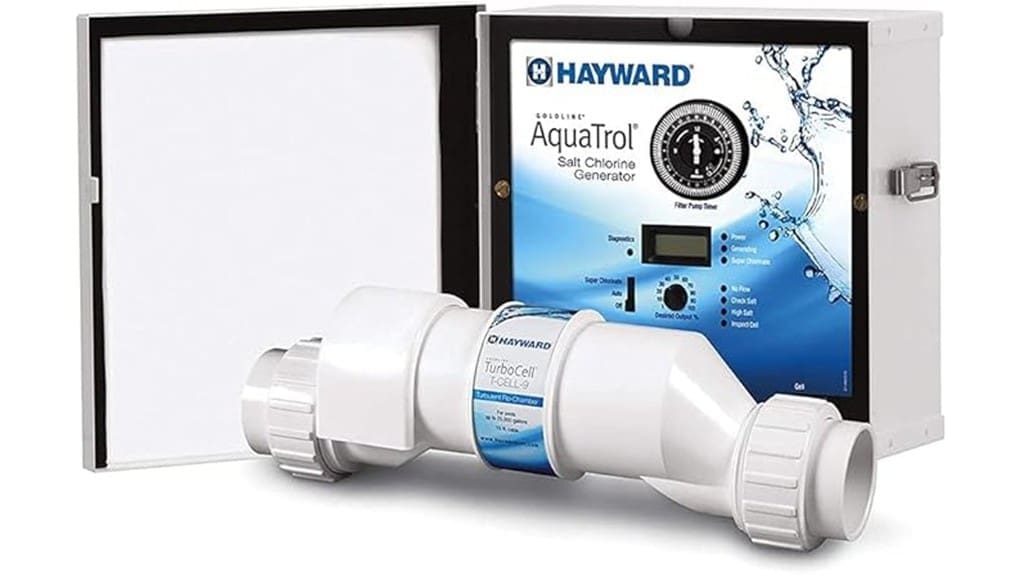
You’ll get a plug‑and‑play salt chlorinator (TurboCell T‑CELL‑5) that automates sanitizing for above‑ground pools up to 18,000 gallons and cuts daily chemical handling. It mounts in the return line, uses included fittings and a straight‑blade cord, and keeps steady, adjustable chlorine production for clearer, softer water. Expect periodic cell replacement (3–5 years) and basic maintenance. It’s ideal if you want convenience over manual dosing — keep going to see details on setup and costs.
Some Key Takeaways
- Automates chlorination for above-ground pools up to ~18,000 gallons using the TurboCell (T-CELL-5) for steady, adjustable chlorine output.
- Easy, minimally invasive install: mounts in return line, includes return jet fittings, hose adapters, and straight‑blade power cord (needs GFCI).
- Delivers clear, softer-feeling water and stable residuals, responding predictably to bather load and temperature changes.
- TurboCell lifespan ~3–5 years; expect replacement costs typically $250–$450 and routine plate inspections for corrosion.
- Best for medium-sized pool owners who want plug‑and‑play convenience; less ideal for infrequent users or those avoiding upfront costs.
What the Hayward W3AQ-TROL-RJ AquaTrol Includes and Who It’s For
The Hayward W3AQ-TROL-RJ AquaTrol comes ready to drop into an above-ground pool setup and includes the TurboCell (T-CELL-5), return jet fittings, and a straight-blade power cord and outlet—everything you need for installation on pools up to 18,000 gallons. You’ll find the included installation accessories thoughtfully chosen to minimize extra purchases. You’ll appreciate that the system automates chlorination, eliminating manual dosing. User demographics skew toward owners of medium-sized above-ground pools who want low-maintenance, gentler water and who prefer plug-and-play systems over complex retrofits. Overall, it’s a practical, cost-effective choice for convenience-focused pool owners. It’s an especially good fit for homeowners looking to keep your above-ground pool warm and enjoy their outdoor spaces longer each season.
How the AquaTrol Installs and Integrates With Above‑Ground Pools
Getting your AquaTrol up and running is straightforward: you’ll mount the TurboCell in the return line, connect the supplied return jet fittings to tie into your above‑ground circulation, and plug the straight‑blade cord into a nearby outlet. You’ll appreciate easy mounting—brackets and fittings align with common return ports. If your layout uses flexible plumbing, hose adapters simplify connections. Mind electrical placement: the cord needs a GFCI-protected receptacle within reach, avoiding extension cords. Verify flow orientation marked on the cell so water passes correctly through the TurboCell. Overall integration is tidy, minimally invasive, and compatible with typical above‑ground setups. These smart pool controllers help homeowners remotely monitor and manage their outdoor pools with automated features and connectivity smart pool controllers.
Real‑World Performance: Chlorine Production, Water Feel, and Maintenance
While you’ll notice the AquaTrol quietly produces a steady stream of chlorine, its real-world output is best judged by consistency and ease of adjustment: it keeps typical above‑ground pools up to 18,000 gallons at stable residuals with minimal intervention, responds predictably to changes in bather load or heat, and lets you dial production up or down without juggling tablets or liquid chemicals. You’ll see strong chlorine efficiency—consistent residuals, improved water clarity, and softer water that’s gentler on skin and fabrics. Monitor cell plates for salt corrosion and follow maintenance intervals, and respect electrical safety when servicing or installing the unit. This makes it a convenient choice for homeowners who appreciate simple, effective shock treatment options for maintaining sparkling pool water.
Costs, Lifespan, and When the TurboCell (T‑CELL‑5) Needs Replacement
Because cell wear determines both ongoing costs and peak performance, you should plan for periodic TurboCell replacement rather than a one‑time purchase. Expect the T‑CELL‑5 to last roughly 3–5 years depending on usage, water balance, and seasonal run time; that’s your baseline for replacement timing. For budgeting, use conservative cost estimates: cells commonly range from $250–$450 retail plus occasional shipping and installation if you don’t DIY. You’ll monitor output decline and higher salt/inspect alerts as triggers to replace. Factoring cell life into annual ownership gives realistic operating costs and avoids sudden sanitizer failures. Many homeowners pair ozone or chlorine systems with ozone pool care equipment to refresh their outdoor oasis and reduce chemical use.
Pros, Cons, and Who Should Buy the AquaTrol
If you want straightforward, low‑maintenance sanitizing for an above‑ground pool up to 18,000 gallons, the Hayward AquaTrol delivers reliable automatic chlorination with minimal day‑to‑day effort. You’ll get consistent sanitization, softer water, and reduced handling of chemicals—clear pros that improve your user experience and produce ongoing cost savings versus constant chlorine purchases. Cons include upfront expense, occasional TurboCell replacement, and basic installation needs. Buy the AquaTrol if you value convenience, gentler water, and lower operating hassle. Skip it if you rarely use your pool, can’t afford the initial outlay, or prefer manual chemical control. Consider pairing it with UV sanitizers for added protection and reduced chemical reliance.
Some Questions Answered
Can the Aquatrol Operate on a Timer or Connect to Pool Automation?
Yes — you can integrate the AquaTrol with a timer and pool automation. You’ll use timer integration for basic on/off cycles, but for smarter control and synchronized functions you’ll rely on automation compatibility with common pool systems. You’ll want to confirm voltage and wiring matches your controller, and may need a relay or transformer. Overall, it’s compatible but check installation instructions or consult a pro to make certain safe, reliable hookup.
Is the Unit Safe to Use With Vinyl Pool Liners?
Yes — you can use it with vinyl pool liners. The system maintains consistent chlorine levels that reduce harsh chemical swings, so liner compatibility is high when you monitor salt and sanitizer levels. You’ll want to avoid excessive sanitizer or imbalanced pH, since chemical interactions (high chlorine, low pH) can damage liners. Follow manufacturer salt, pH, and stabilizer guidelines, and inspect the liner periodically to guarantee long-term protection.
What Salt Type and Purity Are Recommended for Optimal Performance?
You should use clean, high-purity solar salt or food grade salt (sodium chloride) with minimal additives for peak performance. Don’t use rock salt, iodized, or salt with anti-caking agents. Aim for 99%+ purity to prevent buildup on the TurboCell and maintain consistent chlorine output. Regularly test salt levels and cell condition; using recommended salt types reduces corrosion, sensor fouling, and maintenance while extending system life.
Does the System Require a Dedicated Electrical Circuit or GFCI?
Yes — you’ll need a dedicated circuit and a GFCI requirement for safe operation. Install the unit on its own circuit to prevent overloads and guarantee stable power to the TurboCell and controls. Use a GFCI-protected outlet or breaker as required by code to protect against ground faults near water. Follow local electrical codes and Hayward’s installation instructions, and have a qualified electrician complete the hookup for compliance and safety.
Are Replacement Turbocells Covered Under Hayward’s Warranty?
Yes — Hayward covers replacement TurboCells under its warranty, but coverage and warranty duration depend on the specific model and purchase date. You’ll need to follow Hayward’s replacement process: register the product, provide proof of purchase, and contact Hayward or an authorized dealer for a warranty claim. If approved, they’ll authorize a replacement or repair per the warranty terms. Check your manual or Hayward site for exact duration and conditions.