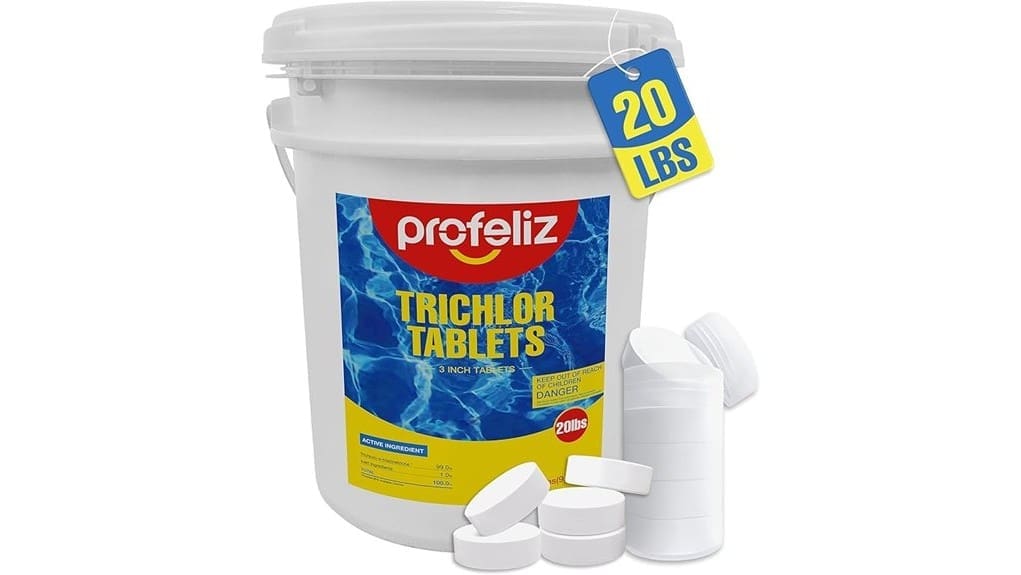
PROFELIZ 3‑inch chlorine tablets give you a compact, high‑strength trichloro option (~99% active, ~90% available chlorine) that dissolves slowly for predictable weekly residuals when used in floaters or feeders. You’ll calculate tablets by pool volume, avoid skimmer placement, and monitor free chlorine, pH, alkalinity and cyanuric acid daily to maintain efficacy and limit equipment wear. Handle with gloves, store dry, and expect reliable algae control; keep going for detailed dosing and safety tips.
Some Key Takeaways
- Tablets are ~99% trichloro-s-triazinetrione, delivering ~90% available chlorine for strong, long-lasting sanitization.
- Slow-dissolving 3″ tablets provide up to a week of steady chlorination when used in floaters or feeders.
- They raise cyanuric acid and acidify water; monitor and adjust pH and stabilizer levels regularly.
- Use skimmer-safe feeders, avoid direct skimmer placement, and dose based on pool volume and target free chlorine.
- Handle and store sealed in a cool, dry place; wear gloves/eye protection and beware moisture-sensitive bulk packs.
Is PROFELIZ 3-Inch Chlorine Right for Your Pool?
Determine fit by matching the tablet’s chemistry and performance to your pool’s needs: PROFELIZ 3-inch tablets are 99% trichloro-s-triazinetrione with 90% available chlorine, slow-dissolving for up to a week, and suitable for both above- and in-ground pools; use them if you need steady, long-lasting chlorination compatible with skimmers, floaters, and most chlorinators. You’ll assess suitability by measuring weekly chlorine demand, pH impact from trichlor’s acidic residue, and cyanuric acid contribution affecting stabilizer levels. For routine dosing, calculate tablet count per volume, monitor pH drift, and adjust alkalinity or add stabilizer to maintain target sanitizer efficacy. Consider routine shock treatments and proper application timing to maintain water clarity and sanitization, especially during heavy use or hot weather when shock treatment is recommended.
What’s in These Tablets and How Strong Is the Chlorine?
Although PROFELIZ tablets look simple, they’re chemically concentrated: each 3-inch tablet is nearly pure trichloro-s-triazinetrione (about 99% active ingredient) and delivers roughly 90% available chlorine by weight, so you’ll get a high, steady source of hypochlorous acid precursors as the tablet hydrolyzes. You’ll handle a compact, high chlorine concentration source that releases oxidizing species predictably. Measure dosage by pool volume and test residual free chlorine regularly. Expect minimal inert filler, consistent mass per tablet, and long shelf stability when kept dry. Follow label safety for handling, storage, and compatible dispensing devices to control dose accurately. Test kits help homeowners maintain safe pool water and verify chlorine levels routinely.
Real-World Performance: Sanitizing, Algae Control, and Dissolution Time
Test PROFELIZ tablets by monitoring free chlorine residuals, algae presence, and tablet mass loss over typical pool cycles to assess sanitizing efficacy and dissolution behavior. You’ll measure chlorine residue daily with calibrated kits, log tablet hardness before deployment, and record mass loss to derive dissolution rate. Compare algae counts and visible growth against baseline controls to quantify control performance. Note sensor interference risks: stabilizer and particulate may bias automated ORP probes, so cross-validate with manual titration. Track water balance (pH, alkalinity, cyanuric acid) since it alters active chlorine availability and tablet dissolution; adjust dosing based on empirical residual targets. Maintain proper pH balance in the pool to ensure clearer, safer water and consistent tablet performance.
How to Use PROFELIZ 3-Inch Tablets Safely and Effectively
Having monitored residuals, dissolution, and algae response, you’ll now apply those findings to safe, effective tablet use. Inspect protective packaging; wear gloves and eye protection to maintain pool safety. Calculate dose from pool volume and target free chlorine; perform dosing calculations before adding tablets. Use a floater or chlorinator to control contact time; avoid placing tablets directly in skimmer to prevent equipment corrosion. Schedule application timing during low bather load, preferably evening, to reduce UV loss and shock requirements. Store unused tablets in original sealed container, cool dry area; keep away from combustibles and children to preserve potency and safety. For homeowners looking to keep their outdoor spaces inviting, consider combining tablet use with a pool clarifier to improve water clarity and reduce maintenance.
Pros, Cons, and Who Should Buy the 20 Lb Pack
If you manage a medium to large pool or maintain multiple pools, the 20 lb PROFELIZ 3-inch tablet pack delivers concentrated, cost-effective chlorination with predictable dissolution and 90% available chlorine; it reduces refill frequency and simplifies chemical logistics while requiring proper storage and dosing protocols to avoid over-chlorination or equipment corrosion. Pros: strong biocidal efficacy, slow-release longevity, compatibility with feeders, and clear Cost savings per pound. Cons: high active chlorine requires careful handling, potential for equipment wear if overdosed, and Storage concerns due to moisture and proximity to incompatible chemicals. Buy if you need bulk, predictable dosing, and lower unit cost. Pools will also benefit from regular testing and maintenance with chlorine tablets to ensure safe sanitizer levels and prevent algae.
Some Questions Answered
Are These Tablets Safe for Saltwater Pools?
Yes — you can use them, but you should be cautious. These tablets offer saltwater compatibility for chlorination systems, yet they add stabilized trichlor which raises cyanuric acid and can affect electrolysis cell performance. Monitor free chlorine, cyanuric acid, and pH frequently. Reduce tablet dosing near the salt cell to limit scale buildup and potential electrolysis concerns. Follow manufacturer recommendations for salt cells and adjust maintenance to avoid premature cell degradation.
Will PROFELIZ Tablets Stain Pool Liners or Surfaces?
Unlikely if you use them correctly: PROFELIZ tablets won’t normally stain liners or surfaces when dosing, circulation, and pH are controlled. For staining prevention, avoid tablet contact with vinyl liners, plaster, or metal by using a floater or chlorinator and keeping tablets off pool walls. Test total chlorine, combined chlorine, and cyanuric acid regularly. Confirm liner compatibility with manufacturer specs and rinse any dissolved residues promptly to prevent localized discoloration.
Can I Use These Tablets With a Metal-Based Algaecide?
Yes — you can, but exercise caution with metal interaction. Chlorine tablets release high available chlorine that can react with metal-based algaecides, potentially accelerating corrosion or reducing algaecide efficacy. To minimize risk, dose chlorine and algaecide separately, avoid adding both simultaneously, and monitor metal surfaces for discoloration. Test on a small scale first, maintain recommended concentrations, and regularly check pH and chlorine residuals to optimize algae prevention.
How Should I Store Unopened Tablets Long-Term?
Store unopened tablets in a cool, dry, climate controlled area away from sunlight and heat sources. Keep them in their original sealed packaging or transfer to airtight containers made of compatible plastic or metal; label contents and date. Avoid moisture, organic materials, acids, and combustible storage. Maintain shelving off the floor and secure from children and pets. Periodically inspect packaging for damage and dispose of compromised tablets per local hazardous-waste rules.
Do These Tablets Affect Pool pH Significantly?
Yes — they’ll raise chlorine demand and slightly lower pH over time. You’ll see steady HOCl/available chlorine release from trichloro-s-triazinetrione; that increases chlorine demand while adding stabilized acid (trichloro byproducts) which exerts a mild pH buffering toward acidity. Monitor free and total chlorine and test pH daily after initial dosing; adjust alkalinity or add soda ash as needed to maintain target pH and buffer capacity.