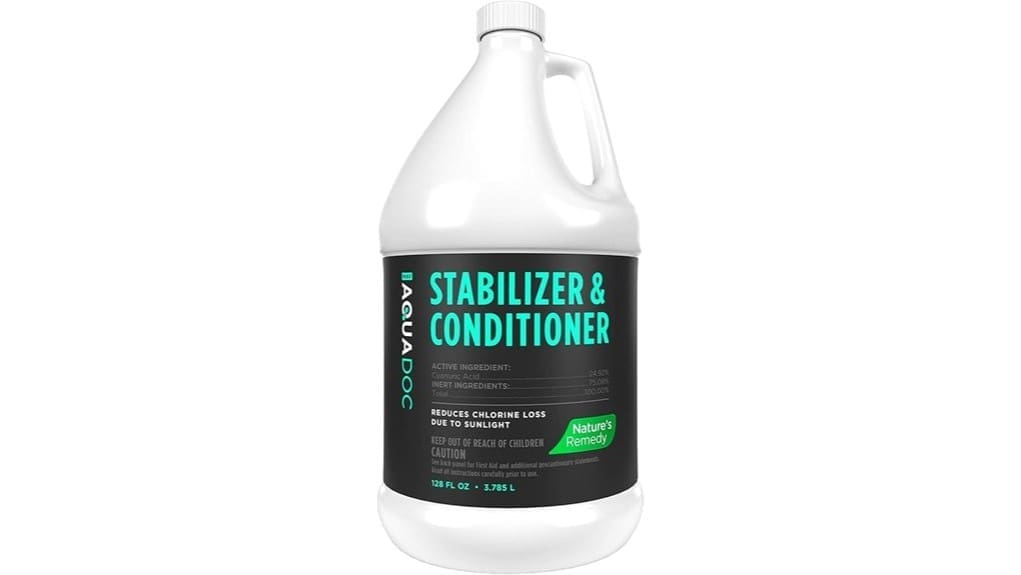
You’ll find MAV AquaDoc NR-SC binds with chlorine to slow UV-driven decay and preserve sanitizer residuals, using cyanuric acid to form a photoprotective complex that lowers chlorine consumption and supports algae control. Test CYA and free chlorine, dose per volume near return jets, and split initial shock over 24–48 hours; expect clearer water within 24–72 hours and track NTU and residuals to quantify benefit. Keep chemistry balanced and PPE on—more specifics follow.
Some Key Takeaways
- Binds with chlorine to slow UV-driven photodegradation, extending sanitizer effectiveness and reducing chlorine loss.
- Contains cyanuric acid for targeted UV protection; maintain 30–50 ppm CYA for optimal outdoor pool stabilization.
- Apply near return jets with pump running; split initial shock dose over 24–48 hours to prevent cloudiness.
- Expect improved clarity within 24–72 hours, plus reduced shock frequency and lower overall chemical consumption.
- Monitor CYA, free chlorine, pH, and alkalinity regularly to avoid over-stabilization and ensure consistent sanitizer performance.
What the MAV AquaDoc NR-SC Pool Stabilizer Does for Your Pool
When you add MAV AquaDoc NR-SC to your pool, it quickly binds with chlorine to slow its breakdown from sunlight, so your sanitizer stays effective longer and you use fewer chemicals overall. You’ll see cyanuric acid stabilize free chlorine by forming a photoprotective complex that provides targeted UV protection, reducing chlorine depletion rates. This liquid conditioner maintains consistent water balance, limits oxidizer loss, and lowers dosing frequency. By preserving sanitizer residuals, it supports reliable algae prevention and clearer water with less manual intervention. The formulation’s compatibility with all pool types guarantees predictable performance within routine maintenance protocols. Keeping your pool pH balanced is important for clearer, safer water and overall pool health.
How to Use the Liquid Stabilizer (Dosage and Timing)
Before dosing, test your pool’s cyanuric acid (CYA) level and free chlorine, then calculate the required addition to reach the target CYA (typically 30–50 ppm for outdoor pools). Measure pool volume precisely, consult NR-SC dosing chart, and convert ounces to milliliters if needed. Add MAV AquaDoc NR-SC near return jets with pump running to disperse. For initial shock raise CYA gradually—split dose over 24–48 hours to prevent clouding. For ongoing application timing use weekly or biweekly micro-doses during high-UV months. Implement seasonal dosing adjustments: increase frequency in summer, reduce in winter when sunlight and chlorine demand drop. Maintain balanced pH naturally to support healthier water and swimmer comfort by using natural pH increasers.
Performance: Does It Reduce Chemical Loss and Clarify Water?
Having established proper dosing and timing, assess performance by measuring reductions in chlorine decay and improvements in water clarity over a controlled interval. You’ll monitor free chlorine residuals at set intervals and record turbidity or NTU readings before and after application. Expect reduced evaporation of active chlorine due to cyanuric acid stabilization, yielding slower decay curves compared with untreated controls. Visually and instrumentally, you should see enhanced clarity within 24–72 hours as particulates settle and filtration efficiency improves. Quantify changes, compare to baseline, and document decreased frequency of shock dosing to validate efficacy objectively. For long-term pool health, also track stabilizer levels regularly to maintain optimal protection and avoid over-stabilization.
Compatibility and Safety: Which Pool Types and Chemicals Work Best?
If you’re managing a vinyl, concrete, fiberglass, or above-ground pool, this liquid cyanuric-acid-based stabilizer is chemically compatible with all common pool surfaces and standard sanitizers, but you should dose according to pool type and volume to avoid excess CYA buildup; follow manufacturer guidelines and measure CYA, free chlorine, pH, and total alkalinity before and after application to make certain target ranges are maintained. You’ll follow liner notes and material safety data to confirm handling, storage, and PPE. Apply incrementally, circulate for 24–48 hours, retest chemistry, and document concentrations to prevent sanitizer lock or corrosion risks. Keep your pool alkalinity balanced to support stable pH and sanitizer effectiveness, and check total alkalinity regularly.
Value and Verdict: Cost, Maintenance Savings, Warranty, and Who Should Buy
With CYA levels stabilized and chemical interactions monitored, you can now evaluate the product’s economic and operational impact. Assess cost per treatment against reduced chlorine consumption to quantify long term savings; the 128 fl oz unit treats multiple pools and lowers refill frequency. Maintenance time drops due to fewer corrective procedures, improving labor efficiency. Warranty details from MAV AquaDoc and Amazon’s 30-day return provide basic protection; consult manufacturer for specifics. Buyer profiles include residential owners with seasonal usage, commercial operators seeking predictable chemistry, and technicians aiming to streamline service cycles. You should buy if you prioritize efficiency and measurable cost reductions. The product also complements proper filtration and filter powder use to improve overall pool water clarity.
Some Questions Answered
Can This Stabilizer Be Used With Saltwater Chlorinators?
Yes — you can use this stabilizer with saltwater chlorinators. You’ll find saltwater compatibility because the active cyanuric acid stabilizes free chlorine produced by electrolysis without interfering with the cell’s function. Monitor CYA and chlorine levels frequently, since elevated CYA from liquid dosing alters target free-chlorine setpoints for effective sanitization. Adjust feed rates and test pH, alkalinity, and salt concentration to avoid unintended electrolysis effects on cell performance.
Is It Safe for Vinyl and Fiberglass Pool Surfaces?
Yes — you can use it on vinyl and fiberglass; it’s safe surfaces and liner compatibility is affirmed when dosed per instructions. You should measure cyanuric acid levels and add product gradually to avoid oversaturation. Apply to circulated water after dilution, monitor free chlorine and pH for 24–48 hours, and inspect liners for any unusual spotting. Follow manufacturer specs for concentration limits to maintain material integrity and warranty compliance.
How Long After Application Can I Swim?
You can usually swim 15–30 minutes after application once the product is fully diluted and circulated; verify pump run time and apply per label. Run your filter 1–2 hours while testing cyanuric acid and free chlorine to confirm levels are safe. If you have known skin sensitivity, wait longer and shower before re-entering. Always follow manufacturer directions and retest water chemistry before allowing swimmers.
Does It Affect pH or Alkalinity Readings?
Yes — it can influence readings. You’ll see minimal pH drift after adding the liquid stabilizer because cyanuric acid buffers free chlorine, not hydrogen ions; however, concentrated additions can temporarily lower measured pH. Alkalinity buffering remains largely unchanged at recommended doses, but large or repeated doses may require you to recheck total alkalinity and adjust with alk increaser. Always test after dosing and allow full circulation before final adjustments.
Can I Overdose and How to Correct It?
Yes — you can overdose cyanuric acid, causing excess buildup; you’ll notice reduced sanitizer effectiveness. To correct it, dilute the pool by partially draining and refilling to lower cyanuric acid concentration. Combine with treatment strategies: stop adding stabilizer, test levels frequently, use activated carbon or ion-exchange filters where applicable, and run high turnover filtration. Rebalance chlorine after dilution and monitor until cyanuric acid returns to target range.