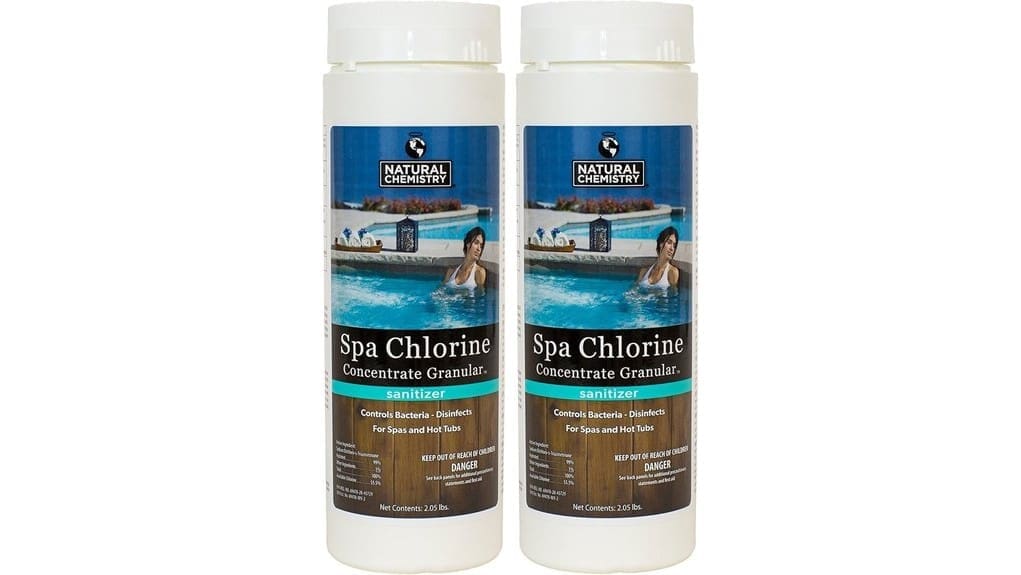
You’ll find Natural Chemistry Spa Chlorine Concentrate Granular dissolves fast and delivers concentrated available chlorine to quickly raise free chlorine to the 3–5 ppm range, making it effective for routine maintenance and shock treatments in properly circulated spas. You’ll need to measure volume, monitor pH and residuals, and use protective gear when handling the dry granules. It performs reliably against common bacteria and algae when dosed correctly, and the following sections explain dosing, safety, pros, and limitations.
Some Key Takeaways
- Fast-dissolving granular chlorine delivers rapid free chlorine for spas, reaching target levels quickly when circulated.
- Recommended dosing: maintenance 1/2 tsp per 100 gallons; shock 1 tsp per 100 gallons, retest to 3–5 ppm.
- Effective sanitizer and oxidizer against common spa bacteria and algae when residuals are consistently maintained.
- Requires pH monitoring, protective handling, dry sealed storage, and never mixing with other chemicals.
- Two-pack four-pound tubs offer economical, concentrated dosing but may emit odor during dosing and affect aroma systems.
How This Spa Chlorine Works and Who It’s Best For
Because it dissolves quickly and delivers a concentrated dose of available chlorine, this granular spa sanitizer gives you rapid control of bacteria and algae in hot tubs and spas when used as directed. You’ll rely on the oxidation process to inactivate organic contaminants and reduce microbial load; residual free chlorine maintains a measurable disinfectant level. Assess user suitability by matching concentration and dosing frequency to spa volume and bather load; it’s suitable for routine maintenance or shock treatments in properly circulated systems. You should monitor pH and test residuals regularly, and only apply according to manufacturer guidelines to guarantee efficacy and safety. For homeowners maintaining outdoor relaxation areas, consider shock treatment scheduling as part of routine pool and spa care.
Real-World Dosing, Setup, and Safety Tips for Spas and Hot Tubs
Having established how the granular sanitizer provides rapid chlorine availability and maintains free-chlorine residuals, you’ll now look at practical dosing, setup, and safety measures to apply it reliably in a spa environment. Measure spa volume precisely, then dose: maintenance 1/2 tsp per 100 gallons; shock 1 tsp per 100 gallons. Add with pump running, dispersing near return jets; wait 15–20 minutes and re-test until 3–5 ppm. Use calibrated scoops or syringes for measuring accuracy and avoid overfeeding. Always wear protective gear—gloves and eye protection—keep granules dry, store sealed, and never mix with other chemicals. Many homeowners find simple test kits useful for routine monitoring and care of outdoor spas, pools, and hot tubs, especially when following pool water test kits best practices.
Performance Check: Sanitizing, Dissolving Speed, and Algae Control
When you test Natural Chemistry Spa Chlorine Concentrate for sanitizing effectiveness, dissolving speed, and algae control, expect rapid chlorine availability and clear, measurable results when dosed and circulated correctly. You’ll see fast dissolving action in active circulation; granules integrate quickly, raising free chlorine to target 3–5 ppm per instructions. Sanitizing performance is reliable against common spa bacteria and algae when residuals are maintained and shock dosed as directed. Monitor with test strips; adjust dosing if residuals lag. Odor control is achieved by maintaining residuals and preventing combined chlorine build-up. Follow contact time and safety procedures for consistent control. For homeowners preparing their pools and spas at season start, using the right opening chemicals and procedures will help ensure a sparkling start.
Pros, Cons, and Comparisons to Other Spa Chlorines
Although no single sanitizer fits every user, Natural Chemistry Spa Chlorine Concentrate offers clear advantages and trade-offs you should weigh against alternatives. You’ll appreciate rapid dissolution, predictable dosing, and reliable bacteria/algae control for spas. Compared with salt alternatives, it provides faster shock capability and simpler residual management, though it lacks the softer feel some users report with salt systems. Limitations include potential odor during dosing and incompatibility with certain scent additives or aroma systems. You’ll need careful handling and storage due to concentrated granular form. Overall, you can expect robust disinfection performance but must consider operational preferences and accessory compatibility. It’s sold alongside other pool care products on websites that focus on chlorine tablet options for homeowners who enjoy their outdoor spaces, including guidance on pool chlorine tablet maintenance and selection.
Value, Packaging, and Final Buying Recommendation
Because the two-pack of Natural Chemistry Spa Chlorine Concentrate gives you four pounds of quick-dissolve granular sanitizer, you’ll get a compact, cost-effective supply that fits typical spa maintenance cycles without frequent repurchasing. You’ll note affordability assessment favors this concentrated format for small to medium spas, reducing cost per treatment versus single-use sachets. Packaging durability is acceptable: sealed plastic tubs resist moisture but need resealing after each use to prevent clumping. For technical buyers, performance meets sanitizer specs when dosed correctly. Recommendation: buy if you want reliable, economical maintenance chlorine and manage storage to preserve potency. If you enjoy maintaining outdoor amenities, this product complements other saltwater pool equipment and supplies homeowners use to keep their relaxation spaces in top condition.
Some Questions Answered
Is This Product Safe to Store Near Other Chemicals Like Bromine?
No — you shouldn’t store it near bromine. You’ll need strict storage separation because chlorine and bromine are chemically incompatible; proximity raises risk of hazardous reactions, off‑gassing, or accelerated degradation. Keep each chemical in original, labeled, tightly sealed containers in separate, well‑ventilated areas, ideally with secondary containment and compatible shelving. Follow manufacturer and local regulations, maintain MSDS access, and isolate oxidizers from organics, acids, and reducing agents to minimize incident risk.
Can Granules Be Used in Saltwater or Mineral Spas?
Yes — you can use the granules in saltwater compatibility and mineral spa use, but proceed cautiously. You’ll need to monitor free chlorine levels closely because salt systems and mineral additives alter sanitizer demand and chemistry. Avoid adding granular chlorine directly to skimmers or concentrates; dissolve per instructions and dose according to spa volume. Test pH, alkalinity, and chlorine residual frequently, and adjust dosing to maintain the recommended 3–5 ppm residual.
Does It Affect Spa Cover or Heater Components Over Time?
Yes — with proper dosing you shouldn’t see significant damage, but excessive chlorine can cause surface discoloration and rubber degradation over time. You should monitor free chlorine residuals, avoid sustained peaks above recommended 3–5 ppm, and shock only as directed. Rinse or neutralize spills on covers and maintain balanced pH/alkalinity to minimize corrosion. Inspect heater and seals periodically; replace degraded rubber components promptly to prevent system failure.
Are There Childproof or Tamper-Evident Packaging Features?
No — the product packaging doesn’t list childproof caps or tamper evident seals as features. You should assume standard screw-top containers without specialized child-resistant closures; inspect seals on arrival for obvious tampering. Store the granules in a locked, ventilated area away from children and incompatible chemicals. If you need certified childproof caps or tamper-evident seals, contact the manufacturer for options or purchase approved secondary containers that meet regulatory safety standards.
Is This Product Approved by Any Regulatory Agency (E.G., NSF)?
No, there’s no NSF listing or explicit Regulatory approvals shown for this product in the provided information. You shouldn’t assume regulatory certification without documentation; check the manufacturer or product label for NSF listing, EPA registration, or other approvals. If you need verified compliance, request certificate numbers or links from Natural Chemistry, then confirm them against the issuing agency databases before relying on claimed regulatory approvals.