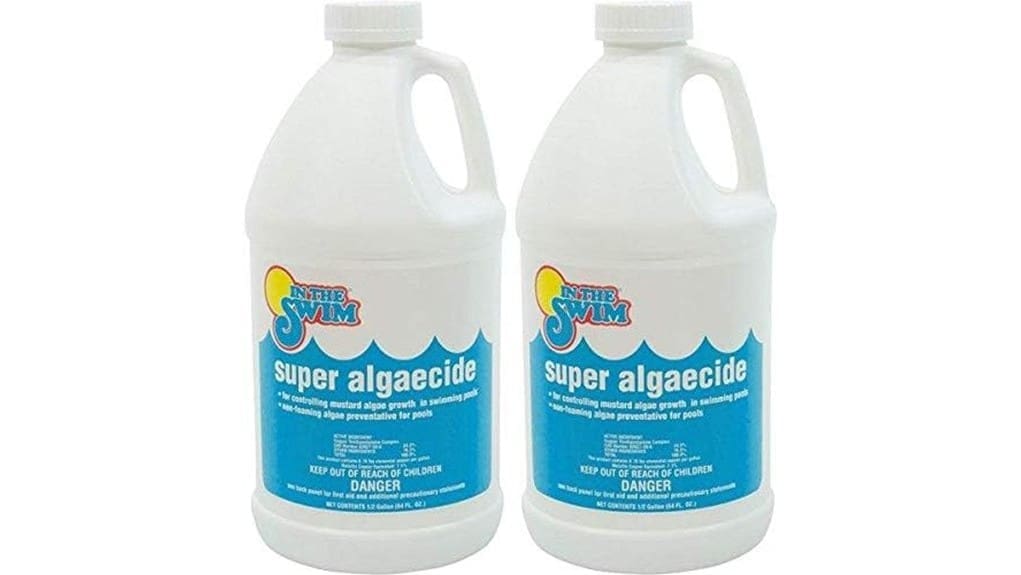
You’ll find In The Swim Super Algaecide is a concentrated, chelated-copper treatment that prevents and knocks out yellow/mustard algae with very small, precise doses. It keeps copper soluble so it stays active longer, minimizes precipitation and staining when you follow label directions, and lets swimmers re-enter immediately. It works well for seasonal owners and quick spot-kills without shocking, though copper persistence means you should use it sparingly — keep going and you’ll get full dosing, safety, and alternative options.
Some Key Takeaways
- Contains 23.5% copper triethanolamine (7.1% chelated copper) for concentrated, effective algae control.
- Prevents and treats yellow/mustard algae with rapid spot-kill and sustained residual action.
- Chelated formulation keeps copper soluble and stable, reducing precipitation and staining risk when dosed correctly.
- Small measured doses make it cost-effective over a season for maintenance-focused and seasonal pool owners.
- Low odor, swimmer-safe re-entry, and non-foaming formula preferred by odor-sensitive users.
In The Swim Super Algaecide at a Glance: Key Specs and Who It’s For
When you need a concentrated, copper-based solution for both above-ground and inground pools, In The Swim Super Algaecide delivers: it contains 23.5% copper triethanolamine (with 7.1% chelated copper) and’s formulated to prevent and control yellow/mustard algae during spring openings or regular maintenance. You’ll appreciate compact, measured dosing that suits both preventative and targeted use. Target customer demographics include homeowners with seasonal openings, maintenance-focused pool owners, and those sensitive to strong odors. Packaging design is clear about concentration and dosing, minimizing user error. It’s non-foaming, low-odor, and ready-to-use information supports practical, safe application. The product is sold through retailers that specialize in pool algaecides for homeowners who enjoy their outdoor spaces.
How the Copper-Based Formula Works and Why Chelated Copper Matters
Understand how copper-based algaecides attack algae: copper ions disrupt cellular enzymes and membranes, blocking photosynthesis and metabolic processes so algae can’t grow or reproduce. You rely on copper ionization to deliver bioavailable copper that interferes with electron transport and enzyme function, producing effective algal metabolism inhibition. Chelated copper in the formula binds to a carrier molecule, keeping copper soluble and stable across pool chemistries so it targets algae before precipitating or staining surfaces. That stability means you dose confidently; the chelate releases copper gradually for sustained activity while minimizing metal buildup and surface discoloration risk. These enzyme-friendly products are designed for homeowners who enjoy their outdoor spaces and want natural pool care options.
Performance in the Real World: Prevention, Spot Treatments, and Longevity
Because Super Algaecide delivers a concentrated, chelated copper dose, you’ll see reliable prevention and quick spot-kill of small yellow/mustard algae with minimal product and fuss. You’ll use small routine doses for preventative maintenance, which keeps copper levels effective between treatments and reduces algae recurrence. For spot treatments, apply directly to blooms after early detection; the fast-acting formula knocks down isolated patches without shocking the system. Longevity outperforms many quaternary products, so treatments stay effective longer and you’ll empty fewer bottles over a season. Consistent monitoring and timely, targeted dosing deliver the best real-world results. Many homeowners find mineral-based systems improve overall pool water balance and reduce chemical use over time, making them a popular choice for enhancing outdoor pool care with mineral systems.
Safety, Scent, Staining Risk, and Pool Readiness After Use
Although it’s powerful, Super Algaecide is formulated to be user-friendly: you can add it and let swimmers re-enter immediately since it has low odor, doesn’t foam, and doesn’t contain harsh, lingering chemicals. You’ll appreciate that swimmer safety is prioritized—copper-based chemistry is effective yet safe at recommended doses, so you don’t need extended wait times. If you have odor sensitivity, the mild scent reduces discomfort compared with stronger treatments. Staining risk is low because chelated copper minimizes metal deposit on liners and surfaces, though you should follow label dosing and maintain balanced pool chemistry to avoid issues. Homeowners who perform regular shock treatments and maintenance can keep their outdoor spaces inviting with consistent use of appropriate products like algaecides and shocks, especially when following best practices for pool shock treatments.
Is It Worth Buying? Dosage, Cost-Effectiveness, and Alternatives
If you’re weighing value, Super Algaecide often earns a spot in the routine because its high copper concentration means very small, easy-to-measure dosages that stretch a bottle farther than lower-strength algaecides. You’ll pay more per ounce upfront, but dosage efficiency usually wins in a practical cost comparison versus quarternary products. It works well for prevention and small blooms, and chelated copper lowers staining risk. Consider environmental impact: copper persists, so use minimally and follow label directions. Alternatives include lower-cost quats for routine maintenance or shock treatments for severe blooms; choose based on pool type and algae severity. Many homeowners also use pool clarifiers to help clear cloudy water after treatment, improving overall water clarity pool clarifiers.
Some Questions Answered
Is This Algaecide Safe for Pools With Vinyl Liners?
Yes — you can use it with vinyl liners if you follow safe usage and liner care guidelines. Its copper-based, chelated formula minimizes staining risk and it’s low-odor and non-foaming, so it’s pool-safe immediately after treatment. Don’t exceed recommended dosages, avoid prolonged high copper levels, and circulate thoroughly after adding. Test copper concentration periodically and perform spot tests on a small area if you’re concerned about sensitive or older liners.
Can It Be Used With Saltwater Chlorine Generators?
Yes — you can use it with saltwater chlorine generators. Its salt tolerant formulation and chelated copper profile won’t interfere with generator chemistry, and it’s safe for both above-ground and inground systems. You should monitor copper levels and follow dosing instructions to avoid buildup, and include generator maintenance in your routine to prevent sensor fouling. This keeps algae control effective without compromising generator performance or pool materials.
Will It Affect Pool Test Kit Readings?
Yes — it can cause some test interference, especially with colorimetric kits. When you add the algaecide, copper can tint samples slightly, producing color changes that may skew free chlorine and pH readings on reagent tests. You should wait a short period or use digital/colorimeter meters for accuracy. To be safe, test before treatment or after thorough circulation, and record baseline levels to spot any anomalous shifts from the product.
Is It Compatible With Metal-Sequestering Agents?
Yes — you can use a metal-sequestering agent with it. The chelated copper in the formula maintains chelation stability, reducing metal interaction and staining risk. Adding a sequesterant can further bind free metals, helping prevent precipitation or staining, but avoid overdosing both products. You’ll want to follow dosing guidelines and monitor copper levels; combining them thoughtfully preserves effectiveness while minimizing unwanted metal interaction in the pool.
Can It Be Used Alongside Algaecide Shock Treatments?
Yes — you can use it alongside algaecide shock treatments. You’ll schedule shock treatments before or after applying the algaecide based on manufacturer timing to avoid chemical interference; follow shock scheduling guidelines (usually shock first, then algaecide). Using both helps prevent algae resistance by combining rapid oxidizing action with longer-lasting copper control. Don’t exceed recommended dosages, and monitor copper levels if you frequently combine treatments.