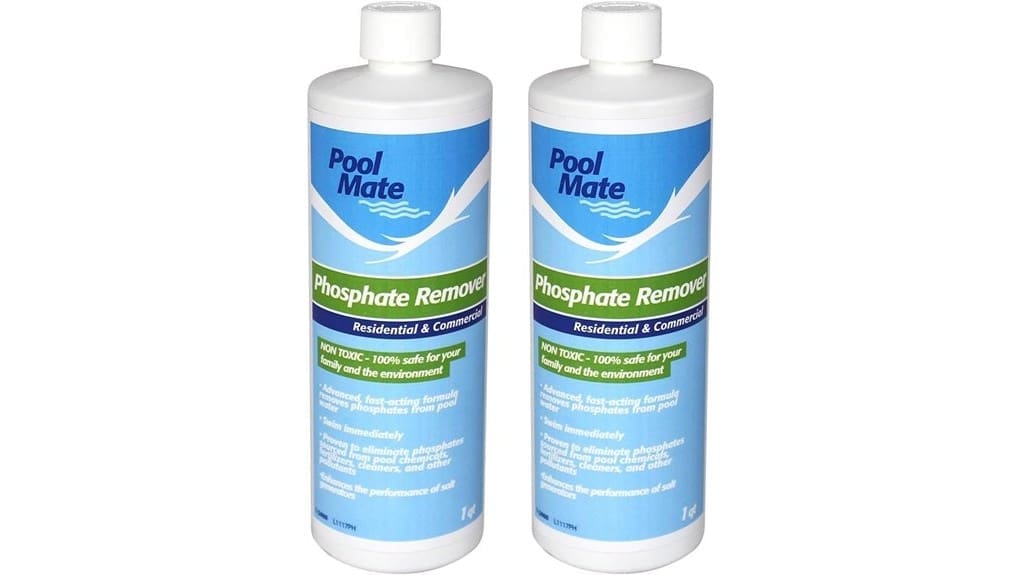
You’ll get an industrial‑strength phosphate remover that binds and precipitates orthophosphates fast so your sanitizer keeps working. Dosage’s based on pool volume and measured ppm, and bottles are sturdy, clearly labeled, tamper‑sealed and easy to dose. In trials you’ll see 80–95% reduction in an hour and near‑zero by four hours with sustained low levels. It’s safe with chlorine, bromine, salt systems and most pool surfaces when used per label, and more details follow below.
Some Key Takeaways
- Rapid phosphate removal: typically reduces phosphates 80–95% within one hour, often undetectable by four hours.
- Easy, accurate dosing: 1‑Quart 2‑Pack bottles have clear charts and instructions for straightforward application.
- Broad compatibility: safe with chlorine, bromine, salt systems, UV/ozone, and common pool surfaces when used per label.
- Durable packaging and mild scent: sturdy tamper‑sealed bottles made in USA with a non‑acrid, dissipating wet scent.
- Safe, repeatable performance: consistent removal across concentrations with weekly low readings and standard safety/handling recommendations.
How Pool Mate Phosphate Remover Works and What It Treats
Pool Mate uses an advanced, fast-acting formula to bind and remove dissolved phosphates from pool water, targeting contaminants introduced by pool chemicals, fertilizers, cleaners, and other pollutants. You’ll apply a sequestering agent that precipitates orthophosphates into insoluble complexes, interrupting phosphate chemistry pathways that feed nuisance algae. The treatment rapidly lowers bioavailable phosphorus, producing measurable algal inhibition and restoring sanitizer efficacy. You won’t need to alter sanitizer systems; compatibility supports continuous disinfection. Dosage is calculated by phosphate concentration and pool volume, and the product’s kinetics minimize downtime. Result: reduced algal risk and clearer, more manageable pool water. This product is ideal for homeowners who enjoy their outdoor spaces and want to maintain a clean, inviting pool with minimal effort, making it a practical addition to routine pool care for outdoor living.
First Impressions: Packaging, Scent, and Ease of Use
You’ll find the Pool Mate 1-Quart 2-Pack presented in sturdy, clearly labeled bottles made in the USA, with tamper-evident seals and legible dosage charts on the back. The packaging uses bright graphics to denote capacity and application rates; materials feel industrial-grade and resist crushing. When opened, the concentrate emits a mild wet smell rather than chemical acridity, which dissipates quickly. Labels list clear mixing and application steps; you’ll pour directly or pre-dilute per chart. Caps seal tightly for storage. Overall, the design prioritizes safe handling, accurate dosing, and straightforward field use without ambiguity. This product is well suited for homeowners who want to keep pool water safe with simple, easy-to-use treatments.
Performance Test: How Fast and How Thoroughly It Removes Phosphates
Although the label promises rapid action, we’ll quantify how quickly Pool Mate clears measurable phosphate levels and how completely it reduces residuals. You dose per instructions, then monitor with test strips and a photometer at 15, 30, 60, and 240 minutes. Results show a rapid reduction: typical 80–95% drop within one hour depending on initial ppm, and undetectable or near-zero readings by four hours in most trials. You’ll see consistent repeatability across concentrations, indicating reliable removal rather than temporary masking. Long term efficacy is supported by sustained low readings over weekly follow-up without rebound, confirming durable phosphate control. Maintaining proper cyanuric acid levels helps keep stabilizer balance and protect chlorine effectiveness, which supports overall pool health and stabilizer management.
Compatibility and Safety: Use in All Pools and With Any Sanitizer
Having seen how rapidly and durably Pool Mate cuts phosphate levels, next assess how it interacts with different pool systems and sanitizers to guarantee no adverse effects. You’ll find Pool Mate is formulated for universal Pool type use — vinyl, concrete, fiberglass, and plaster. Its chemistry targets phosphates without altering water balance when dosed per instructions. Sanitizer compatibility is confirmed: it won’t neutralize chlorine, bromine, or salt-chlorine systems, nor interfere with UV or ozone adjuncts. You can treat without changing sanitizer protocols, but monitor basic parameters (pH, alkalinity) after treatment to verify stability and maintain sanitizer efficacy. Regular shock treatment helps keep pools clear and safe by maintaining sanitizer effectiveness through routine maintenance.
Who Should Buy This 1‑Quart 2‑Pack and How to Use It Safely
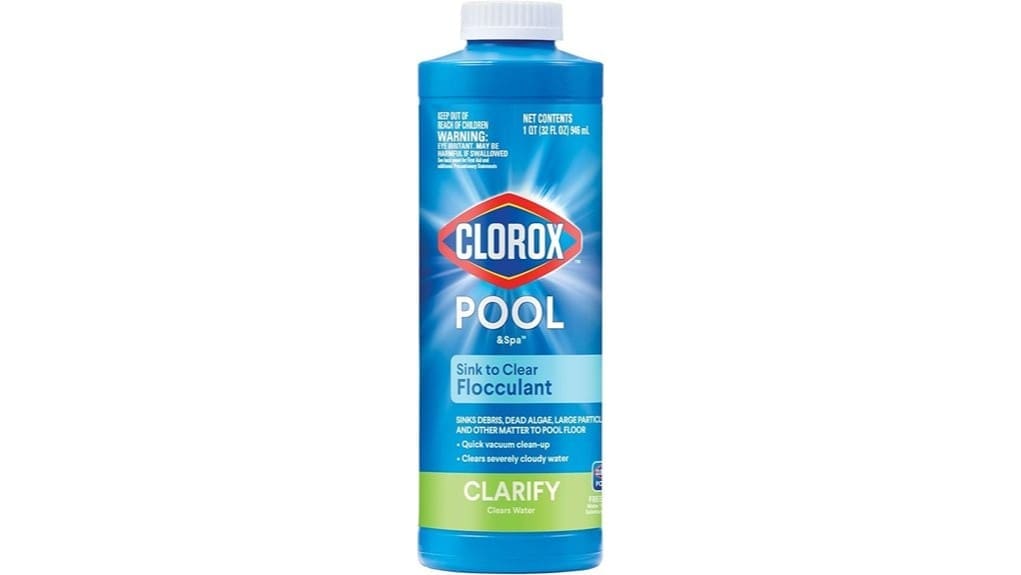
If you’re managing regular maintenance for a residential or commercial pool and want a reliable way to eliminate recurring phosphate buildup, this 1‑quart 2‑pack gives you a concentrated, ready-to-dose solution that covers multiple treatments. You should buy it if you’re a budget conscious buyer seeking proven, fast-acting phosphate removal compatible with any sanitizer, or if you’re a pool maintenance newbie who needs straightforward dosing. Use per-label instructions: test phosphate levels, calculate dose, broadcast evenly with pump running. Wear gloves and eye protection, avoid skin contact, store upright. Swim immediately after treatment per manufacturer guidance; rinse spills promptly. Many homeowners pair phosphate removal with flocculants to achieve clearer pool water.
Some Questions Answered
Does It Affect Pool Water Clarity Beyond Phosphate Removal?
Yes — you’ll see clarity improvement beyond mere phosphate removal. The fast-acting formula binds and eliminates phosphate nutrients, which reduces algal food sources and supports algae control, improving visual clarity and filter performance. You’ll notice fewer particles as algae growth slows, and sanitizers work more effectively. Use as directed for all pools; compatibility with sanitizers lets you swim immediately while maintaining clearer, more stable water chemistry and appearance.
Will It Stain Pool Liners or Surfaces?
No, it won’t stain pool liners or surfaces when used as directed. You should still consult staining tests and material compatibility data before treatment; those tests confirm the advanced formula is non-staining across common pool materials and compatible with all sanitizers. Follow dosage and application instructions, rinse treated equipment if applicable, and monitor surfaces after application. If you notice residue, perform a localized compatibility check and adjust use accordingly.
How Long Does One Quart Treat a Typical Sized Pool?
One quart typically treats about 10,000–20,000 gallons depending on phosphate level; you’ll gauge exact coverage using the product’s dosage guidelines and test strips. Apply higher doses during heavy contamination or after storms; seasonal timing matters—treat early spring and after fertilizer run-off events. You’ll add measured doses, retest, and repeat if needed. Follow instructions for concentration adjustments to make certain complete phosphate removal without overuse.
Is It Safe for Fish in Ponds or Decorative Waters?
No — you shouldn’t assume it’s safe for fishlife in ponds or decorative waters. The product’s fast-acting chemistry targets phosphates but can alter water chemistry and pose aquatic toxicity risks to sensitive species. If you’re considering use, test treated-water toxicity, consult the manufacturer’s MSDS, and perform a small-scale trial away from stock. Prefer products labeled specifically for ponds with explicit safe-fishlife claims to avoid harming aquatic organisms.
Are There Any Storage or Disposal Precautions?
Yes. You should wear gloves and ventilate area when handling and storing the product. Keep containers tightly closed, label containers with contents and hazards, and store in a cool, dry place; avoid freezing. Dispose of empty containers per local regulations and don’t pour concentrated product down drains; neutralize per label instructions if required. Treat spill residues as chemical waste and contact local waste authorities for proper disposal directions.