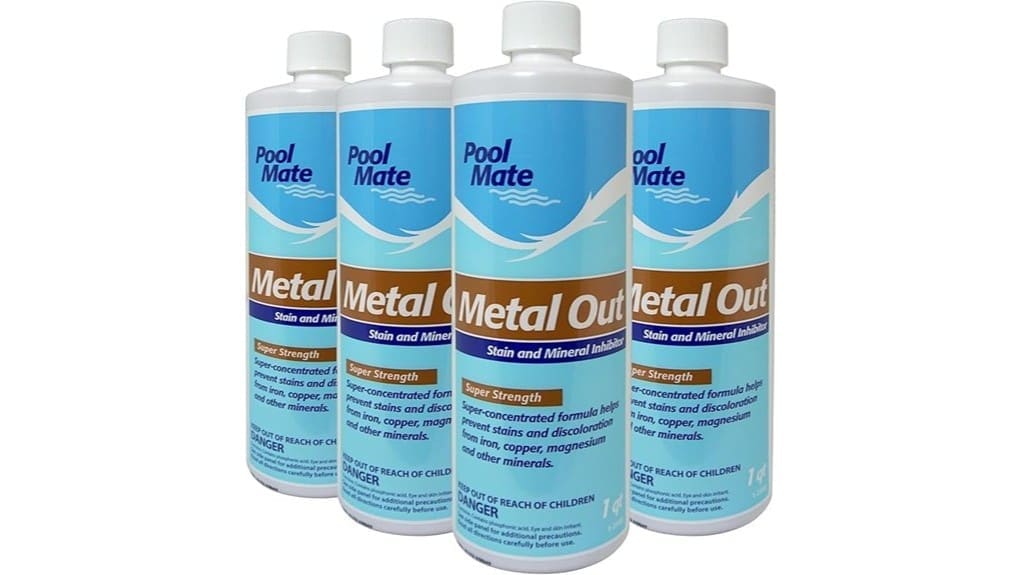
You’ll find Pool Mate Metal Free (Metal Out) works well to prevent new metal stains and often clears fresh metal-clouded water when dosed correctly. It’s a concentrated liquid sequestrant that binds iron, copper, manganese and similar metals to keep them dissolved and stop staining. You’ll follow a simple procedure for colored water and can use smaller doses monthly for maintenance. It’s budget-friendly in multipacks and practical for routine pool care—keep going to learn specifics and tips.
Some Key Takeaways
- Concentrated liquid sequestrant that chelates iron, copper, manganese, and prevents metal staining when dosed per directions.
- Effective for clearing recent metal-clouded pools with predictable results; heavy or old stains may need repeats or professional cleaning.
- Recommended use: lower chlorine, reduce pH to ~6.8, dose 1 qt/10,000 gal, run filter until water clears, then rebalance.
- Good for new fills and monthly maintenance (1 qt/20,000 gal), available in cost-saving multi-packs for frequent users.
- Generally compatible with common pool chemicals, but handle with gloves/eye protection and store sealed away from heat and children.
Quick Verdict: Does Pool Mate Metal Free Work for Pool Metal Stains?
If you want a straightforward fix for metal stains and discoloration, Pool Mate Metal Free delivers in most cases. You’ll see it prevent new stains when added per directions and clear many existing metal-clouded waters after treatment. It’s concentrated, easy to dose for fills and monthly maintenance, and targets iron, copper, manganese and more. User testimonials often praise rapid results and clearer water, though heavy or entrenched stains may need repeat applications or professional attention. Overall, it’s a practical, cost-effective sequestering option for routine stain prevention and remediation when you follow label instructions closely. It’s especially useful when combined with regular calcium hardness monitoring to maintain balanced pool water and prevent mineral-related issues like scaling and staining from metals calcium hardness.
What Pool Mate Metal Free Is and How It Works
Clarity starts with chemistry: Pool Mate Metal Free is a concentrated liquid sequestrant designed to bind and keep dissolved metals—like iron, copper, manganese and calcium—in solution so they won’t precipitate, stain surfaces, or cloud your water. You’ll use it to chelate metals, preventing visible stains and protecting equipment. Its active sequestrants perform metal chelation rather than removing particles, so treatment focuses on stabilization and circulation. You should note stabilizer compatibility with cyanuric acid and other pool additives; it generally plays well with typical maintenance chemicals. Overall, it’s a preventative and corrective tool for metal-related pool issues. Regular phosphate removal helps maintain clarity and reduce algae risk by limiting nutrients for growth, making it a useful complement to metal sequestrants and other maintenance products like phosphate removers.
Real-World Performance: Treating Colored Water and Preventative Maintenance
When you tackle colored water with Pool Mate Metal Free, you’ll see it perform predictably: lower chlorine, bring pH down, add the product at the recommended 1 qt/10,000 gal, and run the filter until clarity returns. In practice, you’ll notice effective stain reversal when metal stains are recent; stubborn, long-set stains may need repeat treatment or professional acid cleaning. For prevention, seasonal dosing at openings and monthly maintenance keeps metals sequestered and plumbing protected. You’ll appreciate clear instructions, measured results, and minimal downtime. Overall, it’s a reliable sequestrant that delivers predictable cleanup and sensible preventative maintenance. Homeowners who enjoy outdoor spaces often use algaecides and sequestrants to keep pools clear and maintain water quality.
How to Use Pool Mate Metal Free Safely and Step-by-Step Dosing
Although you’ll follow a few steps, using Pool Mate Metal Free is straightforward and safe when you stick to the dosing and chemical-handling guidance. You’ll wear personal protective equipment—gloves and eye protection—when measuring or pouring. For new fills, add 1 quart per 10,000 gallons before chlorination; for monthly maintenance, add 1 quart per 20,000 gallons. For colored water, follow the full corrective sequence: stop chlorination, lower pH to 6.8, add 1 quart per 10,000 gallons, run the pump until clear, then rebalance pH and resume chlorination. Store sealed bottles per chemical storage guidelines, away from heat and children. Use pool water weights to keep pool covers secure when performing maintenance or treating water.
Who Should Buy It, Alternatives, and Value for Money
If you want a straightforward, concentrated sequestrant to prevent metal staining and treat occasional metal-caused discoloration, Pool Mate Metal Free is a solid choice—especially if you refill pools, manage seasonal openings/closings, or maintain multiple pools and value a ready-to-dose quart bottle. You should buy it if you need reliable monthly maintenance dosing and prefer an American-made, easy-to-store liquid. Budget conscious buyers will appreciate the 4-pack value versus single bottles. If you want alternatives, consider other sequestrants from established alternative brands with stain-specific formulas or combined clarifier/stain removers. Overall, it’s practical and cost-effective. Keeping your pool pH balanced helps maintain clearer, safer water and supports sequestrants in preventing metal staining pool pH.
Some Questions Answered
Will This Product Damage Vinyl Liners or Plaster Finishes?
No — you won’t damage vinyl liners or plaster finishes when you follow directions. Pool Mate Metal Free is formulated for vinyl compatibility and won’t harm plaster integrity if you use recommended dosages, pH adjustments, and treatment steps. You should lower pH as instructed, avoid overdosing, and circulate properly. If you’re treating unusual stains or large contaminations, test a small area or consult manufacturer support to protect surfaces.
Is It Safe for Saltwater or Salt Chlorine Generators?
Yes — it’s safe for saltwater and salt chlorine generators when used as directed. You’ll get saltwater compatibility because it sequesters metals without adding harsh acids or chlorides that harm cells. You should still follow dosing and avoid overdosing to support corrosion prevention of heaters, cells, and plumbing. Test metal levels and maintain proper pH and chlorine to make certain the generator and pool equipment stay protected and operate efficiently.
Can I Mix It With Algaecides or Other Pool Chemicals?
You shouldn’t mix it directly with algaecides or other pool chemicals; follow treatment sequencing to avoid reactions. Add Metal Out separately, circulate, and let levels normalize before dosing others. Check chemical compatibility for specific algaecides or shock products and wait until chlorine and pH are in recommended ranges. When in doubt, dose Metal Out, run the filter overnight, test water, then apply subsequent treatments per label directions.
How Long Does a Bottle Last With Regular Monthly Use?
If you dose monthly, one quart will treat 20,000 gallons per month, so bottle longevity depends on pool size. For a 20,000-gallon pool one quart lasts one month; for a 10,000-gallon pool it lasts two months. For a 40,000-gallon pool you’ll need two quarts monthly. Calculate monthly dosing by dividing your pool gallons by 20,000 to estimate how many bottles you’ll use per month and annual bottle longevity.
Is It Safe to Use in Pools With Solar Heating Systems?
Yes — you can safely use it with solar panels and other solar heating systems; it’s compatible with common pool heaters. You’ll want to follow dosing and circulation directions so the sequestrant doesn’t concentrate on heater surfaces. Monitor for buildup on panels or heat exchangers during heavy use, and flush or backwash filters as recommended. Overall, it’s heater compatible when used per instructions and with routine maintenance.