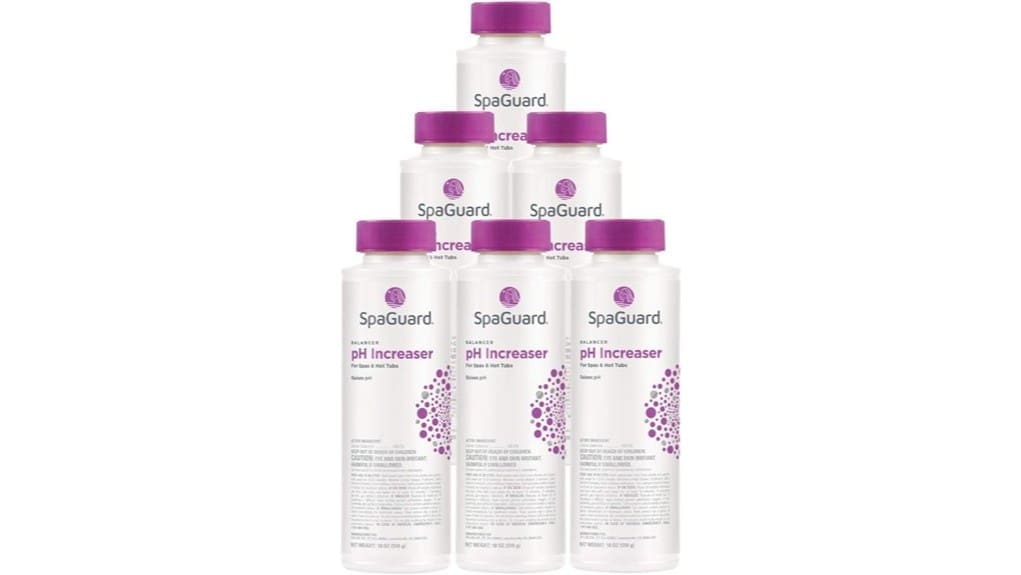
You’ll get six sealed 18‑oz SpaGuard pH increaser containers (42240BIOx6) that deliver quick‑dissolving granular alkalinity to raise and stabilize spa pH with predictable kinetics. You’ll pre‑dose per label charts, pre‑dissolve in bucket, wear goggles/gloves, and allow 15–30 minutes circulation between increments to avoid localized spikes and equipment stress. Proper use helps prevent heater and pump corrosion, improves bather comfort, and preserves sanitizer activity. Continue for step‑by‑step dosing, safety, and alternatives.
Some Key Takeaways
- Six 18‑oz quick‑dissolving SpaGuard units (108 oz total) offer cost savings versus single purchases.
- Granular formula dissolves rapidly and raises pH gradually to avoid localized spikes.
- Follow label dosing, pre‑dissolve increments, and circulate 15–30 minutes between tests for predictable results.
- Proper pH maintenance reduces corrosion, improves bather comfort, and preserves sanitizer effectiveness.
- Recommended for multi‑spa owners or regular users; alternatives include single units, bulk granules, or liquid increasers.
What SpaGuard pH Increaser Pack of 6 Includes and Key Specs
The SpaGuard pH Increaser pack of 6 contains six 18‑ounce containers of quick‑dissolving granular pH increaser (total 108 oz), each labeled with manufacturer part number 42240BIOx6 and UPC 017541422406; the product is sold under the SpaGuard brand (alternate model reference 42240BIOX3, ASIN B01M06R0TV) and is intended for measured, controlled pH adjustments in spas and hot tubs to prevent corrosion and maintain sanitizer effectiveness. You’ll receive six sealed units, clear labeling, and instructions; bundle savings apply versus single-unit purchases. Packaging dimensions and net weights are marked for inventory, transport, and safe storage. Regular shock treatments and proper pH control are key to keeping your spa water clear and safe, so consider integrating this product into your pool maintenance routine.
How the Quick‑Dissolving Granular Formula Works and Expected pH Changes
Mix SpaGuard’s quick‑dissolving granular formula into circulating spa water so it disperses evenly and raises pH gradually without causing localized spikes. You’ll rely on predictable dissolution kinetics: granules dissolve rapidly but are formulated to release alkalinity at a controlled rate, preventing abrupt pH jumps. Measure initial pH and add dose incrementally; allow 15–30 minutes of circulation between doses for full mixing. The product augments buffering capacity, stabilizing pH against acids introduced by bathers or chemicals. For safety, avoid overdosing—use calibrated scoops, PPE, and follow label limits to prevent overshoot and equipment stress. Keeping your spa water pH balanced also helps ensure clearer, safer water for homeowners who enjoy their outdoor spaces.
Real‑World Performance: Preventing Corrosion, Bather Comfort, and Sanitizer Stability
After you’ve confirmed proper dissolution and gradual pH adjustments, evaluate how maintained pH prevents corrosion, improves bather comfort, and preserves sanitizer effectiveness in real use. You’ll rely on routine corrosion testing data and visual inspections to verify reduced metal loss in heaters, pumps, and fittings. Consistent pH within target range minimizes acidic attack, lowering replacement risk. Bather satisfaction rises as irritation and chlorinous odors decrease, measurable via simple surveys or incident logs. Stabilized pH keeps free sanitizer active longer, improving microbial control without overdosing. Monitor and document readings; act on deviations immediately to maintain safety and equipment longevity. Regular use of stabilizers helps maintain optimal pH and prevent rapid chlorine loss in outdoor pools.
How to Use the 18 Oz Units Safely and Effectively in Your Spa
When you add SpaGuard pH Increaser to your spa, follow measured dosing and safety steps to make certain controlled, gradual pH adjustment and avoid equipment damage or skin irritation. Read the product label and consult dosage charts to determine grams or ounces per gallon based on current pH and volume. Wear safety goggles and gloves while handling the 18 oz granular units. Pre-dissolve recommended amounts in a bucket of spa water away from equipment, then pour slowly around the perimeter with circulation on. Retest pH after 15–30 minutes and repeat small increments until target pH is reached. Store sealed, dry, cool. For homeowners who enjoy outdoor spaces, using chlorine tablets and proper pH management helps keep spa and pool water safe and sparkling clean.
Who Should Buy the 6‑Pack, Alternatives, and Final Buying Recommendation
Now that you know how to measure, pre-dissolve, and add the 18 oz units safely, consider who benefits most from buying the six-pack. You should opt for the 6-pack if you’re a budget buyer maintaining multiple treatments, a seasonal caretaker prepping spas for winter or summer layup, or managing large properties where consistent pH control reduces corrosion risk. First time owners will appreciate measured, quick-dissolving units and predictable dosing. Alternatives include single 18 oz units, bulk granular containers, or liquid pH increasers; choose based on storage, dosing frequency, and handling preference. Final recommendation: buy the 6-pack for regular, multi-use safety and economy. Many pool owners also benefit from controlling phosphate levels with specific phosphate removers to keep water clear and protect filter efficiency.
Some Questions Answered
Is Spaguard pH Increaser Safe for Use With Saltwater Hot Tubs?
Yes — you can use SpaGuard pH Increaser in saltwater hot tubs, but you’ll monitor levels carefully. Its granular, slow-acting formula offers good saltwater compatibility and helps maintain sanitizer efficacy. You’ll avoid overcorrection to minimize corrosion risk to heaters, fittings and electrodes. Test pH and total alkalinity frequently, add small doses, allow full dissolution, and follow manufacturer guidelines and salt chlorine generator recommendations to make certain safe, balanced water.
Will This Product Affect My Spa Cover or Surrounding Decking?
No, it won’t directly damage your spa cover or decking if you handle it properly. You’ll avoid staining potential by keeping granular product and dissolved solution off surfaces; clean spills immediately. Check material compatibility for vinyl covers, wood, composite or painted decking—prolonged contact with concentrated solution or repeated splashes can cause discoloration or finish degradation. Wear PPE, use measured dosing away from edges, and rinse any contacted areas promptly to protect surfaces.
Can I Store the Unopened 18 Oz Units Long‑Term Without Degradation?
Yes — you can store unopened 18 oz units long-term without significant degradation if you maintain proper conditions. For shelf stability, keep containers sealed, dry, and away from heat, moisture, and acids. Inspect container integrity before use; bulging, corrosion, or compromised seals indicate contamination. Store in original packaging, upright, and ventilated area per manufacturer guidelines. Follow the warranty and return policy if you find defects upon opening.
Is This Granular Formula Compatible With Enzyme or Clarifier Additives?
Yes — the granular formula is compatible with enzyme compatibility and clarifier interactions when used correctly. You should add pH increaser first, allow full dissolution and pH stabilization, then dose enzymes or clarifiers. This prevents premature reactions and guarantees sanitizer efficacy. Avoid overdosing; follow label rates and wait 15–30 minutes between additions. Wear gloves and eye protection, store chemicals separately, and consult product SDS for specific hazard and handling guidance.
Are There Specific Local Regulations for Disposing Unused Product?
Yes — you must follow local ordinances: treat unused granular pH increaser as chemical waste where required. Check municipal guidance for hazardous waste collection, household hazardous waste drop-off, or approved disposal methods. Don’t pour granules or concentrated solutions down drains or into storm sewers. Wear PPE when handling residuals, neutralize per label instructions if allowed, and document disposal per local regulations to make certain compliance and environmental safety.