You’ll get a lab-grade titration kit that measures free/total chlorine, bromine, pH, alkalinity, hardness and stabilizer with high accuracy when you rinse the vial, count drops consistently and store reagents cool and dark. It’s bulkier and has a learning curve compared with strips, but gives repeatable, near-lab results for homeowners and techs who want control. Expect occasional reagent replacement; warranty won’t cover consumables. Keep going to see detailed use tips and comparisons.
Some Key Takeaways
- Comprehensive titration kit measures free/total chlorine, bromine, pH, alkalinity, calcium hardness, acid/base demand, and cyanuric acid.
- Delivers laboratory-close accuracy when vial rinse, steady drop technique, and fresh reagents are used.
- Learning curve exists for titration endpoints, but repeatable results reward practice and consistent drop size.
- Requires upright, cool, dark storage and occasional reagent replacement to maintain reliability.
- Better value and precision than strips; choose digital photometer if you want simpler, faster readings.
What the Taylor K-2006C Kit Includes and Which Tests It Performs
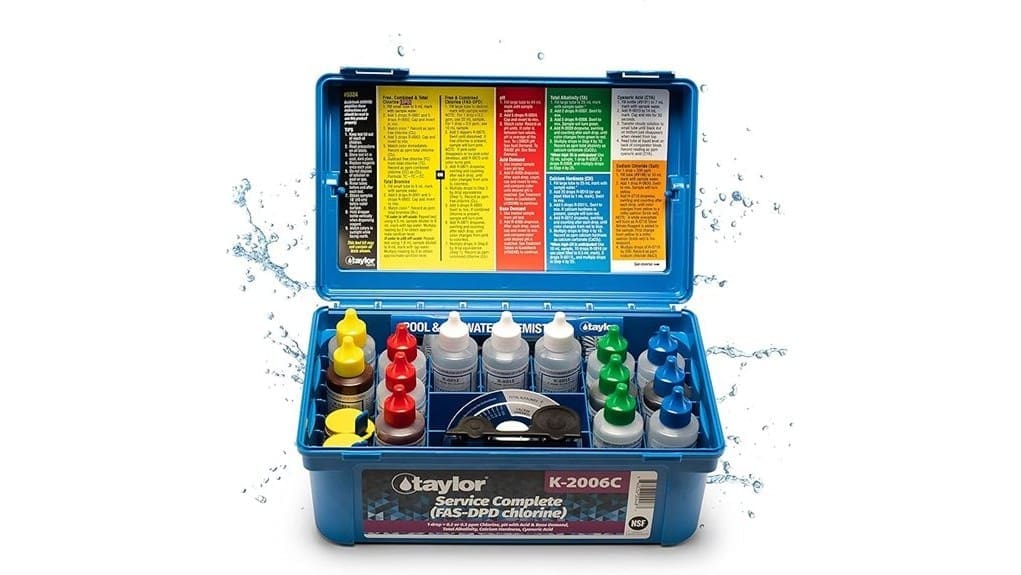
Although it’s compact enough to sit on a poolside shelf, the Taylor Service Complete Pool Water Test Kit K-2006C gives you a full titration-based testing setup: the kit includes the test block and apparatus plus multiple 2 oz reagent bottles needed for titration drop tests. You get reagents and clear instructions to measure free and total chlorine, bromine, pH, acid/base demand, calcium hardness, total alkalinity, and stabilizer (cyanuric acid). You’ll appreciate precise results that prevent overtreatment and guide proper pool chemicals dosing. Store reagents upright in a cool, dark place to preserve accuracy and extend reagent storage life. Homeowners who spend time enjoying their outdoor spaces should test regularly to keep their pools safe and clear, especially monitoring free chlorine levels.
How to Use the Titration Drop Method: Step-by-Step Walkthrough
Now that you know what the K-2006C contains and which parameters it measures, you’ll want to master the titration drop method to get accurate readings every time. Rinse the test vial, collect sample at elbow depth, and add required indicator. Hold the reagent bottle vertically and apply the drop technique: count each drop as you squeeze gently, aiming for steady single drops. Swirl between drops until color change target appears. Record drops used and calculate concentration per kit instructions. If results seem erratic, consult titration troubleshooting: check reagent age, rinse technique, and drop size consistency before repeating the test. For routine maintenance of your pool, consider integrating digital pool testers into your testing schedule to simplify tracking and accuracy.
Accuracy, Range, and Real-World Performance (Chlorine, pH, Alkalinity, Hardness, Stabilizer)
Assess the K-2006C by focusing on how its titration-based chemistry translates to real-world accuracy: the kit delivers precise, repeatable readings for chlorine, pH, alkalinity, hardness, and stabilizer when you follow the vial-rinse and drop-count technique, but measurement reliability depends on reagent freshness, consistent drop size, and careful endpoint recognition; under typical backyard conditions you can expect laboratory-close results for total and free chlorine within the kit’s stated resolution, pH accurate enough for treatment decisions, and dependable alkalinity, calcium hardness, and cyanuric acid values—provided you store reagents properly and avoid common user errors that introduce variability. You’ll get strong measurement precision, though occasional field calibration against a reference helps catch drift. Expect seasonal variability—hot, high-UV months and heavy bather loads change readings—so monitor more frequently. Reagent stability is vital: replace opened bottles per guidance and keep caps tight and cool to retain accuracy. The kit is especially well suited for homeowners who manage their outdoor spaces and want reliable results from an easy-to-use home test system with pool water test kits available on the market.
Pros, Cons, and Who This Kit Is Best For
When you want lab-style results without the cost and complexity of bench equipment, the Taylor K-2006C gives you precise, repeatable titration measurements for chlorine, pH, alkalinity, hardness, and stabilizer—provided you follow the vial-rinse and drop-count technique and keep reagents fresh. Pros: high accuracy, thorough tests, durable kit, clear instructions—ideal if you track maintenance schedules closely. Cons: learning curve for titration, occasional reagent replacement, bulkier than strips. Who it’s best for: pool owners who want reliable, repeatable data, serious DIYers, pool service techs, and budget buyers who value long-term accuracy over single-use convenience. This kit pairs well with a simple maintenance log to keep your pool care organized and consistent.
Price, Warranty, Alternatives, and Final Buy/No-Buy Recommendation
You’ve seen how the K-2006C delivers lab-style accuracy and where it may demand more user skill and upkeep; next you’ll want to weigh price, warranty, and alternatives to decide if it fits your budget and needs. The kit’s upfront cost sits above basic test strips but below professional bench equipment—good in a price comparison for serious owners. Manufacturer warranty details are available online; expect limited coverage on defects, not consumables. Alternatives include strip kits for convenience and digital photometers for simplified accuracy. Buy if you value precise titration control and reagents; skip if you need lowest cost or zero maintenance. Consider how this choice fits your overall approach to effortless pool cleaning and outdoor living maintenance.
Some Questions Answered
Are Replacement Reagents Sold Separately and Where to Buy Them?
Yes — replacement reagents are sold separately, and you can buy them from authorized retailers. You’ll find reagent packs and individual 2 oz bottles through Taylor’s official website, authorized pool supply shops, and major online sellers like Amazon and PoolSupplyWorld. Check product listings for model K-2006C compatibility and expiration dates. If you want guaranteed authenticity and warranty support, purchase from Taylor-authorized retailers or contact Taylor Service for local dealer recommendations.
How Long Do the Reagents Remain Stable After Opening?
Reagents typically remain stable 6–12 months after opening; you should expect about a year if stored cool, dark, and tightly sealed. Check reagent labels for specific shelf life and expiration dates, and discard any that change color or clarity. For reagent disposal, follow local hazardous-waste rules or manufacturer’s instructions—don’t pour concentrated chemicals down drains. When in doubt, replace reagents to guarantee accurate results and avoid contamination.
Is This Kit Suitable for Commercial or Public Pools?
Yes — you can use this kit for commercial suitability checks, but you’ll need to verify regulatory compliance first. It provides accurate titration-based measures (chlorine, pH, alkalinity, hardness, stabilizer), yet public pools often require calibrated, certified testing methods and record-keeping. Don’t rely solely on this kit for official compliance; use it for routine monitoring and pair it with certified lab tests or government-approved test equipment to meet regulations.
Can Results Be Logged or Tracked Digitally With This Kit?
No — the kit doesn’t offer built‑in digital logging or app integration. You’ll record results manually from the titration drops and reagent readings. If you want digital tracking, you can enter values into a pool‑care app or spreadsheet yourself, or photograph results for timestamped records. For routine use, maintain a logbook and periodically transfer entries to your chosen app to preserve history and analyze trends.
Are Colorblind-Friendly Instructions or Aids Included?
No — the kit doesn’t include specific color vision aids or labeled contrast guides. You’ll get standard color charts and reagents for titration-based measurements, which rely less on color matching for some tests, but many pH and chlorine comparisons still use color plates. If you have color vision limitations, you should use a digital color comparator app, high-contrast lighting, or a secondary tester to make certain accurate readings and avoid misinterpretation.