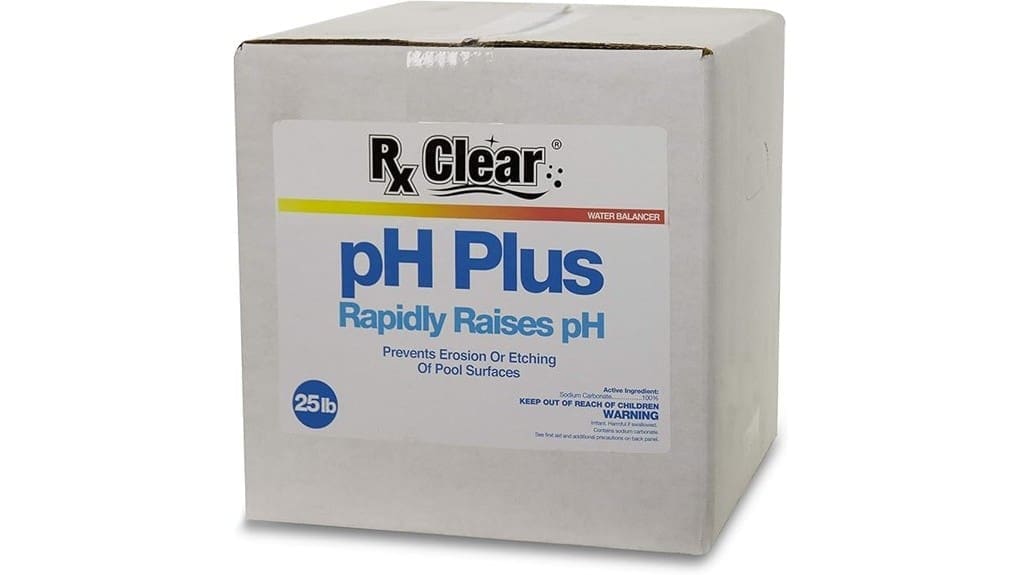
Rx Clear Swimming Pool pH Plus is a 25 lb sodium carbonate powder that quickly and predictably raises your pool pH and alkalinity to the 7.2–7.6 range, restoring chlorine effectiveness. You’ll measure pH/alkalinity first, apply 1–2 lbs per 10,000 gallons (dissolve if desired), run the pump, and retest in 2–4 hours, adjusting in 1‑lb increments. It’s cost‑effective, moisture‑resistant packaged, and compatible with common pool surfaces; continue for detailed dosing, safety, and compatibility notes.
Some Key Takeaways
- Rx Clear pH Plus is a 25 lb sodium carbonate powder designed to raise pool pH quickly and predictably.
- Typical dose is 1–2 lbs per 10,000 gallons; dissolve in a bucket and broadcast with pump running for even distribution.
- It supplies carbonate ions that raise pH and total alkalinity, stabilizing toward the 7.2–7.6 target.
- Improves chlorine efficacy and reduces corrosive, etching risks when used with proper monitoring and dosing.
- Packaged in a polyethylene-lined bag offering good value per dose compared with smaller pre-measured products.
What Rx Clear Swimming Pool pH Plus Is and Who It’s Best For
Rx Clear Swimming Pool pH Plus is a 25 lb powder of 100% sodium carbonate formulated to raise pH quickly and reliably in pools, spas, hot tubs and saltwater systems. You’ll use it to correct acidic water, stabilize pH toward the 7.2–7.6 target, and restore chlorine efficacy. Dosage is straightforward: 1–2 lbs per 10,000 gallons as a guideline; test weekly. It’s compact for larger-volume maintenance and compatible with common pool equipment. It’s ideal for pool owners who need fast, predictable pH adjustments and for water chemistry novices who want a single-ingredient, easy-to-dose solution with minimal variables. Many homeowners also use it as part of regular shock treatment routines to maintain clear, safe water.
How Sodium Carbonate (Soda Ash) Raises pH : What to Expect
Sodium carbonate (soda ash) raises pool pH by supplying carbonate ions (CO3^2−) that react with free hydrogen ions (H+) in the water, shifting the carbonate-bicarbonate equilibrium toward higher pH. You’ll see a rapid pH increase as CO3^2− consumes H+, producing HCO3− and reducing acidity. Carbonate chemistry dictates that this also affects total alkalinity; bicarbonate formed contributes to buffer capacity, resisting further pH change. Expect immediate pH rise after dissolution, followed by stabilization over hours as mixing and CO2 exchange occur. Monitor pH and total alkalinity; adjusting both prevents overshoot and maintains effective sanitizer performance. For homeowners using chlorine tablets, consider the interaction between pH adjustments and chlorine tablet use to keep your pool water balanced.
Dosage, Step-by-Step Use, and Testing Routine for 10,000‑Gallon Pools
When your 10,000‑gallon pool tests below the 7.2–7.6 pH range, add 1–2 lbs of Rx Clear pH Plus (sodium carbonate) per 10,000 gallons to raise pH incrementally. Measure pH, alkalinity, and free chlorine. Dissolve measured powder in a bucket of pool water if wind or splashing is a concern. With pump running, broadcast solution around deep end; avoid concentrated dosing near plaster. Retest pH after 2–4 hours and adjust in 1‑lb increments until 7.2–7.6. Include this in weekly maintenance and test after shock treatment or heavy bather load. Record readings and amounts for trend control. Regular testing with pool test strips helps homeowners keep water clear and balanced.
Performance, Safety, and Material Compatibility (Metals, Plaster, Fiberglass)
Because pH directly affects corrosion and surface integrity, maintaining the 7.2–7.6 range with pH Plus delivers predictable performance: it quickly neutralizes acidic water, improves chlorine efficacy, and markedly reduces metal corrosion and surface etching. You’ll see reduced degradation on rails, heaters, and fittings when you follow dosing and corrosion monitoring protocols. For plaster and fiberglass, pH control supports surface preservation and minimizes etching, delamination, and pore expansion. Confirm chemical compatibility with rubrics for sodium carbonate and perform material testing after treatment changes. Follow manufacturer guidelines, test weekly, and document results to guarantee long-term asset protection. Store pool chemicals in a cool, dry location using approved storage containers to reduce risk and maintain product integrity.
Value, Packaging, and Buying Considerations (Price, Returns, and Alternatives)
Although price per pound varies by retailer and season, Rx Clear Swimming Pool pH Plus (25 lb, 100% sodium carbonate) typically offers competitive cost-per-dose for routine pool maintenance; you’ll usually pay less per treatment than for smaller, pre-measured pH increasers. For price comparison, calculate cost per pound and per 10,000 gallons (1–2 lbs guideline) to assess value against alternatives. Packaging durability is adequate: polyethylene-lined bag resists moisture but store in a dry, sealed container after opening to prevent caking. Amazon’s voluntary 30-day return covers delivery issues; check seller warranty for defects. Consider generic soda ash for lowest cost. Homeowners who value outdoor living often prioritize straightforward, cost-effective solutions for pool care and maintenance, including using pool clarifiers and balancing chemicals accordingly.
Some Questions Answered
Is Rx Clear pH Plus Safe for Use With Salt Chlorine Generators?
Yes — you can use it with salt chlorine generators. Its active ingredient, 100% sodium carbonate, provides salt compatibility when dosed correctly and raises pH efficiently. You’ll prevent cell corrosion by maintaining pH in the 7.2–7.6 range and avoiding overuse. Follow dosage guidelines (1–2 lbs per 10,000 gallons), test weekly, and monitor total alkalinity to protect generator cells and extend equipment life.
Can It Be Pre-Dissolved Before Adding to the Pool?
Yes — you can pre-dissolve Rx Clear pH Plus using pre dissolving methods: dissolve measured powder in a clean bucket of water (never add water to chemical), stirring until fully clear. Apply solution around pool deep end while pump circulates, adding slowly to avoid localized high pH. Observe application timing: wait 15–30 minutes, retest pH, and repeat dosing if needed. Always wear PPE and follow dosage guidelines.
Does It Affect Total Alkalinity Long-Term?
Yes — it raises and stabilizes total alkalinity long-term when used correctly. You’ll increase alkalinity because sodium carbonate shifts carbonate equilibrium toward carbonate/bicarbonate, reducing pH drift and buffering the water. Dose carefully (1–2 lbs/10,000 gal) and test weekly; repeated additions accumulate carbonate, slowly elevating total alkalinity, so adjust dosing or use acid to rebalance if alkalinity rises above target.
Is This Product Pet-Safe if Spilled Around the Yard?
No — it isn’t pet-safe if spilled; sodium carbonate is a pet toxicity risk and can irritate paws, eyes, and digestive tracts. If spilled around the yard, you’ll neutralize by diluting thoroughly with large volumes of water to prevent concentrated soil impact and corrosive damage to plants and microflora. Keep pets away until fully dissolved and rinsed. Wear gloves and avoid inhalation during cleanup; consult veterinarian if exposure occurs.
Can It Be Used in Above-Ground Pools With Vinyl Liners?
Yes — you can use it in above-ground pools with vinyl liners. The product’s active ingredient, 100% sodium carbonate, raises pH without organic solvents that attack vinyl, so vinyl compatibility is high when dosed correctly. You’ll maintain liner integrity by dissolving powder in a bucket, broadcasting around perimeter with pump running, and testing pH. Follow dosage (1–2 lbs/10,000 gal) and retest weekly to avoid localized high concentrations.