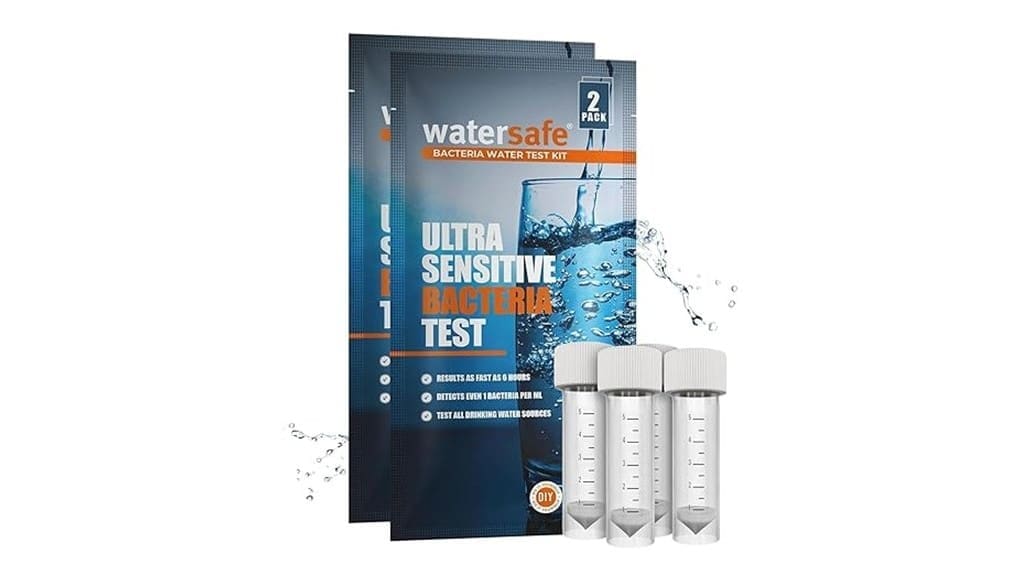
You’ll get a fast, field‑ready screen for coliforms and E. coli with lab‑level sensitivity down to about 1 cell/mL using the Watersafe WS‑831 four‑count kit. You label and collect mid‑stream samples, snap on caps, shake to mix reagents, and incubate; high loads can show results in about 6 hours, while low counts or cool temperatures often need 24–48 hours. It’s great for home or travel screening but confirm positives with a lab for critical decisions — more details follow.
Some Key Takeaways
- Detects coliforms including E. coli, with claimed sensitivity down to 1 bacterium per mL for lab-quality qualitative detection.
- Gives results as fast as 6 hours at high contamination, typically 24–48 hours for low counts or cooler temperatures.
- Four-vial kit supports one sample per vial; requires sterile mid-stream collection and simple shake-incubate-read workflow.
- Field conditions can reduce sensitivity and occasional false positives occur; confirmatory lab testing recommended for critical decisions.
- Best for homeowners, RVers, and quick screening of taps, wells, and outdoor sources, but not a full laboratory substitute.
What the Watersafe® WS-831 Tests For and How Sensitive It Is
What does the Watersafe WS-831 detect and how low can it go? You assess water for coliform bacteria, including E. coli, and non-coliform bacterial species relevant to drinking and recreational sources. The WS-831 provides lab-quality qualitative detection with stated detection limits down to 1 bacterium per mL, enabling identification of very low-level contamination. Results appear as fast as six hours at higher loads, with up to 24–48 hours required for low concentrations or cooler conditions. Manufactured in an FDA-registered U.S. facility, the four-count kit supports rapid, field-friendly screening without sacrificing sensitivity or objective, evidence-based interpretation. This makes it a practical choice for homeowners maintaining outdoor spaces who want quick, reliable screening of their water.
How to Use the 4-Count Kit Step‑by‑Step (No Lab Needed)
Start by preparing a clean work area and reading the included instructions so you know the sequence: label each vial for sample location, collect your water samples following the kit’s sterile technique, snap on the caps, and shake each vial as directed to mix reagents with the sample. You’ll use one vial per location, avoid touching inner surfaces, and collect mid-stream for tap or well samples to reduce contamination risk. Incubate per instructions at room temperature and record observations at specified intervals. Follow Disposal instructions: seal used vials, place in household trash or per local guidelines, and wash hands thoroughly. For routine pool maintenance, consider pairing these tests with digital pool testers to keep your pool water balanced and safe.
Speed of Results and How Temperature or Low Counts Affect Timing
Understanding how quickly the Watersafe® Bacteria Water Test Kit gives results helps you plan testing and interpret positive or negative readings accurately. You’ll often see results as fast as 6 hours with high contamination because rapid incubation accelerates indicator reactions. When bacterial counts are low or ambient temperature is cool, expect slower development; low counts and cooler conditions commonly extend read times to 24–48 hours. Seasonal variability matters: colder months tend to slow indicator color change, while warm seasons speed it. Monitor vials at intervals, record times, and avoid discarding negative-looking samples before the maximum recommended incubation to prevent false negatives. Homeowners can use simple at-home kits to maintain pool water safety and enjoy their outdoor spaces.
Real‑World Performance: Accuracy, Limits, and Typical Use Cases
Because the Watersafe® Bacteria Water Test Kit detects down to 1 bacterium per mL and flags both coliform and non‑coliform organisms, you can rely on it for early, actionable screening of drinking, well, tap, pool, RV, and outdoor water sources. In practice, accuracy aligns with manufacturer claims under controlled conditions, but sample variability and field conditions can reduce sensitivity. You should expect occasional false positives from contaminated collection tools or environmental inhibitors; confirmatory lab testing is advisable for critical decisions. Proper user training in sampling, timing, and interpretation minimizes errors and guarantees results are reproducible for routine household and recreational use. For homeowners who enjoy outdoor spaces, pairing testing with proper equipment like a pool thermometer helps maintain safe and enjoyable water conditions.
Who Should Buy This Kit and How It Compares to Alternatives
Having seen how the Watersafe® kit performs in real settings, you can now judge who will get the most value from it and how it stacks up against other options. You should buy this if you need rapid, DIY bacterial screening—homeowners, outdoor enthusiasts checking streams or campsites, RV travelers, and property managers monitoring wells or rental units will find the 4-count WS-831 practical. Its lab-quality sensitivity (1 bacteria/mL) and no-shipping workflow beat basic test strips, though professional lab culture/ PCR offers more specificity. Compared with competitors, Watersafe balances speed, ease, and affordability, but isn’t a full laboratory substitute. Proper storage in a cool, ventilated area away from pool chemicals is recommended to maintain kit effectiveness and safety, especially when kept near pool chemical storage.
Some Questions Answered
Is the Kit Fda‑Registered and Where Is It Manufactured?
Yes — it’s FDA registered and manufactured in the USA. You can rely on the kit’s FDA registered production, which indicates adherence to regulated facility standards. Manufactured location is the United States, produced in an FDA-registered facility under the WaterSafe brand. This gives you traceable origin and regulatory oversight for quality. You’ll get four bacteria vials per pack, suitable for testing drinking, well, tap, pool, RV, and outdoor water.
Does the Kit Detect Viruses or Protozoa?
No — it doesn’t detect viruses or protozoa. You won’t get viral detection or protozoan sensitivity from this kit; it’s designed to detect bacteria (coliforms including E. coli) down to about 1 bacterium per mL. For viruses or protozoa you should use specialized assays or lab services validated for viral detection and protozoan sensitivity, since those organisms require different sampling, concentration, and analytical methods than bacterial culture/indicator tests.
How Long Is the Shelf Life and Storage Instructions?
The kit’s shelf life is typically 12–24 months; check expiration dates printed on each vial. You’ll store kits at room temperature, avoiding extremes; recommended storage temperature is 50–86°F (10–30°C). Keep vials sealed until use, out of direct sunlight and away from moisture. If exposure or past the printed expiration date occurs, don’t rely on results—discard and replace to guarantee accurate, evidence-based detection.
Are Test Vials Reusable or Single‑Use Only?
They’re single‑use only; you shouldn’t reuse test vials. Reusing vials compromises container longevity and raises the risk of sample contamination, which undermines the kit’s lab-quality sensitivity to low bacterial counts. You should discard each vial after one test and use a fresh vial from the 4-count pack for subsequent samples. This maintains reliable results and prevents carryover that could produce false positives or negatives.
Can Results Be Photographed for Recordkeeping or Lab Confirmation?
Yes — you can photograph results for recordkeeping or lab confirmation. Photographing results provides a timestamped visual record and supports digital archiving for later review or expert consultation. Guarantee good lighting, a steady camera, and include a note with sample ID, date, and time in the frame. If sending images for lab confirmation, follow the lab’s submission guidelines and provide full sample metadata to validate chain of custody and interpretation.