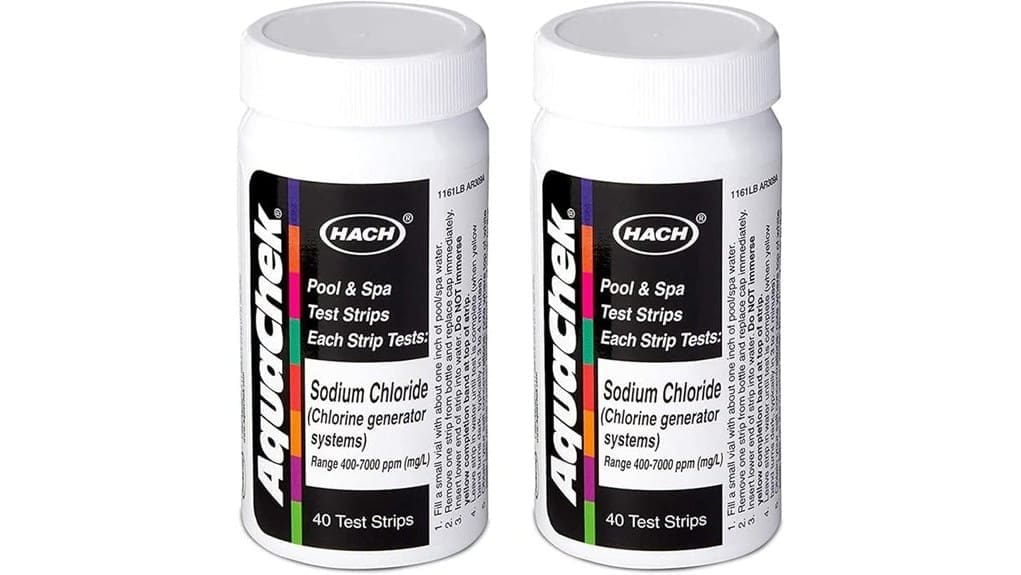
You’ll find the AquaChek 561161-02 Salt Value Pack a practical, fast way to keep your saltwater pool in range—two 40-strip bottles give repeatable, seconds‑fast colorimetric readings. It won’t match a titrator or lab meter for precision, but it saves time, cuts adjustment guesswork, and suits routine checks. Expect variability from technique and environment; rinse, time carefully, and use a titrator when results don’t align. Read on for detailed comparisons, tips, and buying notes.
Some Key Takeaways
- Fast, low-cost salt-testing strips ideal for routine home pool checks, providing results in seconds.
- Two 40-strip bottles (80 tests) cover about 10 weeks with twice-weekly testing at both ends.
- Colorimetric readings span roughly 400–7,000 ppm; target ~3,600–3,800 ppm (7.2–7.6%) guidance noted for generators.
- Less precise than titrators or digital meters; use strips for spot checks and titrator for calibration or inconsistent results.
- US-made, brand-backed product sold broadly (Amazon for returns); convenient but generates packaging waste and not lab-grade.
Quick Verdict: Is the AquaChek 561161-02 Salt Value Pack Worth Buying?
While you could spend more time and money on titrator kits, the AquaChek 561161-02 Salt Value Pack is a practical, fast option for keeping pool salt in range. You get reliable, immediate salt readings from two 40-strip bottles, which simplifies salt maintenance and supports consistent testing habits. You’ll save minutes per check versus titrators and reduce guesswork when adjusting your generator. It’s not lab-grade, but its US-made, brand-backed design and Amazon return option give confidence for routine use. If you want quick, repeatable checks to keep levels steady, this value pack is worth buying. These simple kits are ideal for homeowners who enjoy their outdoor spaces and want easy pool maintenance.
How the Test Strips Work and What They Measure (Salt Range, Sterility, Speed)
Because they rely on colorimetric chemistry, AquaChek salt strips give you an immediate, easy-to-read indication of sodium chloride levels so you can confirm your pool’s salinity at a glance. You dip a strip, wait seconds, and match colors to the chart; the reaction mechanism converts chloride concentration to a visible dye shift via indicator chemistry on the pad. The strips cover roughly 400–7,000 ppm, with sterility guidance around 7.2–7.6 for safe generator operation. Use a consistent reading technique and follow the manufacturer’s calibration protocol recommendations for reliable, repeatable results across both bottles in the value pack. Homeowners who want to keep their pool refreshingly cool and properly maintained can pair accurate salinity testing with pool chillers to maximize outdoor comfort.
Real-World Testing: Accuracy, Speed, and Ease of Use vs. Titrator Method
When you compare AquaChek salt strips to a titrator, you’ll notice the biggest tradeoff is speed for precision: the strips give a readable result in seconds and are ideal for routine checks at multiple pool points, but a titrator—though slower and requiring a small sample and more skill—delivers more exact ppm readings for calibration or troubleshooting. In practice, follow a clear testing protocol: use strips for quick spot checks and a titrator when you suspect calibration drift or inconsistent readings. Watch environmental factors and minimize user variability by rinsing, timing accurately, and training anyone who tests to keep results reliable. Many homeowners pair digital testers and chemical strips to maintain consistent pool water balance and simplify routine maintenance with digital pool testers.
Pros, Cons, and Ideal User Scenarios (Cost, Pack Size, Testing Frequency)
Having established that strips trade speed for the titrator’s precision, let’s look at who benefits most from AquaChek’s 2-pack format and how cost, pack size, and recommended testing frequency play into value. You’ll like the fast seconds-level results if you do routine pool maintenance and test both ends twice weekly; 80 strips cover about 10 weeks for a single pool. Pros: low upfront cost, easy use, clear user demographics (owners valuing convenience). Cons: less precise than titrators, potential packaging waste from two plastic bottles. Cost analysis favors casual owners; serious hobbyists or commercial users should consider higher-precision options. Owners looking for simplicity often prefer digital pool thermometers as part of their routine.
How It Compares to Alternatives and Where to Buy the Best Deal
Although test strips trade some precision for speed, AquaChek’s Salt Value Pack competes well for routine pool owners who need quick, actionable salt readings without the time or cost of titrators. You’ll find strips faster and cheaper per test than electronic meters for basic pool maintenance; they’re ideal when you test each end twice weekly. For higher accuracy, titrators and handheld salt meters beat strips but cost more and take longer. Shop retailer comparisons—Amazon often has the best price and the 30-day return; big-box stores offer instant purchase and local return options. Choose based on convenience, accuracy needs, and budget. Many homeowners also pair regular testing with simple maintenance routines to keep pool water clear.
Some Questions Answered
Are These Strips Safe to Use in Hot Tubs or Saltwater Pools?
Yes — you can use them in saltwater pools and they’ll work for hot tubs too, but watch ranges. You’ll get fast salt readings suitable for pool and hot tubkits maintenance; they measure roughly 400–7,000 ppm so they cover typical salt systems. They’re not specialized for marine environments corrosion testing, so avoid relying on them for seawater chemistry beyond salt concentration. Test regularly and confirm with titrator if precise control’s critical.
Do the Strips Expire or Lose Accuracy Over Time?
Yes — the strips can lose accuracy over time. You should treat them as shelf stability‑sensitive: exposure to heat, humidity, or sunlight speeds reagent degradation and reduces reliability. Store bottles tightly sealed in a cool, dry place and note manufacture/expiry dates if provided. If strips change color at rest or give inconsistent readings versus a titrator, discard them. Replace bottles regularly to keep your salt readings trustworthy.
Can Children Safely Handle the Test Strips and Bottles?
Yes — children can handle the strips with supervised use and child safe packaging, but you shouldn’t let them play with bottles. You’ll want to keep caps secured, store bottles out of reach, and avoid contact with eyes or mouth. Use strips together, follow instructions, and supervise testing to prevent spills or ingestion. That approach preserves accuracy and safety while letting kids help under your guidance.
Are Instructions and Color Charts Available in Other Languages?
Yes — you’ll usually find multilingual packaging and translation availability for basic instructions and color charts with these strips. Check bottle labels and included inserts for common languages; manufacturers often print translations for major markets. If you don’t see your language, the brand’s website or customer service can provide digital charts or PDFs. Keep a photo of the chart for quick reference and confirm translations to avoid misreading results.
Do Humidity or Storage Conditions Affect Strip Performance?
Yes — storage humidity and poor storage conditions can degrade strip performance. You should keep strips in sealed containers, upright, away from humidity, heat, and sunlight to preserve reagents. Don’t leave bottles open or store strips in a damp pool area; that’ll cause false readings. You’ll get more reliable, fast salt results when you follow manufacturer storage guidance, reseal bottles promptly, and replace strips before expiry for consistent accuracy.