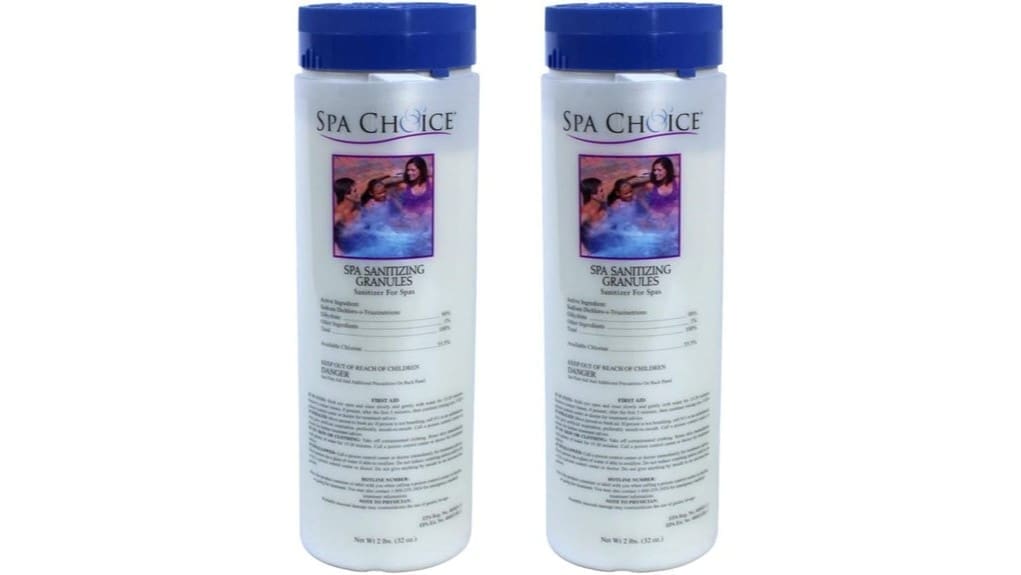
You’ll find SpaChoice Premium spa granules a reliable, fast‑dissolving chlorine sanitizer that keeps hot tub water clear when you follow dosing and testing. It kills common spa bacteria, helps control algae with routine use, and dissolves quickly in running water so levels stabilize fast. Follow the start‑up and maintenance dosages, monitor free chlorine, pH, alkalinity and hardness, and watch for foaming or oil buildup. Keep circulation running and check compatibility with your equipment to learn more.
Some Key Takeaways
- Reliable chlorine sanitizer with solid bacterial and algae control when dosed and maintained per directions.
- Fast-dissolving granules provide prompt chlorine availability and predictable real-world sanitizer levels.
- Start-up dosing: 6 teaspoons per 500 gallons (~8.4 ppm); maintain daily testing and target recommended FAC range.
- Compatible with routine spa equipment if manufacturer guidance followed; circulate during dosing and retest frequently.
- Sold as a 2-pack (two 2-lb tubs), made in USA; compare cost per pound versus bulk for best value.
Quick Verdict: Is SpaChoice Premium Spa Sanitizing Granules Worth Buying?
If you want a straightforward, effective chlorine sanitizer for your hot tub, SpaChoice Premium Spa Sanitizing Granules deliver reliable results without fuss. You’ll appreciate clear dosing guidance, fast dissolution, and U.S. manufacture in a 2-pack that’s practical for routine care. It balances performance with user safety—follow re-entry limits and test frequently. It won’t mask water issues, so you’ll still manage pH, alkalinity, and hardness. Note scent preferences: granules don’t add fragrances, so any smell comes from additives or contaminants you control. Overall, it’s a pragmatic, cost-effective choice if you accept chlorine’s trade-offs. Many homeowners find using simple pool water test kits helps maintain safe levels and extend sanitizer effectiveness.
How Well It Sanitizes Spas: Effectiveness on Bacteria, Algae, Dissolution, and Real-World Performance
While not flashy, SpaChoice granules sanitize spas reliably when used as directed. You’ll see solid bacterial efficacy against common spa pathogens when you maintain recommended chlorine levels and circulation. Algae control is effective with routine dosing; treat visible blooms promptly. Dissolution speed is fast—granules dissolve quickly in running water, minimizing residue and allowing prompt chlorine availability. In real world performance the product performs predictably: stable sanitizer levels, clear water, and straightforward handling. You should still test frequently and manage bather load, pH, and contaminants, since oils and lotions can reduce effectiveness despite proper product use. Regular use alongside algaecide maintenance helps keep pools and spas clear and prevents recurring blooms.
Exact Dosing and Water Metrics for Your Hot Tub: Start-Up, Maintenance, and Ppm Targets
Start by testing and balancing your water, then add 6 teaspoons of SpaChoice granules per 500 gallons for an initial dose and rerun circulation until levels stabilize. You’ll use start up calculations: each level teaspoon (~0.17 oz) yields ~1.4 ppm in 500 gallons, so six teaspoons target ~8.4 ppm available chlorine—retest after circulation. For maintenance, aim for free available chlorine in the recommended range (below re-entry limits) and retest daily with a reliable kit. Monitor pH 7.2–7.8, alkalinity 60–100 ppm, and calcium hardness ≥200 ppm. Note chlorine retention varies with bather load, sunlight, and contaminants. Homeowners who enjoy outdoor spaces should consider seasonal pool opening routines to keep water ready for use.
Compatibility, Maintenance, and Common Issues: Equipment, Foaming, and Drain Intervals
Because your spa’s materials and systems vary, check the manufacturer’s guidance before using chlorine granules so you don’t void warranties or harm equipment. You should confirm equipment compatibility—some pumps, heaters, and seals tolerate chlorine better than others. Run circulation during dosing and test levels frequently. Watch for foam: oils, lotions, and certain cleaners react with chlorine and cause foaming; use defoamers sparingly and address sources first. Maintain a regular drain schedule—typically every 30–90 days, sooner with heavy use—to control buildup and contaminants. If persistent cloudiness or corrosion appears, stop use and consult a pro or the manufacturer. For homeowners, consider following best practices for chlorine tablets and outdoor pool care to keep your spa safe and sparkling.
Where to Buy and Value Comparison: Package Size, Made in USA, and Cost Per Pound vs Alternatives
If you want reliable, American-made chlorine for your hot tub, SpaChoice’s 2-pack (two 2-lb tubs, 4 lbs total) is widely available from major retailers and online marketplaces, often priced competitively versus single-pound or bulk alternatives. You’ll appreciate the packaging convenience for storage and dosing. Check local retailers for immediate pickup and compare with online discounts that sometimes undercut store prices. Evaluate cost per pound against bulk industrial options; SpaChoice’s made-in-USA status and brand reputation can justify modestly higher unit costs. Balance price, availability, and authenticity when choosing sanitizer for routine spa maintenance. Proper pool chemical storage helps keep granules dry and reduces the risk of hazardous reactions during home storage.
Some Questions Answered
Can These Granules Be Used in Swim Spas or Larger Pools?
Yes — you can use these granules in swim spas and some larger pools, but you’ll need to scale dosing precisely. They’re formulated for portable hot tubs and spas; for commercial pools or big swim spas calculate gallons and adjust teaspoons per 500 gallons, monitor free chlorine and cyanuric acid limits, and run circulation while dosing. Consult your pool manufacturer and test frequently; commercial pools may require different sanitizer protocols or higher-capacity products.
Are They Safe for Use With Bromine Systems or Mineral Sanitizers?
No — you shouldn’t mix them directly with bromine systems or mineral sanitizers; they’re chlorine-based and can disrupt bromine compatibility and cause unwanted mineral interaction. If you switch systems, fully shock and neutralize residual chlorine, follow manufacturer guidance, and test levels before adding bromine or mineral products. Consult your spa’s guidelines; avoid simultaneous dosing to prevent reduced sanitizer efficacy, cloudy water, or chemical byproducts.
Do They Have an Expiration Date or Shelf-Life?
They don’t have a strict printed expiration date, but they’re shelf stable if you follow proper storage conditions. Keep the granules dry, tightly sealed, and stored in a cool, dark place away from moisture and contaminants. Under those conditions you’ll maintain potency for years; exposure to humidity or heat can degrade effectiveness and cause caking. Regularly inspect and test before use to guarantee proper sanitizing performance.
Will They Damage Spa Covers or Liners With Prolonged Exposure?
No, they won’t directly damage covers or liners with normal use, but they can contribute to color fading and material hardening if you repeatedly splash high chlorine levels onto surfaces or store granules against materials. You should run circulation when dosing, avoid prolonged direct contact, rinse spills, and follow recommended chlorine and CYA limits. Test water frequently and follow manufacturer compatibility advice to minimize long-term aesthetic or material changes.
Are They Safe to Handle Without Gloves or Masks?
You shouldn’t handle them without protection; they’re granular chlorine so skin contact can irritate and there’s an inhalation risk if dust’s generated. Wear gloves and a dust mask when measuring and pouring, work in a well-ventilated area, and avoid breathing dust or letting it touch your skin or eyes. If contact occurs, rinse thoroughly and seek medical help for persistent irritation. Follow label safety instructions.