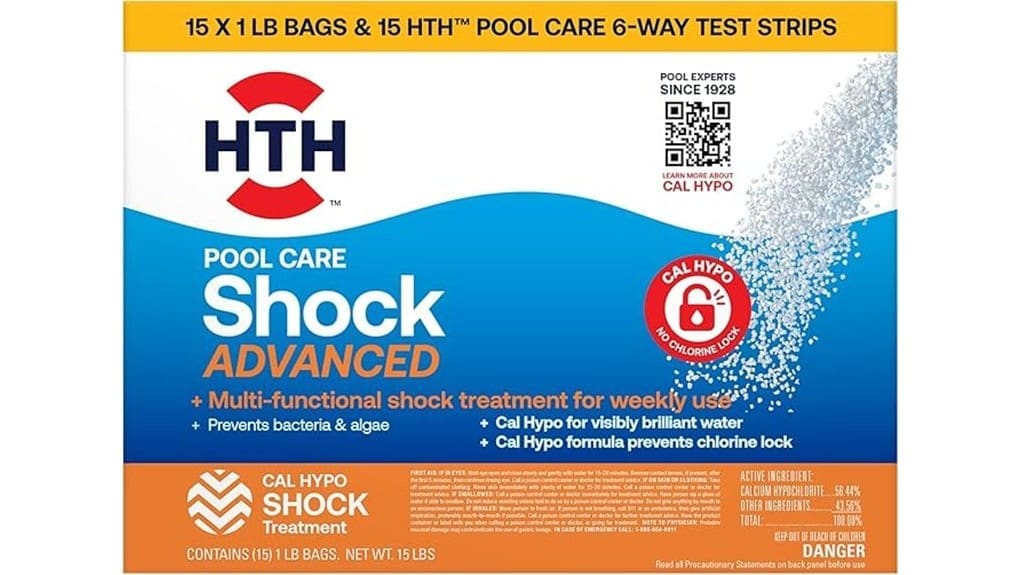
You’ll get a fast, measured chlorine boost with HTH 52125 Shock Advanced, a concentrated powdered formula sold in 15 one‑pound bags that each treat 13,500 gallons. Apply with the pump running, test before and after, and keep free chlorine 1–4 ppm; wear gloves and eye protection. It clears bacteria and algae and clarifies water within 24 hours when dosed properly, is vinyl‑ and salt‑system compatible, and lets you plan costs and inventory—further details follow.
Some Key Takeaways
- HTH 52125 is a 1‑lb powdered chlorine shock sold in 15 bags, each treating 13,500 gallons for measured dosing.
- It rapidly raises free chlorine and visibly controls microbes and algae within 24 hours when used as directed.
- Apply powder directly to pool with pump running; test chlorine and pH before and after to maintain 1–4 ppm.
- Compatible with vinyl liners, gunite, concrete, and salt systems when dosed correctly; avoid overdosing to protect surfaces.
- Wear gloves and eye protection, keep granules dry and sealed, and schedule shocks during low sunlight and bather load.
What HTH 52125 Swimming Pool Shock Advanced Is and Who It’s For
Although it looks simple, HTH 52125 Swimming Pool Shock Advanced is a concentrated, powdered chlorine shock formulated to quickly raise free available chlorine and eliminate bacteria and algae in residential and commercial pools. You’ll use 1-lb bags to treat 13,500 gallons, supporting routine pool maintenance and rapid remediation. The formulation’s compatibility with liners, gunite, and salt systems makes it versatile for operators and homeowners. You’ll store unopened bags in cool, dry chemical storage away from combustibles and moisture, and you’ll note visible microbial control within 24 hours. This product’s packaging—15 one-pound bags—facilitates measured dosing and inventory control. It’s an ideal option for homeowners who enjoy maintaining their outdoor spaces and need reliable shock treatment for seasonal care and unexpected issues, with guidance available for shock treatment tips.
How to Use HTH 52125: Dosage, Timing, and Safety Tips
When you need to quickly raise free available chlorine, dose one 1‑lb bag of HTH 52125 per 13,500 gallons and apply the powder directly to the pool water with the pump running for even dispersion. You should perform water testing before and after shock to verify free available chlorine and pH; maintain chlorine 1–4 ppm. For routine maintenance, test weekly and schedule shocks when sunlight and bather load are lowest—early morning or late evening—to optimize application timing and minimize UV loss. Wear gloves and eye protection, keep granules dry, store sealed, and prevent children or pets access during treatment. Homeowners can use simple test kits to monitor chlorine and pH levels and ensure safe swimming conditions with routine testing.
Performance Breakdown: Chlorine Boost, Algae Control, and Results in 24 Hours
Because HTH 52125 delivers a concentrated dose of stabilized chlorine in powdered form, you’ll see a measurable rise in free available chlorine within hours and substantial microbial kill within 24 hours when dosed per instructions. You’ll observe rapid clarification as particulates flocculate and oxidize; turbidity drops markedly after circulation and filtration. Algae control is achieved through sustained chlorine residuals that disrupt cell membranes and metabolic pathways, reducing colony-forming units to non-detectable levels within a day under typical loads. Sensory impact is minimal if you maintain recommended ppm—no strong odors or irritation when levels return to the 1–4 ppm range. Proper use as part of your pool opening chemical routine helps ensure safe, swim-ready water.
Compatibility and Practical Benefits: Pools, Liners, and Salt Systems
Having established its rapid chlorine boost and reliable algae control, we can now examine how HTH 52125 performs across different pool constructions and systems. You’ll find explicit liner compatibility: the formula won’t fade vinyl liners when dosed per instructions, so you can shock without compromising finish. For Gunite and concrete, it disperses uniformly, restoring free chlorine efficiently. Salt tolerance is confirmed for saltwater pools; the oxidizer works alongside salt chlorinators without causing system interference when you maintain recommended chlorine ranges. Apply per volume guidelines, test regularly, and avoid overdosing to preserve surfaces and equipment longevity. Keep your pool pH balanced for clearer, safer water by testing often and adjusting as needed with pH decreasers.
Buying Considerations: Coverage, Cost Per Treatment, and When to Choose This Shock
To figure out if HTH 52125 is the right shock for you, focus on coverage per bag, cost per treatment, and the scenarios that call for a fast chlorine boost. Each 1-lb bag treats 13,500 gallons, so do the coverage math: divide pool volume by 13,500 to determine bags per treatment. For routine weekly maintenance keep free chlorine 1–4 ppm; for algae or contamination shock at higher dose and increase bag count accordingly. For budget planning, calculate cost per bag times bags per treatment to compare brands. Choose HTH 52125 when you need predictable coverage, rapid results, and vinyl-safe formulation. Proper closing also includes balancing water and using appropriate chemicals to leave your pool safely closed for the offseason.
Some Questions Answered
Does This Shock Have a Strong Chlorine Smell After Treatment?
You might notice a mild chlorine odor after treatment, but it’s typically not strong. The shock raises free available chlorine (target 1–4 ppm) to oxidize contaminants, which can produce a brief chlorine odor as byproducts release. If you have sensory sensitivity, you’ll detect it more readily; ventilating the area and waiting 24 hours—when visible results appear—reduces odor as chlorine levels normalize and the smell dissipates.
Is It Safe to Swim Sooner Than 24 Hours After Application?
You shouldn’t swim sooner than 24 hours after application. You’ll wait to meet safety thresholds—free chlorine 1–4 ppm—before reentry to avoid skin irritation and compromised breathability. Test water before swimming; if chlorine remains elevated or pH is off, continue delaying. Follow recommended doses for your pool volume and retest hourly if levels are borderline. Prioritize measured readings over elapsed time for safe swim delay decisions.
How Should Leftover Bags Be Stored for Long-Term Use?
Store leftover bags in a cool, dry place; don’t leave them exposed. Keep each unopened bag in an airtight container to remain moisture free and protect from contaminants. Maintain a temperature stable environment away from sunlight and heat sources. Label containers with purchase and open dates, and stack bags to avoid crushing. Inspect before use for caking or discoloration; discard if compromised. Follow local disposal rules for expired product.
Can It Be Mixed With Other Pool Chemicals Safely?
No, you shouldn’t mix it directly with other pool chemicals; chemical compatibility and dosing interactions can create hazardous reactions. You should add shock to the pool separately, allow full dissolution and circulation, then test water before adding other treatments. Follow dosing instructions and wait between applications to avoid unsafe byproducts or reduced effectiveness. When in doubt, consult product labels and manufacturer guidance to confirm safe sequencing and compatibility.
Is This Product Pet-Friendly if Pool Pets Swim Afterward?
Yes — it can be pet-friendly if you wait. You shouldn’t let pets swim immediately after treatment; wait until free chlorine returns to 1–4 ppm and pH is balanced. You’ll want to perform residue testing for oxidizers before allowing pets back in. Rinse pets’ fur after swimming and monitor for irritation. Follow label instructions and avoid mixing with other chemicals to prevent harmful reactions that could increase pet exposure.