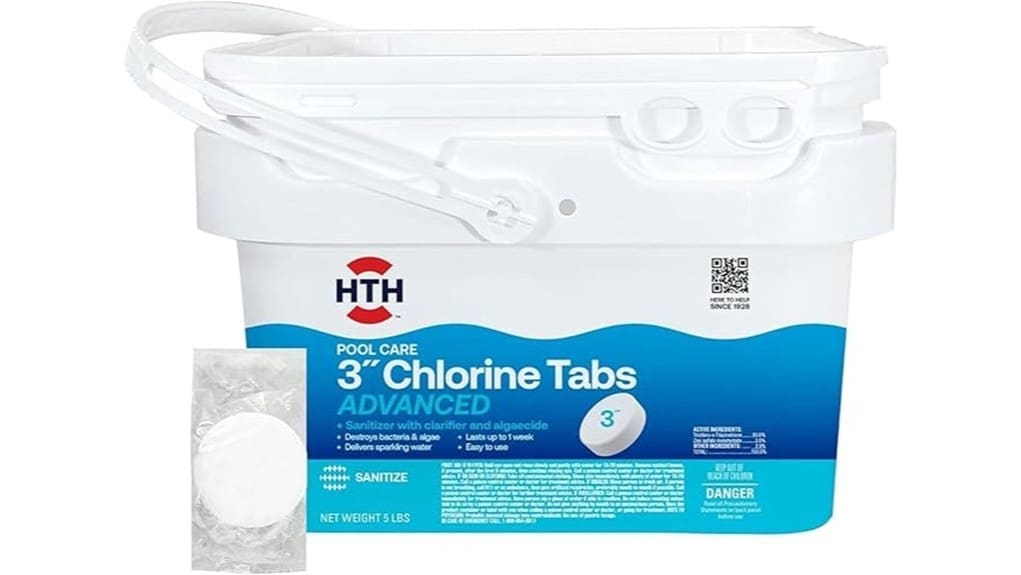
You’ll get individually wrapped, sun‑protected 3″ HTH 42052W chlorine tablets designed for slow, controlled dissolution to maintain free chlorine at 1–4 ppm when used in appropriate floaters or feeders. They reduce shock frequency, help prevent algae with balanced chemistry, and clarify water as filtration removes particulates. Store unopened in a cool, dry, ventilated area, avoid direct contact with vinyl or salt cells, and test twice weekly; continue for usage tips, placement tradeoffs, and safety details.
Some Key Takeaways
- Sun-protected 3″ HTH 42052W tablets dissolve slowly, providing steady chlorine residuals for up to one week under typical conditions.
- Individually wrapped tablets reduce moisture and contamination, simplifying storage and safer handling with gloves and eye protection.
- Best dosing via in-line feeder for consistent distribution; skimmer accelerates burn-off and floaters can unevenly cluster.
- Maintain free chlorine 1–4 ppm and test twice weekly; shock if algae blooms or visible contamination occur.
- Compatible with vinyl-lined and salt systems when used per label, but avoid direct tablet contact with liners or salt cell plates.
HTH 42052W at a Glance: What’s in the 5 Lb Box
Open the sealed 5 lb box and you’ll find individually wrapped, 3-inch HTH 42052W chlorine tablets designed for controlled, slow dissolution; each tablet is sun-protected to preserve active chlorine and engineered to last up to one week when used properly. You’ll observe a clear tablet count on the label; remove tablets with gloves and eye protection to avoid contact. Packaging limits moisture and cross-contamination. Tablets are compatible with floaters, feeders, and skimmer baskets; store unopened in a cool, dry, ventilated area away from organics and acids. Follow label directions and local disposal regulations for safety. These tablets are intended for homeowners who enjoy their outdoor spaces and maintaining pool water quality.
Does It Sanitize, Prevent Algae, and Clarify Water? Real Performance Breakdown
Having examined how the tablets are packaged and handled, let’s assess their on-water performance against microbes, algae, and turbidity. You’ll find chlorine potency sufficient to reduce heterotrophic bacteria to safe levels when you maintain 1–4 ppm; measure with test strips and adjust dose. Tablet dissolution is predictably slow, providing steady residuals and lowering shock frequency. Algae control is effective when combined with balanced water chemistry; treat visible blooms with supplemental shock to prevent algae regrowth. Clarification occurs as particulates settle or are filtered once sanitizer residuals are stable. Always handle with gloves and store away from sunlight. Homeowners who enjoy their outdoor spaces should consider routine use of pool opening chemicals as part of seasonal maintenance.
How Long Each 3 Tablet Lasts and Best Placement (Floater, Feeder, Skimmer)
While each wrapped 3″ tablet is designed to dissolve slowly and can maintain effective chlorine residuals for up to one week, actual longevity depends on tablet placement, pool size, bather load, and environmental factors. You’ll see tablet longevity vary: small pools with low bather load approach a week per tablet; larger or heavily used pools shorten that. For placement options, use an in-line feeder for controlled, consistent dosing; a skimmer basket gives strong localized chlorination but faster burn-off; a floater offers simple, moderate release but can cluster and over-chlorinate. Always follow label instructions and monitor chlorine levels frequently for safety. Consider using in-line feeders for the most consistent, long-lasting chlorine delivery.
Compatibility and Safety: Vinyl Pools, Salt Systems, and Testing Recommendations
Because these 3″ HTH tablets dissolve slowly and are individually wrapped, they’re compatible with vinyl-lined pools and saltwater systems when you follow label directions and monitor levels, but you must avoid direct tablet contact with the liner or cell plates and never place tablets in the skimmer if return flow is restricted. You should use approved feeders or floaters positioned for even dispersion to preserve vinyl compatibility. For salt systems, apply saltwise dosing practices: adjust tablet feed to account for continuous chlorine generation. Test water twice weekly with HTH 6-Way strips, keep free chlorine 1–4 ppm, and record readings for trend analysis. Keep your pool pH balanced for clearer, safer water by maintaining recommended alkalinity and pH levels with regular testing and adjustment using pH balancing techniques.
Value Verdict: Cost, Convenience, and Who Should Buy These Tablets
If you want a cost-effective, low-maintenance sanitizer that prioritizes safety and predictable dosing, HTH 42052W 3″ tablets deliver—slow dissolution and sun-protected formulation stretch each tablet to about a week, reducing the frequency of handling and exposure. In budget comparison, per-tablet longevity and reduced dosing events lower ongoing cost versus fast-dissolving alternatives. Convenience ranking is high: individually wrapped tablets simplify storage and reduce chloramine exposure during handling. You should buy these if you run a residential pool, prefer scheduled weekly maintenance, or need compatibility with vinyl and salt systems. Avoid them if you require rapid shock-level chlorination. These tablets are well-suited for homeowners who maintain their outdoor pool spaces on a seasonal schedule and want predictable maintenance intervals for effortless summer enjoyment.
Some Questions Answered
Can These Tablets Damage Pool Covers or Plumbing Over Time?
They shouldn’t damage your pool cover or cause significant plumbing corrosion if you use them correctly. You’ll avoid chemical buildup by maintaining chlorine 1–4 ppm, testing twice weekly, and using floaters/feeders to prevent concentrated contact. Don’t store tablets on covers or allow tablets to sit against vinyl. Rinse spillages promptly and guarantee proper circulation to dilute chlorine. Persistent high chlorine or bypassing feeders can increase corrosion risk to plumbing.
Are These Tablets Safe for Use With Pool Heaters?
Yes — you can use them with pool heaters if you follow heater compatibility and temperature limits. You’ll want to keep tablet placement in a floater or feeder away from direct heater intake and make sure circulating water dilutes chlorine before entering the heater. Maintain recommended chlorine (1–4 ppm) and avoid spikes. Monitor water chemistry twice weekly, and keep heater temperature within manufacturer limits to prevent accelerated corrosion or degradation of heater components.
Do They Leave Residue or Staining on Pool Surfaces?
They typically won’t cause surface discoloration or tile etching when you use them correctly. You’ll avoid residue by dissolving tablets in floaters, feeders, or skimmer baskets rather than placing them directly on pool surfaces. Maintain proper pH and chlorine (1–4 ppm) and test twice weekly. If you see deposits or etching, lower chlorine, adjust alkalinity/pH, brush affected areas, and consult a pool professional to prevent long-term damage.
How Should I Store Leftover Tablets Long-Term?
Store leftover tablets in an airtight container placed in cool storage to minimize moisture and chlorine loss. Keep them away from heat, sunlight, and combustible materials. Use nonmetal, corrosion-resistant containers and separate from acids or pool chemicals to prevent dangerous reactions. Label the container with contents and date. Check seals periodically and dispose of degraded tablets per local hazardous-waste rules. Don’t mix different chemical types in the same container.
Are They Biodegradable or Environmentally Friendly?
No — they’re not biodegradable; their biodegradable composition is limited. You’ll note the tablets release persistent chlorine compounds that control microbes but can harm aquatic life if discharged. Environmental impact includes residual halogenated byproducts and elevated oxidant levels downstream. You should avoid direct release, follow label disposal instructions, and neutralize excess chlorine before draining. Use measured dosing and test water to minimize environmental and safety risks.