You’ll get a high‑available calcium hypochlorite oxidizer that quickly raises free chlorine, oxidizes organics and clears algae when you pre‑dissolve and dose correctly. Use 1 lb per 10,000 gallons for routine shock, double for visible algae, and circulate 8–12 hours before retesting. Wear gloves and eye protection, never mix with acids or organics, and store cool and dry away from incompatible materials. Continue for detailed steps on mixing, testing, and material precautions.
Some Key Takeaways
- Cal-hypo (calcium hypochlorite) is a fast‑acting, unstabilized oxidizer that quickly raises free chlorine to kill algae and bacteria.
- Typical routine shock dose is 1 lb per 10,000 gallons; double dose for visible algae and circulate 8–12 hours.
- Pre-dissolve granules in cool, nonmetallic container, add solution at deepest point with circulation running.
- Wear gloves and eye protection, avoid mixing with acids or organics, and store cool, dry, segregated from acids.
- Can bleach vinyl and corrode metals/rubber at high residuals; test free/combined chlorine at 1, 4, and 24 hours.
How In The Swim Cal‑Hypo Works and What It Treats
Understand how In The Swim Cal‑Hypo works so you can use it safely and effectively: its active ingredient, calcium hypochlorite, releases hypochlorous acid and hypochlorite ions when dissolved in water, which are strong oxidizers that destroy bacteria, algae, and other microorganisms by breaking down cell walls and disrupting metabolic processes. You’ll rely on rapid oxidation mechanisms to neutralize organics and clear algae blooms; monitor residual chlorine to confirm efficacy. Handle granules with PPE, avoid mixing with acids or stabilizers, and log treatments in maintenance scheduling to prevent overdosing, material damage, or unsafe swim conditions. Regular shock treatments are part of keeping your pool sparkling and preventing recurring algae problems; follow a consistent maintenance schedule.
Dosage and Best Practices: Safe Mixing, Pre‑Dissolving, and Application
When preparing and applying In The Swim Cal‑Hypo, follow strict dosing and handling steps to protect swimmers, equipment, and yourself: pre‑dissolve the recommended amount in a clean, nonmetallic container of cool water (never pour water into dry chemical), wear gloves and eye protection, and add the solution to the pool at the deepest point with the circulation system running. Calculate dose: 1 lb per 10,000 gallons for routine weekly shock; adjust per demand. Use a controlled pre dissolve technique to prevent hotspots. Rinse equipment after use, close containers promptly, and observe storage safety: cool, dry, ventilated, segregated from organics and acids. For homeowners maintaining their outdoor pool, consider including other essential pool opening chemicals in your routine to ensure a sparkling start and balanced water chemistry, such as test kits and algaecides to address common spring issues like debris and algae growth; see essential pool opening chemicals.
Performance Test: Sanitization Speed, Algae Control, and Chlorine Levels
Although Cal‑Hypo acts faster than stabilized chlorine in raising free chlorine, you should measure and manage residuals carefully during and after application to guarantee effective sanitization without damaging pool materials. You’ll observe fast sanitization: free chlorine spikes within an hour when dosed correctly. Test free and combined chlorine at 1, 4, and 24 hours to confirm breakpoint chlorination and algae kill. Maintain residual chlorine in the target range while avoiding overstress to surfaces and equipment. For visible algae, double shock and circulate 8–12 hours, then retest. Follow safety protocols for dosing, personal protection, and proper dilution. Keep your pool pH balanced to ensure clearer, safer water and optimal sanitizer effectiveness.
Compatibility and Cautions: Pool Types, Liners, Spas, and Material Risks
Because calcium hypochlorite is an unstabilized, high‑available‑chlorine oxidizer, you must treat it as a concentrated chemical that can bleach vinyl liners, damage certain metals, and stress spa components if applied undiluted or overdosed. For above ground compatibility, pre-dissolve granules and add slowly to avoid localized high chlorine. Prevent liner bleaching by keeping solution dilute and circulating; never dump undissolved product onto vinyl. For spas, control dose and temperature to minimize spa corrosion and avoid rubber seal damage. Monitor metals, plastics and seals for early signs of material degradation and follow manufacturer safety and handling procedures. When considering pool safety products, evaluate appropriate pool covers to enhance overall backyard safety and complement chemical management.
Value for Money and Buying Advice: Pack Size, Storage, and Who Should Buy
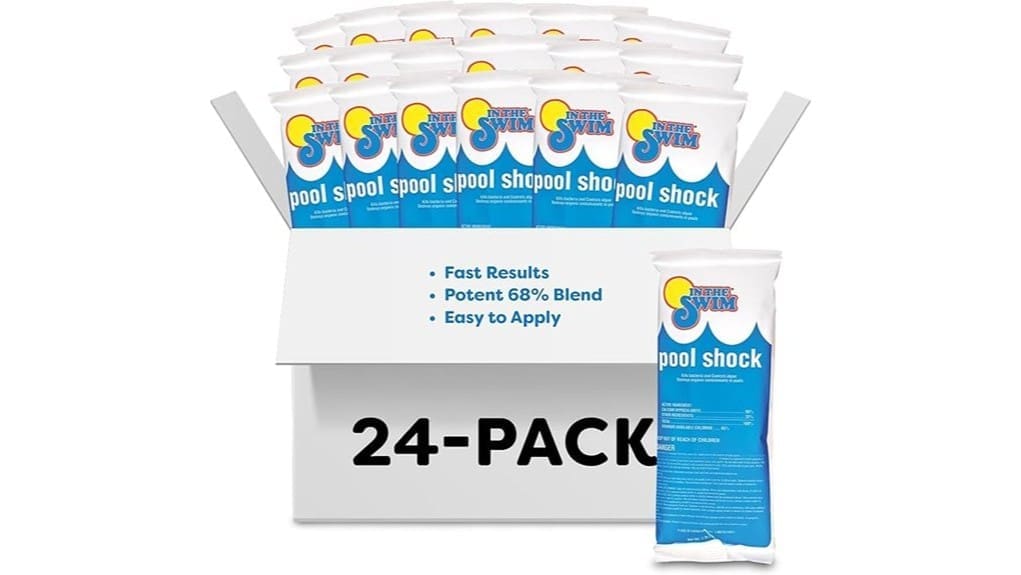
If you maintain multiple pools or seasonally shock a single large pool, buying the 24 × 1 lb package of In The Swim Cal‑Hypo offers clear cost-per‑use savings and reduces shopping frequency. You’ll assess buyer profile: commercial operators, pool services, and committed homeowners benefit most. Store unopened tubs in a cool, dry, well‑ventilated area away from organics and acids; label containers and keep away from moisture to prevent degradation. For bulk storage, use corrosion‑resistant shelving and secondary containment. Handle with PPE, avoid mixing with other chemicals, and rotate stock by date. Don’t buy single units if you need frequent shocks. For safe home storage, consider pool chemical storage practices that keep containers secure and separated from other household supplies.
Some Questions Answered
Is It Safe to Use Around Pool Toys and Inflatables?
Yes — but be cautious. You shouldn’t expose pool toys and inflatables directly to Cal-Hypo granules or concentrated solutions because chemical residues can degrade vinyl and printed coatings. After shock treatment, wait until free chlorine and pH return to normal, rinse items with fresh water, and check material compatibility before prolonged use. Store toys away during dosing and follow dilution or pre-dissolve instructions to minimize localized high-concentration contact.
Will It Affect Pool Heater or Salt Chlorine Generator Warranties?
Yes — using high-strength cal-hypo can influence warranty implications if it contributes to equipment corrosion or misuse. You should follow manufacturer dosing, pre-dissolve granular product, and avoid feeding concentrated chlorine into heaters or salt chlorine generators. Excessive free chlorine and improper application may void warranties tied to corrosion damage. Document your procedures and keep water chemistry within recommended ranges to support warranty claims and minimize equipment corrosion risks.
How Should Accidental Skin or Eye Contact Be Treated?
If skin or eyes contact the product, you should remove contaminated clothing immediately and rinse thoroughly with running water for at least 15 minutes; flush eyes gently but continuously and avoid rubbing. For skin, wash with mild soap after initial rinsing. If irritation, burns, or persistent pain occur, seek medical attention promptly and seek medical evaluation for eye exposures. Carry product label information when you seek medical care.
Can It Be Used With Other Algaecides or Clarifiers Simultaneously?
Yes — you can use it with other algaecides or clarifiers, but you must manage compatible chemicals and dosing timing precisely. Avoid mixing with acids, ammonia, or stabilized chlorine; always pre-dissolve granules. Add shock first, circulate until free chlorine returns to safe levels, then dose algaecide/clarifier per label. Maintain recorded dosing timing and residuals to prevent reactions, bleaching, or reduced efficacy; when in doubt, wait 24 hours.
Are There Seasonal Disposal or Recycling Guidelines for Empty Containers?
Yes. You should follow seasonal regulations for hazardous-shock residues: rinse containers outside only when allowed, neutralize residues per label, and dry thoroughly before recycling. Contact local recycling centers for acceptance criteria and seasonal collection schedules. If prohibited, dispose through household hazardous waste programs. Keep containers sealed, labeled, and segregated from combustibles during storage and transport to collection points to minimize reaction and contamination risks.