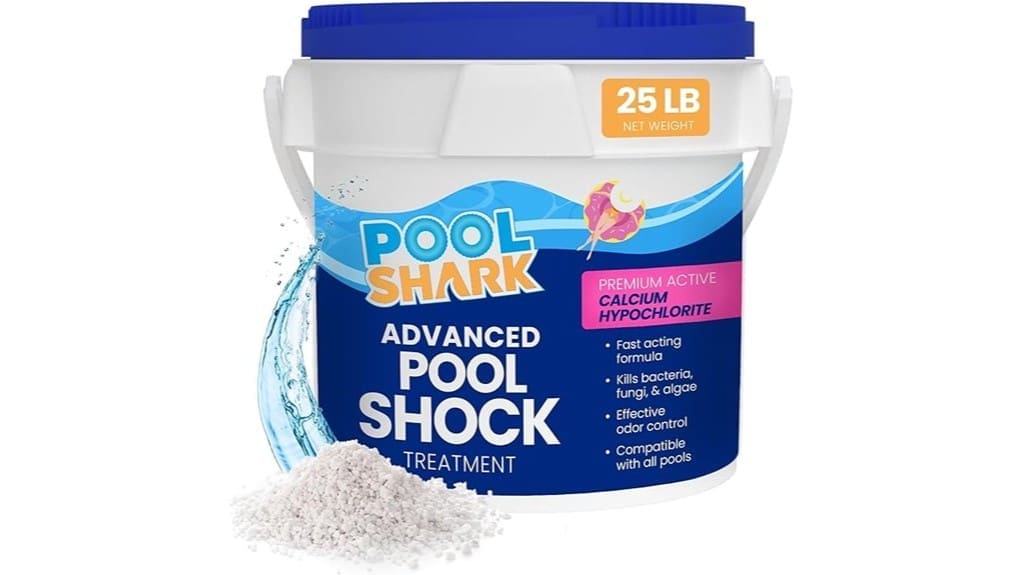
You’ll get a fast, non‑stabilized 68% calcium hypochlorite shock that rapidly raises free chlorine and oxidizes algae, bacteria, and odors when dosed per label. You must test water, dissolve granules in a plastic bucket, wear PPE, and avoid adding to the skimmer. It’s effective for routine and emergency shocking but raises calcium/alkalinity and isn’t for biguanide or CYA‑dependent systems. Follow storage and handling rules precisely — more detailed guidance follows below.
Some Key Takeaways
- Fast-acting 68% calcium hypochlorite shock rapidly raises free chlorine for quick algae, bacteria, and odor control.
- Sold in 25 lb bucket (Model CH25), best for routine shocks and post-storm or heavy-use treatments.
- Non-stabilized formula avoids cyanuric acid buildup but increases pool calcium and alkalinity.
- Requires careful handling: goggles, gloves, long sleeves, dust mask, dissolve in water in a plastic bucket.
- Not suitable for biguanide systems or scaling-prone surfaces; test water and follow label dosing and storage instructions.
What Pool Shark 68% Calcium Hypochlorite Is and Who It’s Best For
Think of Pool Shark 68% Calcium Hypochlorite as a fast‑acting, granular pool shock designed to rapidly raise free chlorine and oxidize contaminants; it’s a non‑stabilized calcium hypochlorite formulation sold in a 25 lb bucket (Model CH25). You’ll find it suited for routine pool maintenance, shock treatments after heavy use or storms, and situations needing rapid algae and bacterial control. You should prefer it when avoiding cyanuric acid buildup matters. Handle with care: follow label directions, segregate from incompatible materials, and maintain compliant chemical storage. This product best fits pool operators and informed homeowners who follow regulatory and safety protocols. Many homeowners buy related supplies from websites that focus on pool shock treatments and outdoor pool care.
How to Dose and Use Pool Shark 68% Calcium Hypochlorite Safely
Now that you know what Pool Shark 68% Calcium Hypochlorite is and when to use it, you’ll need clear, safety‑focused dosing and handling steps to apply it correctly. Always wear safety equipment: goggles, chemical-resistant gloves, long sleeves, and a dust mask. Calculate dose per label (ppm targets) and dissolve granules in a clean plastic bucket with water—never add water to chemical. Broadcast solution around pool perimeter with pump running; avoid adding to skimmer. Store sealed, cool, dry, away from organics. Follow local regulations for disposal and spill response; notify authorities and follow prescribed drain procedures if required. Pools treated with calcium hypochlorite can increase water hardness over time, so monitor and adjust levels as needed.
Performance: How Quickly It Kills Algae, Bacteria, and Odors
When you apply Pool Shark 68% Calcium Hypochlorite correctly, it raises free chlorine quickly to levels that neutralize algae, bacteria, and odor-causing contaminants within hours rather than days; exact kill times depend on achieved ppm, water temperature, pH, and organic load. You’ll observe rapid sanitization when target breakpoint chlorination is reached and maintained; green or yellow algae often diminish within 6–24 hours under ideal conditions, tougher strains may take longer. Follow label dosing, monitor free chlorine and pH, and document contact time for regulatory compliance. Expect measurable odor elimination as contaminants oxidize and filtration removes debris. Homeowners should also consider using pool algaecides as a supplemental preventive measure alongside shock treatments.
Compatibility and When Not to Use This Calcium Hypochlorite Shock
Although this granular calcium hypochlorite shock is broadly compatible with inground, above‑ground, saltwater pools, spas, and hot tubs, you should not use it in systems or situations where calcium buildup, stabilized chlorine needs, or chemical incompatibilities create hazards or performance issues. You should avoid use if your pool surface is prone to scaling (plaster, unsealed aggregate) or if total alkalinity and calcium hardness are already high. Do not add to systems requiring stabilized chlorine (CYA) or to pools with incompatible sanitizers (biguanide). Also avoid frequent dosing where equipment corrosion risk exists; follow label limits and test water before treatment. Homeowners looking to maintain balanced pool water may prefer using specialized calcium hardness increasers alongside shock treatments.
Pros, Cons, and Value: Is Pool Shark 68% Calcium Hypochlorite Worth Buying?
Wondering if Pool Shark 68% Calcium Hypochlorite delivers the right balance of performance and risk for your pool? You’ll find clear pros: rapid chlorine boost, effective algae and bacteria control, and long-lasting sanitization suitable for varied pool types. Cons include increased calcium and alkalinity, handling hazards, and incompatibility with certain stabilized systems. From a regulatory and safety stance, follow label directions and storage rules to mitigate risks. Cost analysis should factor per-treatment chlorine potency versus alternative shocks. Review user testimonials for real-world dosing notes and outcomes. If you prioritize fast, potent oxidizing power, it’s a practical option. Homeowners who enjoy their outdoor spaces may also want to consider clarifiers and related products to maintain clear pool water.
Some Questions Answered
Can This Shock Be Used With Vinyl Pool Liners?
Yes — you can use it with vinyl liners, but proceed cautiously. You’ll follow label instructions, pre-dissolve granules if directed, and avoid pouring concentrated product directly onto the liner to minimize vinyl compatibility risks. High calcium or repeated heavy dosing can cause liner discoloration or premature wear, so monitor calcium hardness and water balance, dose gradually, and rinse any splashes promptly to meet safety and regulatory guidance.
How Long Should I Wait to Swim After Treatment?
You should wait at least 8 hours before swimming, and longer if free chlorine remains above 3 ppm; confirm with test strips or a digital tester. Be cautious about chlorine rebound after shock dosing—measure several times over 24 hours to guarantee levels stabilize and don’t spike. Follow local pool regulations and manufacturer guidance; if cyanuric acid or calcium levels are high, consult a pro before returning swimmers for safety and compliance.
Does It Affect Salt Chlorine Generator Cells?
Yes — you should be cautious. Using granular calcium hypochlorite can increase calcium levels and promote cell scaling, which reduces salt chlorine generator efficiency over time. While it doesn’t directly cause generator corrosion, elevated calcium and improper pH can contribute to corrosive conditions. You’ll want to monitor calcium hardness, cyanuric acid, and pH, follow manufacturer dosing limits, and flush or inspect cells regularly to mitigate scaling and corrosion risks.
How Should Leftover Granules Be Stored Safely?
Store leftover granules in airtight containers, labeled with product and date, and keep them in a cool, dry, well-ventilated area away from heat, flame, acids, and organic materials. Use moisture absorbers inside containers to prevent clumping and degradation. Wear gloves and eye protection when handling. Follow local, federal, and manufacturer regulatory storage limits and never mix with other chemicals. Dispose of damaged containers per hazardous-waste guidelines.
Is This Safe for Use Near Pool Landscaping and Concrete?
Yes — you can use it near landscaping and concrete if you’re careful. Maintain proper dilution and avoid direct granular contact with plants, mulch, or concrete to prevent burns and concrete corrosion. Rinse any spills promptly, keep granules off soil and hardscapes, and store sealed. Follow label directions, local regulations, and PPE guidance; if treating near sensitive plants or new concrete, test a small area first and consider temporary protective barriers.