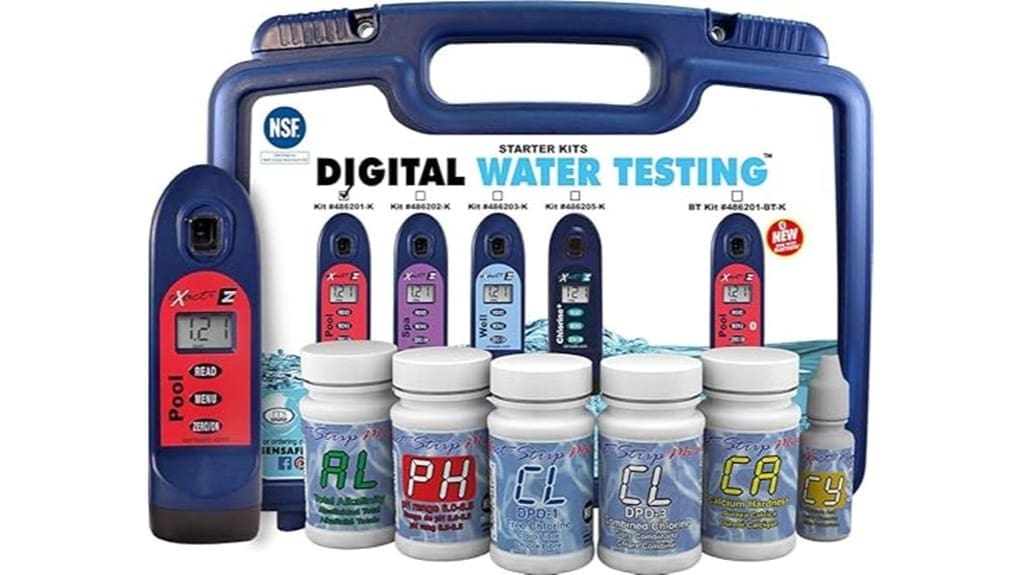
You’ll get fast, lab-grade digital readings for chlorine, pH, alkalinity, calcium hardness, and CYA with the 486201-K Exact® Pool EZ Photometer Starter Kit, making it ideal for homeowners and light commercial use. It’s compact, NSF-certified, and removes color-matching errors, though reagent packs are limited to 25 tests and omit phosphate, copper, and salt. Expect good accuracy and occasional sensor drift requiring QC checks and spare supplies. Keep going to see detailed limits, costs, and alternatives.
Some Key Takeaways
- Compact, NSF-certified photometer provides accurate digital readings for chlorine, pH, alkalinity, hardness, and CYA.
- Kit includes meter, brush, manual, foam-lined case, and 25-test reagent packs for six key parameters.
- Digital readout eliminates subjective color matching and matches lab standards when sampled correctly.
- Lacks phosphate, copper, and salt reagents; reagent packs limited to 25 tests each.
- Best for homeowners/small pools; consider bulk reagents and spare cuvettes/batteries for frequent use.
Quick Verdict : Who Should Buy the 486201-K Exact® Pool EZ Photometer
If you want fast, lab‑grade results without color matching, the 486201‑K Exact® Pool EZ Photometer is a solid choice. You’ll get precise digital readings that suit homeowners operators who want reliable routine checks and light commercial managers overseeing small pools. You won’t wrestle with subjective color strips, and the device speeds decisions on chlorine, pH, alkalinity and hardness within practical ranges. It’s compact, durable and NSF‑certified, so you can trust quality control and GMP manufacturing. If you need broader lab arrays or phosphate/copper quantification included out of the box, consider higher‑end or supplementary testing options. Many homeowners prefer digital testers because they make it easy to keep pool water perfect with faster, more consistent results.
What’s in the Kit and Which Tests It Actually Covers
While the compact navy case might suggest a basic kit, the 486201‑K Exact® Pool EZ Photometer actually bundles a precise digital meter, a cleaning brush, an instruction manual, and 25‑test reagent packs for six key parameters: free/total/combined chlorine (DPD‑1 and DPD‑3), pH, total alkalinity, calcium hardness, and cyanuric acid. You get 25 tests per included reagent type, covering the most used pool metrics; phosphate, copper, and salt reagents aren’t included. The foam-lined case improves portability and supports case durability. Note reagent shelf life on the packs; replace expired reagents to maintain QA and reliable results. Homeowners who enjoy their outdoor spaces should regularly test water to keep pool water clear and safe.
How the eXact Strip Photometer Performs : Accuracy, Ranges, and Real-World Testing
Having outlined what’s in the kit, let’s look at how the eXact Strip Photometer performs in practice. You’ll find readings precise across stated ranges (pH 6.4–8.4, free/total chlorine 0–12 ppm, alkalinity 10–200 ppm, calcium 20–700 ppm, CYA 1–110 ppm). The digital readout removes color matching errors; accuracy matches lab-prepared standards when you follow proper sampling technique. Watch for slow sensor drift over months—periodic user calibration and routine QC checks preserve accuracy. Battery life is solid for typical field jobs, but carry spares for extended use. Overall performance is reliable and repeatable for pool maintenance. For homeowners who enjoy outdoor spaces, pairing this device with pool clarifiers helps maintain clear pool water and optimal conditions.
Limits and Missing Items : When You’ll Need Extra Reagents or Equipment
Because the Starter Kit leaves out phosphate, copper and salt reagents, you’ll need to buy those test packs separately if you monitor for algal risk, metal staining, or salinity systems. You should also plan for extra reagents as your 25-test packs run out faster than routine parameters, especially during heavy use. The photometer handles measured ranges well, but missing PO4, Cu and NaCl limit standalone utility for pools with fertilizer exposure, copper heaters, or salt chlorinators. Order seasonal supplies ahead of peak use to avoid downtime. Consider spare strips, batteries, and a replacement cuvette to maintain uninterrupted testing. Homeowners who enjoy outdoor pool spaces should keep simple test kits on hand to protect water quality and make maintenance easier.
Final Pros, Cons, and Buying Recommendations (Cost, Use Cases, Alternatives)
Given the missing PO4, Cu and NaCl reagents and the need to stock extras, assess whether the Starter Kit meets your ongoing testing needs before buying. You’ll get accurate, easy digital readings, NSF-certified build, and a compact kit ideal for homeowners or small pool pros. Cons: limited 25-test reagent packs, absent phosphate/copper/salt reagents, and consumable costs affect long term maintenance. Cost is moderate but add reagents for full coverage; consider bulk reagent packs for savings. Warranty support exists; confirm terms before purchase. Alternatives: full reagent bundles or higher-capacity photometers if you need heavy-duty or commercial use. This kit fits well for homeowners focused on outdoor pool maintenance and casual use, especially those who prefer robotic pool care and automated outdoor solutions.
Some Questions Answered
Can the Photometer Test Pool Water Temperature?
No — the photometer doesn’t measure water temperature. You won’t get a water temperature or ambient temp reading from the device; it only analyzes chemical parameters like chlorine, pH, alkalinity, hardness, and cyanuric acid. You’ll need a separate thermometer for accurate water temperature or to track ambient temp. Rely on the photometer solely for chemical results and use a calibrated thermometer when temperature influences treatment or test interpretation.
Are Replacement Reagent Packs Sold Individually or in Bulk?
Yes — you can buy replacement reagent packs either individually or in bulk. You’ll find varying pack sizes (single 25-test packs up to multi-pack bundles) and reagent pricing reflects that: single packs cost more per test, bulk buys lower the per-test price. Evaluate your usage to decide: buy individual packs if you test infrequently, or choose larger pack sizes for frequent testing to reduce reagent pricing and waste.
Is the Device Battery-Powered and Are Batteries Included?
Yes — the device is battery powered? Yes, it operates on batteries for portable use, and batteries included? No, replacement batteries typically aren’t included with the starter kit. You’ll need to supply the appropriate batteries (check the manual for type and installation). This setup keeps the unit compact and field-ready, but plan for spare batteries to avoid downtime during testing.
Does the Unit Come With a Warranty or Customer Support?
Yes — you get warranty length and customer service support. The manufacturer backs the unit with a limited warranty (check your manual for specific warranty length and terms), and you can contact customer service for defects, parts, or usage questions. Support is responsive and documented, with QC-verified production and NSF certification reinforcing reliability. Keep your purchase info and serial number handy to expedite claims and technical assistance.
Can It Be Calibrated or Updated by the User?
Yes — you can perform basic user calibration and receive firmware updates. You’ll calibrate the photometer using supplied standards/procedures per the manual for user calibration to maintain accuracy. Firmware updates, when available, are provided by the manufacturer; you’ll install them following their instructions (often via included software or service). This keeps measurements current and reliable, though major calibration or firmware issues may require factory service.