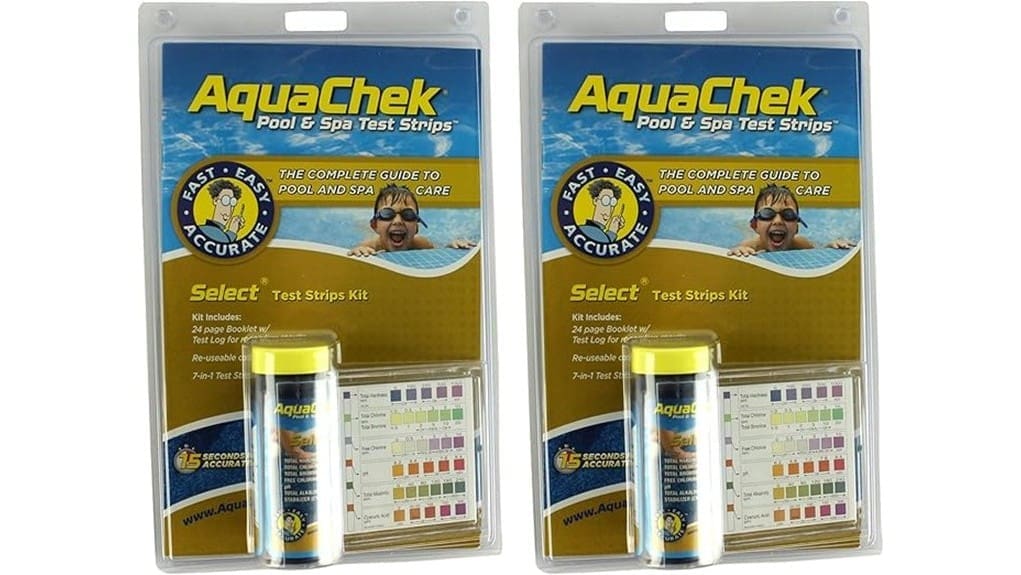
You’ll get two tubs of 50 strips, a color comparator and a guide, so you can run 100 quick, cheap 7‑parameter checks for weekly DIY pool care. Dip one strip for a second, time carefully, match colors under steady light and record pH, free/total chlorine, bromine, alkalinity, hardness and CYA. Results are fast and fine for trend spotting; pH and free chlorine align reasonably with meters, but don’t expect lab precision — more details follow.
Some Key Takeaways
- Provides 100 total tests (two 50-strip tubs) measuring seven key pool parameters for quick, routine monitoring.
- pH and free chlorine readings are reasonably accurate versus lab meters when timing and lighting are controlled.
- Total alkalinity, cyanuric acid, total hardness, and bromine show greater variability and are better for trend spotting.
- Simple, fast one-second dip-and-read procedure with color comparator and storage tips minimizes common user errors.
- Best for budget-conscious homeowners seeking fast screening; verify critical readings with calibrated instruments.
What the AquaChek Select 7‑in‑1 Kit Tests and What’s in the Box
When you open the AquaChek Select 7‑in-1 kit, you’ll find everything needed to monitor key pool chemistries quickly: two tubs (each with 50 plastic test strips), a color chart and comparator for reading results, and the booklet “The Complete Guide to Pool & Spa Care.” You’ll test seven parameters: total hardness, total chlorine, free chlorine, total bromine, pH, total alkalinity, and cyanuric acid. The kit’s packaged components let you track trends and spot issues fast. Be aware of chemical interference and potential color fading on strips; store tubs sealed and compare promptly to minimize reading errors. These digital-friendly kits are ideal for homeowners who want to keep their outdoor water features safe and enjoyable by using digital pool testers.
How to Use the Strips : Setup, Timing, and Reading Results in Seconds
Now that you know what’s in the kit and which chemistries are measured, set up for testing by removing one strip from the sealed tub, keeping the remaining strips capped to prevent fading. Dip the strip vertically into pool water for one second, shake off excess once, and start a stopwatch — results appear in seconds. Match pads to the provided color chart under consistent light; read each parameter at its specified application timing (some pads stabilize faster). Record values immediately. After use, recap the tub, store at room temperature away from sunlight and humidity to preserve storage conditions and shelf life. Proper pool maintenance includes using clarifiers and other water care products to help keep water clear.
Accuracy and Performance: Real-World Results for pH, Chlorine, TA, CYA, Hardness, Bromine
Although test strips promise rapid readings, you’ll want to verify each parameter against known standards because real-world accuracy varies by chemistry. You’ll find pH and free chlorine match lab meters within an acceptable margin if you control timing and lighting, but reading variability increases for TA and CYA near low concentrations. Total hardness and bromine are reliable for trend spotting, not precise titration. Minimize error by using fresh strips, proper dipping technique, and consistent comparison lighting. Don’t substitute strips for calibrated instruments when tight control matters; periodic sensor calibration of your reference meter guarantees meaningful cross-checks. For routine maintenance and to enjoy your outdoor spaces, consider keeping a simple pool testing routine to catch issues early.
Value and Convenience: Cost per Test, Included Accessories, and Who This Kit Is Best For
Accuracy limitations affect how you should value a test strip kit, so let’s look at what you actually get for the price and how convenient it will be in routine pool care. You get two 50‑strip kits, color chart, comparator, and a care booklet—enough for 100 quick tests. Calculate cost per test by dividing retail price by 100; do a price comparison against single-chem test kits if accuracy requires follow-up. Strips deliver seconds‑fast results that suit weekly DIY maintenance and trend tracking. This setup favors homeowners who want low‑cost, fast screening rather than lab‑grade precision. Many homeowners also appreciate having basic pool water safety guidance included with their test supplies.
Pros, Cons, and Buy Recommendation: Final Verdict and Quick Buying Tips
Because you’re getting two 50‑strip kits with a comparator and care guide, this AquaChek Select set offers clear value for routine pool maintenance: it’s fast, inexpensive per test, and well suited for weekly screening and trend tracking, but it won’t replace lab‑grade accuracy when precise dosing decisions are critical. Pros: extensive 7‑parameter coverage, rapid results, useful comparator, good cost-per-test. Cons: strip chemistry limits precision versus labs, no digital readout so no battery life concern but also no data logging. Buy recommendation: get it if you want low-cost, practical monitoring; contact customer support for warranty or replacement questions. Remember to follow seasonal pool opening best practices to ensure safe, sparkling water as you start the season.
Some Questions Answered
Does This Kit Test for Stabilizer (CYA) in Saltwater Pools Accurately?
Yes — you can measure cyanuric acid with these strips, but salt residue in saltwater can slightly affect accuracy. You’ll get a practical, rapid estimate of CYA levels, yet readings may skew if salt concentration or chlorine/bromine levels are high. You should confirm critical CYA values with a secondary test (titration or lab) when precision matters. Follow the kit’s instructions and rinse samples to reduce salt residue influence.
Are Replacement Color Charts Available Separately?
Yes — you can get replacement charts separately from AquaChek or some retailers. You’ll want to confirm the exact model (541604-02/541604-P) to make certain accurate color matching with your strip batch. Order OEM charts or high-quality aftermarket prints, then compare printed colors under natural light to avoid shifts. Keep original comparator for best results, and replace charts whenever strip formula changes or fading affects reliable color matching.
Can Strips Be Used for Hot Tubs/Spas Safely?
Yes — you can use the strips for hot tubs/spas safely. They’re hot tubcompatibility suitable for measuring spa chemistry parameters like pH, total alkalinity, free/total chlorine or bromine, cyanuric acid and hardness. You’ll get rapid, practical readings, but watch for elevated temperatures and higher sanitizer levels that can affect accuracy; follow the included color chart and comparator, and confirm critical readings with a liquid test or lab if precise adjustments are required.
Do Strips Expire and How Long Is Their Shelf Life Unopened?
Yes — test strips do expire. You’ll find a manufacturing date on the packaging; shelf life unopened is typically 2–3 years from that date. Proper storage conditions (cool, dry, sealed container away from sunlight and humidity) preserve accuracy. Once opened, use strips within the manufacturer-recommended timeframe (often 6 months) and keep the cap closed. If colors look faded or results seem inconsistent, discard and replace.
Is There Customer Support for Result Interpretation?
Yes — you can get help. You’ll contact customer service for interpretation assistance; they’ll clarify strip readings and expected ranges. The manufacturer offers online troubleshooting resources and documentation, and some retailers list live chat for quicker answers. You’ll need product details (model/UPC) and sample readings when you reach out. Expect practical guidance on pH, chlorine, alkalinity, hardness and cyanuric acid adjustments based on your strip results.