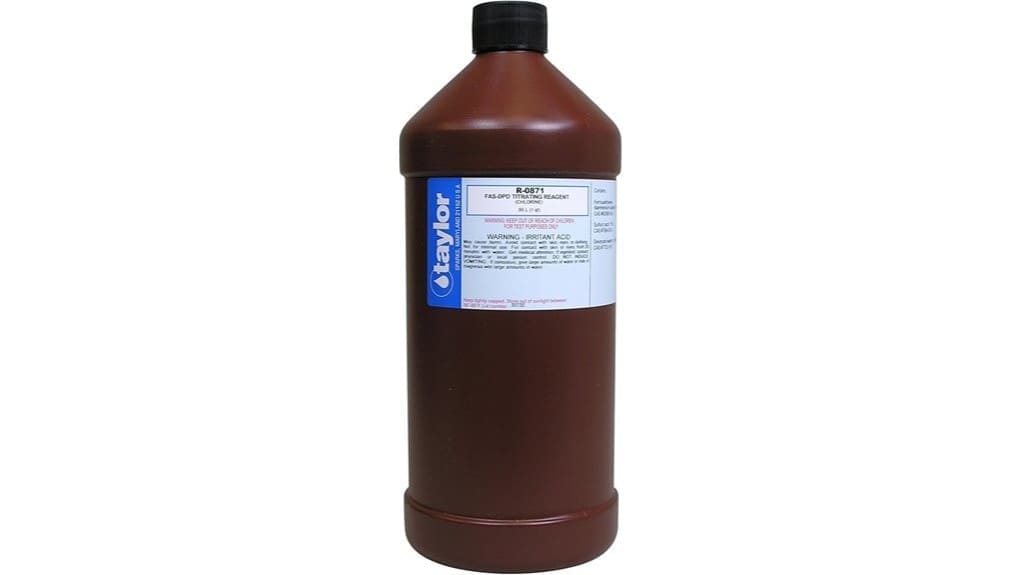
You’ll find the Taylor R0871‑F replacement delivers lab‑grade FAS‑DPD titration accuracy for routine pool testing, and it’s a dependable swap for compatible Taylor kits. It measures free and total chlorine, lets you distinguish combined chlorine, and titrates in the same drop‑for‑drop fashion as factory reagents. Store it cool and sealed, follow kit volumes, and troubleshoot with clean glassware and fresh reagent for best results. Continue for practical tips and alternatives.
Some Key Takeaways
- Reliable FAS‑DPD titrant providing lab‑grade free and total chlorine measurements for Taylor kits.
- Accurate when using correct vial volumes, fresh reagent, and verified burette/drop size.
- Compatible drop‑for‑drop with Taylor K‑2005/K‑2006 kits; substitute cautiously after verifying concentration.
- Store sealed, cool, and away from sunlight; potency and accuracy decline with age or contamination.
- Widely available in 1‑quart bottles; compare sellers, price per test, and expiration before buying.
Quick Verdict: Is the Taylor R0871-F Reagent Worth Buying?
If you need reliable chlorine titration for routine pool testing, the Taylor R0871-F reagent is worth buying: it’s the official FAS‑DPD replacement for Taylor kits, comes in a convenient 1‑quart liquid bottle, and delivers accurate results so you can quickly decide whether to shock or add chlorine. You’ll get consistent, lab-grade titration performance that simplifies maintenance decisions. For long term storage, keep the bottle sealed, cool, and away from sunlight to preserve potency. Follow label instructions and handle carefully to protect user safety. Considering price, compatibility, and precision, it’s a practical purchase for serious pool owners. Proper pH balance is essential for clearer, safer water, so be sure to test and adjust pH regularly.
What the R0871-F Measures and How to Use It Step-by-Step
While the R0871‑F is primarily designed to measure free and total chlorine through FAS‑DPD titration, it also lets you distinguish combined (chloramine) levels by comparison, giving you a complete picture of your pool’s chlorination status. You start by filling the test vial with sample water to the mark, add DPD tablets or reagent per kit instructions to reveal combined or free chlorine, then titrate with R0871‑F until the color clears. Record milliliters used and convert to ppm using your kit chart. The titration method is precise when you follow volumes and avoid contamination, letting you decide shock or routine dosing. Proper shock dosing and routine maintenance can help keep your pool safe and enjoyable by preventing algae and bacteria buildup pool shock treatments.
Performance and Accuracy: Real-World Results and Common Troubleshooting
Having confirmed free and total chlorine with the FAS‑DPD titration, you’ll find the R0871‑F delivers reliable, lab‑grade results when you follow proper technique and kit volumes. In real use, readings are consistent if you control sample timing, avoid air bubbles, and use fresh reagent. Expect some field variability from temperature, high combined chlorine, or colored water; account for that by repeating titrations and noting conditions. For best accuracy, use simple calibration tips: verify burette zero, check drop size, and compare to a known standard periodically. Troubleshoot by rinsing glassware, replacing old reagent, and repeating tests. Homeowners who enjoy their outdoor spaces will appreciate the convenience of digital pool testers and complementary pool maintenance practices.
Compatibility and Alternatives: Which Taylor Kits It Fits and Other Reagent Options
Because the R0871‑F uses the FAS‑DPD titration method, it fits directly into Taylor’s standard titration kits (such as the K-2006 and K-2005 series and other kits that list R‑0871‑F or FAS‑DPD reagents), and you can expect straightforward drop‑for‑drop substitution with those burettes and test vials. You’ll find excellent kit compatibility across Taylor’s FAS‑DPD lineup; labels and manuals typically note interchangeability. If you need alternatives, consider equivalent FAS‑DPD reagents from reputable lab suppliers or Taylor’s factory replacements rather than generic oxidizers. Verify concentration and expiration before swapping to maintain accurate chlorine titrations. Homeowners who track their maintenance often use simple logs to record reagent swaps and test results for consistent pool care with maintenance logs.
Cost, Packaging, and Where to Buy for Best Value
Wondering where to get the best value for the Taylor R0871‑F replacement reagent? You’ll find one-quart bottles priced competitively across retailers; do a quick price comparison between Taylor’s site, Amazon (ASIN B002ZIZEP6), and pool-supply stores. Factor in unit cost versus number of tests per bottle. Packaging is simple: a 32 fl oz liquid bottle, durable and labeled for safe storage. Check seller ratings and return policy. Compare shipping options—standard, expedited, or free thresholds—since shipping can erase savings. Buy from reputable sellers to make certain genuine R-0871-F and reliable customer support. For homeowners who enjoy outdoor spaces, maintaining your system with the right filter cartridges helps keep water clear and healthy, so pair R-0871-F with proper cartridge maintenance for best results.
Some Questions Answered
Is This Reagent Safe to Ship Internationally?
Yes — you can ship it internationally in many cases, but you’ll need to follow shipping regulations and packaging standards. Check hazardous materials rules for liquid oxidizers and chlorine reagents in origin and destination countries, and use UN-approved inner and outer packaging with proper labeling. Consult carriers for allowed quantities, documentation, and customs requirements. If in doubt, contact the manufacturer or a hazardous shipping specialist before sending.
How Should I Dispose of Leftover Reagent Responsibly?
You should dispose of leftover reagent by following local environmental regulations and never pouring concentrated chemicals down drains. Contact your local hazardous waste facility or household hazardous waste collection for proper take-back. If allowed, dilute small amounts per manufacturer guidance and perform household neutralization cautiously, then flush with plenty of water. Label containers, wear gloves and eye protection, and consult your municipality for disposal instructions to avoid environmental harm.
Does This Reagent Have a Strong Odor When Opened?
No, you shouldn’t notice a strong odor; it’s not usually overpowering when opened. You might detect faint chemical fumes? from the liquid, especially in a small, unventilated space or if bottle’s been shaken. Handle it in a well-ventilated area, avoid inhaling directly, and seal the bottle after use. If you smell intense fumes or irritation occurs, move to fresh air and consult the MSDS or manufacturer for safety guidance.
Can the Bottle Leak During Poolside Use?
It’s unlikely the bottle will leak during poolside use if you tighten the cap properly, but mishandling can cause spills. You’ll rely on capillary action and dropper accuracy to control drops; shaky hands or a cracked nozzle can defeat both. Keep the bottle upright, store it in a secondary container, and check the cap seal before use. Those steps’ll minimize leaks and preserve reagent accuracy for reliable chlorine testing.
Are There Any Ingredients That Trigger Allergies?
There aren’t specific allergen listings for this reagent, but you should assume it can cause skin sensitivity and respiratory reactions in some people. You’ll want to avoid direct contact, use gloves and eye protection, and work in a well-ventilated area to reduce inhalation risk. If you’ve had prior chemical sensitivities or asthma, don’t handle it without medical advice. Seek medical help if you develop rash, wheeze, or other allergy symptoms.