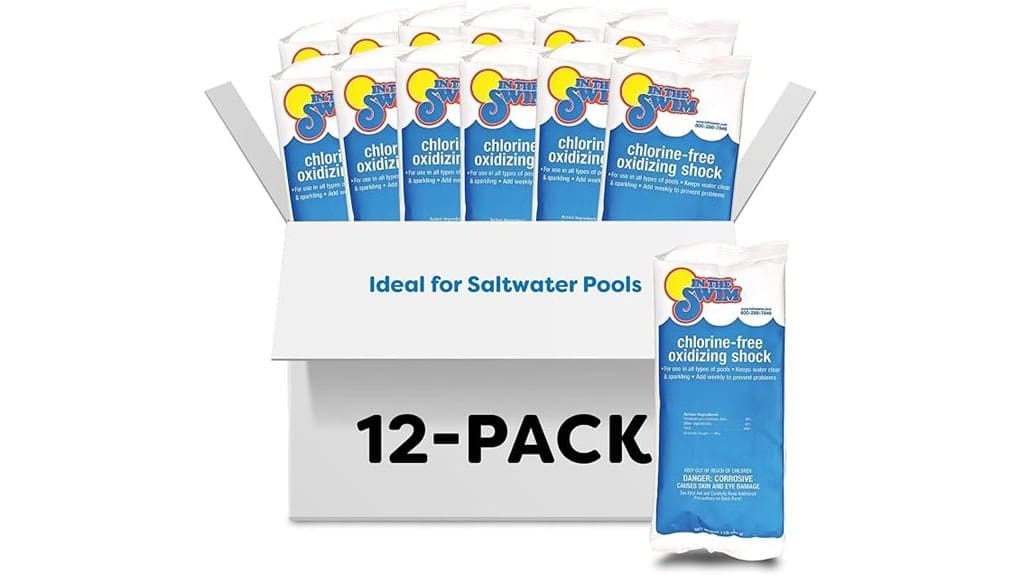
You’ll find In the Swim Chlorine-Free Pool Shock is a fast-acting, non-chlorine oxidizer that clears non-living organic contaminants without raising free chlorine. You should dose precisely per volume, wear gloves and eye protection, and pre-dissolve when recommended; granules dissolve within minutes in circulating water and produce minimal odor. It’s compatible with salt, bromine, and mineral systems and has little pH impact. Keep an eye on sanitizer residuals and ORP, and continue for full usage and comparisons. yellow out swimming pool treatment benefits include enhanced water clarity and a more pleasant swimming experience. Users often report that their pools feel softer to the touch, which adds to the overall enjoyment. Additionally, the reduced chemical load makes it safer for both swimmers and the environment.
Some Key Takeaways
- Fast-acting non-chlorine oxidizer that quickly removes non-living organic contaminants and restores pool clarity without adding chlorine.
- Granules dissolve within minutes, providing rapid turbidity reduction and near-instant visual clarity when dosed correctly.
- Compatible with salt, bromine, and mineral systems and does not interfere with salt cell operation or increase sanitizer residuals.
- Minimal pH impact and low odor, though monitor sanitizer residuals, ORP, and adjust alkalinity or pH after treatment.
- More expensive per treatment than chlorine shock but reduces irritation, combined-chlorine buildup, and pairs well with clarifiers or enzymes.
What In the Swim Chlorine-Free Pool Shock Is and Who It’s For
Think of In The Swim Chlorine-Free Pool Shock as a fast-acting, non-chlorine oxidizer designed to remove non-living organic contaminants and restore water clarity without increasing chlorine levels. You’ll use it when you need targeted oxidative treatment that relies on non chlorine chemistry to break down organics, preventing combined chlorine buildup and aiding your sanitizer. It’s suited for operators who prioritize low-chlorine profiles—salt systems, bromine, mineral mixes, or standard chlorine setups seeking reduced dosing. For pool maintenance, you’ll apply it during routine shock cycles or before events that demand rapid clarity, while monitoring sanitizer and ORP to confirm efficacy. Homeowners can pair it with pool clarifiers to further enhance water clarity and particle removal.
How to Use the 12×1lb Pack Safely for Pools, Spas, and Hot Tubs
When handling the 12×1 lb pack of In The Swim Chlorine-Free Pool Shock, wear chemical-resistant gloves and eye protection, open bags only at the poolside or well-ventilated area, and measure doses precisely according to water volume and manufacturer guidelines. You’ll add measured portions to a bucket of water first when recommended, then distribute slowly around the perimeter while pumps run. Follow dosing schedules for pools, spas, and hot tubs—adjust for temperature and bather load. Store unopened bags in a cool, dry place per storage guidelines; keep separate from acids and organics. Keep children and pets away until dissolved and circulated. For best results and product options, consider stocking a variety of shock treatments suitable for different pool sizes and needs.
Real-World Performance: Dissolving Speed, Odor, and Water Clarity
You’ll notice the granules dissolve very quickly in circulating water, often dispersing fully within minutes rather than the hours some oxidizers require; this rapid dissolution translates to fast oxidizing action without a prolonged cloudy phase. In practice, you’ll observe fast dissolving kinetics that restore visual clarity rapidly, producing near-instant clarity when dosing rates are correct. Odor is minimal — a neutral scent rather than a chlorinous sting — so swimmer comfort improves. Your user experience will be defined by prompt turbidity reduction and low olfactory impact, though you should monitor residuals and follow dosing instructions to guarantee consistent results. For maintaining that clarity over time, consider pairing treatments with filter powder to capture fine particles and improve overall water quality.
Compatibility and Safety: Salt, Bromine, Mineral Systems, and pH Effects
Although formulated to be compatible with a wide range of sanitizing systems, you should apply In The Swim Chlorine-Free Pool Shock with standard precautions for mixed-chemistry environments. You’ll find reliable salt compatibility: it won’t interfere with salt cell operation or increase sanitizer residuals. For bromine safety, use typical dosing intervals and monitor combined bromine levels to avoid oxidizer overlap. Mineral systems remain stable; add shock away from cartridge or mineral media to prevent localized concentration spikes. pH effects are minimal—product doesn’t alter pH—but you should confirm total alkalinity and pH post-treatment and adjust if required. Follow label instructions precisely. Natural enzyme treatments can help maintain clarity and reduce organic load in pools when used alongside shock dosing, supporting pool maintenance.
Value and Alternatives: Cost, Benefits, and When to Choose a Chlorine-Free Shock
If you’re weighing cost against performance, consider that chlorine-free shock typically costs more per treatment but can reduce overall chlorine use and irritation-related complaints, making it a strategic choice for sensitive swimmers or pools with frequent organic load. You’ll evaluate cost comparison by calculating per-treatment oxidizing capacity versus traditional chlorine shocks and factoring reduced sanitizer demand. Benefits include rapid oxidation, no pH shift, and compatibility with salt and bromine systems. Choose chlorine-free when irritation, frequent bather load, or sanitizer-sparing is priority. For budget constraints, consider alternative products—standard chlorine shocks or enzyme-based clarifiers—as lower-cost options with different trade-offs. Natural enzyme products can also help break down organic waste and reduce maintenance needs, supporting pool health and clearer water.
Some Questions Answered
Is This Shock Safe for Fish and Aquatic Plants in Decorative Pools?
Generally yes, but you should be cautious: fish safety depends on concentration and exposure time, and plant tolerance varies by species. You’ll avoid chlorine-related toxicity since it’s a non-chlorine oxidizer, but overdosing can stress aquatic life and sensitive plants. Test residual oxidizer levels, use the lowest effective dose, aerate water, and isolate or remove delicate plants and fish during treatment. Monitor behavior and water chemistry closely. When considering pool maintenance, evaluating pool shark chlorine tablet effectiveness can be crucial for ensuring a balanced environment. Regular testing not only helps in maintaining safe chlorine levels but also informs you about the tablets’ performance over time. Additionally, keeping an eye on the overall health of your aquatic plants and fish will guide you in determining if adjustments are needed in your treatment approach.
Can I Use It Immediately After Adding Algaecide?
Yes — you can usually add the shock immediately after algaecide, but check chemical compatibility and product labels first. You’ll want to confirm the algaecide’s active ingredient won’t react; if labels don’t conflict, there’s typically no wait time. When in doubt, wait 15–30 minutes while circulating, then test sanitizer levels and pH before swimming. Prioritize manufacturer guidance to avoid unintended reactions or reduced effectiveness. sodium dichlor chlorine shock benefits can enhance water clarity and provide a powerful oxidation treatment for pool care. By regularly using sodium dichlor, you can effectively kill bacteria and eliminate organic contaminants, which helps maintain a healthier swimming environment. Additionally, its fast-dissolving formula ensures that your pool is ready for use shortly after application, making it a convenient choice for pool maintenance.
Does It Affect Pool Heater or Filter Cartridge Lifespan?
No, it won’t markedly reduce heater lifespan or accelerate cartridge wear when used as directed. You’ll avoid pH swings and corrosive chlorine spikes, so heaters and filter media aren’t exposed to harsher chemistry. Still, you should run the filter during treatment and follow manufacturer flow and pressure guidelines; inspect cartridges for trapped debris more often. If you’re uncertain, flush equipment and consult your heater/filter manufacturer for compatibility confirmation.
How Should I Store Unopened and Opened 1‑Lb Bags Long-Term?
Store unopened 1‑lb bags in cool storage, upright, sealed, away from heat and direct sunlight, and on pallets to avoid concrete contact. Once opened, reseal immediately in original pouch or transfer to airtight, moisture barriers containers (HDPE or metal drum with desiccant). Keep both types in a well-ventilated, dry area, away from combustible materials and acids. Label with date, inspect periodically for caking, and discard if compromised.
Is It Biodegradable and Environmentally Friendly for Runoff?
No — you shouldn’t assume it’s fully biodegradable or harmless for runoff. The manufacturer doesn’t publish thorough biodegradability testing or runoff toxicity data, so you ought to treat treated pool discharge cautiously. You’ll minimize environmental risk by retaining water until oxidizer levels drop to normal, diluting discharge, and following local regulations. If you’re unsure, request lab results from the maker or consult an environmental specialist before releasing pool water. When managing pool water, understanding the calhypo pool shock effectiveness can also play a crucial role in your decision-making process. High levels of calcium hypochlorite can impact water chemistry, leading to potential environmental concerns if not handled properly. Always ensure that your approach aligns with best practices for pool maintenance and environmental responsibility.