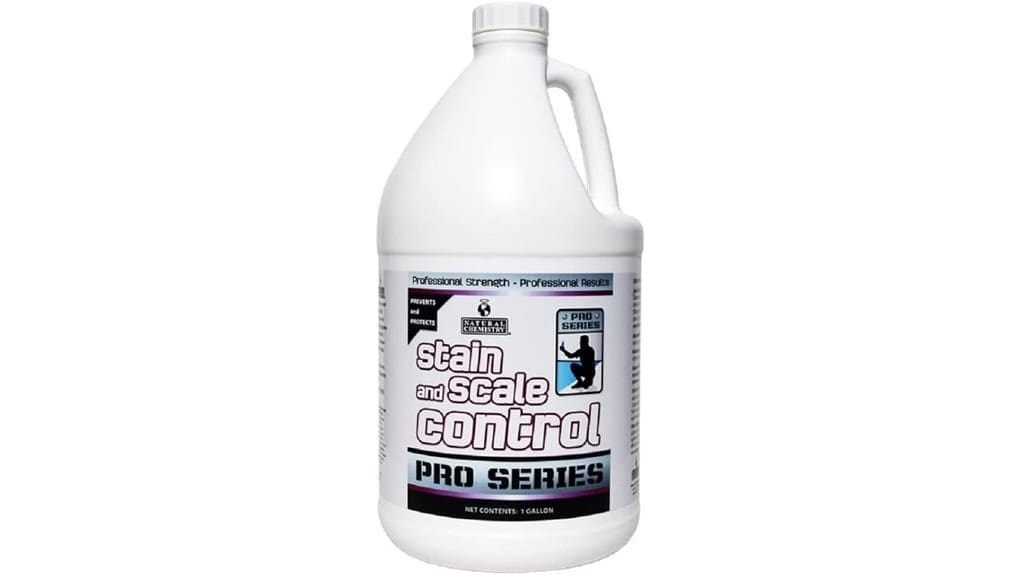
You’ll find Natural Chemistry Pro Series Stain & Scale Control reliably prevents metal stains and slows calcium buildup when dosed correctly. It binds iron, copper, and manganese to keep them dissolved and interferes with calcium nucleation without adding phosphates or harsh acids. It works well on plaster, vinyl, and fiberglass and cuts deposits on filters, heaters, and salt cells. Follow labeled dosing, test water, and avoid biguanide systems. Keep going for detailed usage and comparisons.
Some Key Takeaways
- Provides reliable protection against common metal staining and scale buildup when dosed as directed.
- Uses chelants to sequester iron, copper, manganese and inhibit calcium carbonate nucleation without added phosphates.
- Initial dosing: 32 oz per 10,000 gallons; repeat if hardness >400 ppm, metals >0.5 ppm, or during new-plaster startup.
- Compatible with most sanitizers and chlorine systems but incompatible with biguanide (PHMB) systems.
- Reduces visible staining and equipment deposits, lowering cleaning frequency while not replacing routine maintenance.
Natural Chemistry Pro Series Stain & Scale Control : Quick Verdict
While it won’t fix extreme mineral problems overnight, Natural Chemistry Pro Series Stain & Scale Control delivers reliable protection against common metal staining and scale buildup, and it’s easy to use with clear dosing guidelines. You’ll find the product practical: straightforward dosing, compatibility with most sanitizers, and no added phosphates or harsh acids. You can assess efficacy quickly on routine maintenance rather than emergency remediation. Ingredient transparency is moderate—basic formulation claims are clear though proprietary components aren’t fully detailed. Environmental impact appears reduced versus phosphate-heavy alternatives, but independent lifecycle data isn’t provided, so weigh operational benefits against unknowns. Regular use can help maintain the clarity of pool water and prevent common buildup issues.
How the Formula Works and What Minerals It Protects Against
Because it binds and sequesters dissolved metals and interferes with calcium nucleation, the formula prevents metals like iron, copper, and manganese from oxidizing and depositing as stains and keeps calcium from forming scale on pool surfaces and equipment. You’ll rely on a targeted chelating mechanism that holds trace metals in solution, reducing precipitation and visible staining. Mineral specificity favors common culprits—iron, copper, manganese—and curbs calcium carbonate nucleation without adding phosphates or harsh acids. Applied per dosing instructions, it protects surfaces, heaters, and oxidation-sensitive components. The description is analytical: it controls metal chemistry and inhibits scale initiation. It is ideal for homeowners who maintain outdoor pools and want to keep their pool sparkling and low-maintenance.
Real-World Performance: Results on Surfaces, Equipment, and Chlorine Generators
In real-world use you’ll see the product consistently reduce visible metal staining and slow scale buildup on pool plaster, vinyl, and fiberglass when dosed as directed, with treated surfaces showing fewer discoloration spots and smoother textures near returns and steps. You’ll notice less frequent scrubbing and fewer chemical shock cycles, which supports surface durability over seasons. On equipment, filters and pumps collect fewer mineral deposits, and chlorine generators and UV crystal lenses sustain output longer between cleanings, improving equipment longevity. Results depend on proper dosing and baseline water chemistry; it mitigates but doesn’t eliminate the need for routine maintenance. Maintaining proper calcium hardness levels with calcium hardness increasers helps prevent scale formation and preserves surface integrity.
How to Use It Safely: Dosing, Startup Tips, and Compatibility Notes
The improvements you saw on surfaces and equipment depend on correct application, so start by testing and balancing your pool water before treatment and follow the labeled dosing exactly. Measure pool volume and apply the initial 32 oz per 10,000 gallons evenly around the pool; if hardness >400 ppm, metals >0.5 ppm, or during new-plaster startup, wait 24 hours and repeat the initial dose. Use regular pool testing to monitor metals and hardness afterward. Keep product in original container, secured and upright, observe chemical storage guidance, and avoid combining with biguanide systems. Follow label PPE and emergency instructions. Homeowners who enjoy their outdoor spaces should consider integrating shock treatment into routine maintenance to keep pools sparkling and equipment protected.
Who Should Buy This Product and How It Compares to Alternatives
If you manage a pool with visible metal staining, recurring scale on heaters or salt-cell/UV components, or you’re starting a new plaster finish, this product suits you because it targets metals and calcium without adding phosphates or harsh acids; it’s especially appropriate for owners who use chlorine-based or mineral sanitizers (not biguanides) and want a liquid, pro-strength treatment that’s easy to dose by pool volume. You should buy it if you need reliable stain/scale control, run salt friendly pools, and prefer straightforward dosing. Budget conscious buyers will find gallon sizing economical versus single-use packets. Compared to chelator blends, it’s lower-risk and broadly compatible. Pool owners looking to improve clarity and filtration may also benefit from using the right filter powder alongside this treatment to enhance overall water quality.
Some Questions Answered
Is This Product Safe for Use With Saltwater Pools?
Yes — you can use it in saltwater pools; the formula offers saltwater compatibility and won’t add phosphates or harsh acids. You should still monitor electrode corrosion risk on chlorine generators: follow dosage directions and avoid overdosing. If hardness or metals are high, repeat the initial dose after 24 hours per instructions. You’ll protect surfaces and equipment but check generator manufacturer guidance to minimize any long-term electrode corrosion concerns.
How Long Does One Gallon Typically Last With Regular Maintenance?
About 2–3 months. For typical pools (10,000 gallons) you’ll use the initial 32 oz dose, then shift to a weekly dosing or maintenance frequency of roughly 4–8 oz per week depending on hardness and metals. At 4 oz/week a gallon lasts ~24 weeks; at 8 oz/week it lasts ~12 weeks. Monitor hardness and metal readings and adjust; heavy conditions will require more frequent treatment and shorten longevity.
Can It Be Mixed With Other Pool Chemicals in the Same Container?
No — you shouldn’t mix it with other pool chemicals in the same container. You’ll want to perform compatibility testing before any unusual combinations, but standard guidance warns against co‑storage to avoid container hazards and reactive mixtures. Keep products separate, add chemicals to pool water individually, and follow label instructions. Doing so minimizes risk, preserves effectiveness, and prevents corrosive or hazardous reactions from concentrated mixtures in shared containers.
Is This Product Biodegradable or Environmentally Friendly?
No definitive biodegradable claims are stated, so you shouldn’t assume it’s fully biodegradable. Assess environmental impact by checking the label or MSDS for ingredients and degradation data; the product is formulated without phosphates or harsh acids, which reduces some risks, but metals sequestered in solution can still affect ecosystems if discharged. You’ll want to follow dosing and disposal instructions, avoid runoff, and contact the manufacturer for specific biodegradability and ecotoxicity data.
Does It Require Special Storage Temperatures or Conditions?
Yes — you should store it in cool storage and avoid freezing. You’ll keep the product stable and effective by storing the sealed gallon in a cool, dry place away from direct sunlight and heat sources. Don’t let it freeze; freezing can change the formulation and reduce performance. Keep container tightly closed, upright, and out of reach of children. Follow any additional manufacturer storage instructions on the label.