You should pick a divider kit that matches your usable pool width and anchor placement so the rope has no slack and floats sit at manufacturer spacing. Prioritize UV‑stabilized, marine‑grade polyethylene floats, low‑stretch braided polypropylene rope, and corrosion‑resistant hooks with reinforced splices. Verify material compatibility with your pool finish and local chemicals, and plan anchors to avoid circulation interference. Inspect tension, seams, and anchors monthly to sustain rated performance—keep going for specific product comparisons and installation tips.
Some Key Takeaways
- Measure pool width, changeover depth, and anchor locations to choose the correct rope length and avoid slack or interference.
- Prefer UV-stabilized, marine-grade polyethylene floats and low-stretch braided polypropylene rope for long-term durability.
- Verify float size, spacing, and buoyancy (typical 3×5 in floats) to ensure clear lane definition and proper floatation.
- Choose corrosion-resistant hooks, reinforced splices, and verified tensile ratings to prevent failures and rust.
- Install per manufacturer spacing, tension gradually, inspect monthly, and combine with other safety devices for maximum protection.
How to Choose the Right Pool Divider Rope & Float Kit for Your Pool
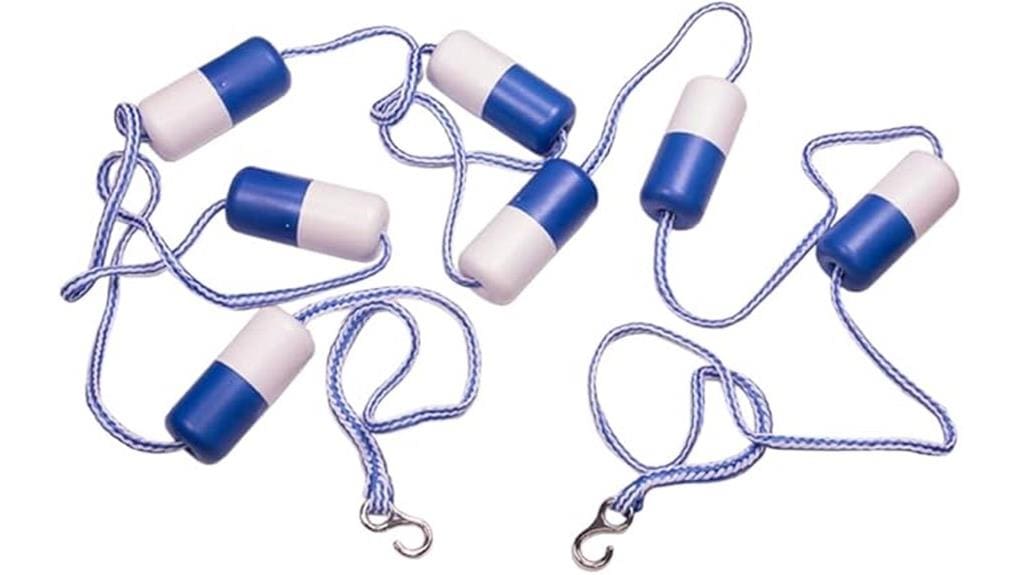
Start by measuring your pool’s usable width and identifying where you need the barrier—this determines the length and placement of the divider rope, which should fit pools up to 24 feet wide without excess slack. You’ll select a kit based on float spacing, non‑sliding float size, and rust‑resistant hooks. Verify material compatibility with your pool finish and local chemicals to prevent degradation. Plan anchor placement to avoid circulation interference. Establish a maintenance schedule for inspections, rope tension, and UV wear. You’ll prioritize proven safety features that protect children and family while fitting your community of users. Consider choosing products from a seller that specializes in pool safety ropes to ensure proper fit and materials.
Top Features That Prove Durability and Season‑to‑Season Value
When you evaluate divider rope and float kits for season‑to‑season value, prioritize UV‑stabilized, marine‑grade polyethylene floats and low‑stretch, braided polypropylene rope that resist sun, chlorine, and abrasion; together these materials maintain buoyancy, spacing, and tension without frequent replacement. You’ll look for verified UV resistance ratings, sealed float seams, and rope kern construction that preserves material integrity under load. Corrosion-resistant connectors and reinforced splice points improve weather durability and reduce failure modes. Inspect standardized buoy spacing and tensile specs to assure seasonal longevity. Choosing kits meeting these technical criteria helps your pool community stay safe, confident, and connected year after year. Also consider pairing divider lines with pool wall foam to protect both the floats and the pool structure from impact and wear.
Comparing Blue‑and‑White Nautical Kits: Fit, Float Size, and Hooks
Although the blue-and-white nautical kits share a common visual theme, you should compare fit, float dimensions, and hook design closely to assure secure, regulation-like performance; fits up to 24 ft typically use 3 x 5 in non‑sliding floats spaced to maintain buoyancy and lane definition, while rust‑resistant hooks and reinforced rope splices determine attachment reliability. You’ll evaluate nautical aesthetics alongside measurable performance: spacing, float displacement, and tensile ratings. Conduct buoyancy testing on samples, inspect hook metallurgy and clasp geometry, and verify splice integrity under load. Choose the kit that meets your safety protocol, and you’ll join others prioritizing reliable barrier performance. Our product selection focuses on helping homeowners protect outdoor pool areas with durable, code-aware fencing and accessories like divider kits pool safety.
Quick Installation and Placement Tips to Block Deep Ends Safely
Because proper placement determines how effectively the divider rope blocks the deep end, you should position and tension the line to create a clear, continuous visual and physical barrier without sagging or excessive lateral pull. Measure pool width, mark the changeover depth, and lay floats so spacing aligns with manufacturer specs. Choose anchor selection based on load, corrosion resistance, and pool type; use fixed wall anchors for inground and clip-on rails for above‑ground. Tension gradually, test for movement, and adjust float orientation to prevent rotation. Inspect anchors and rope monthly. Train household members on the barrier’s limits to reinforce shared safety. Many homeowners enhance their outdoor spaces with stylish lane dividers to both improve safety and complement pool aesthetics, especially when selecting lane dividers designed for backyard pools.
Real‑World Uses and Safety Benefits for Families and Pool Owners
Having set and tested the divider rope for correct placement and tension, you can expect tangible safety and operational benefits in everyday pool use. The rope clearly separates deep and shallow zones, creating predictable swim areas that support child supervision and reduce accidental entry into hazardous water. You’ll use the nautical marker line to establish swim lanes, teach boundaries, and control group activities. Durable floats and rust‑resistant hooks maintain consistent positioning, lowering maintenance tasks. For emergency preparedness, the visible barrier aids responders in rapid assessment and limits search areas. This system fosters shared responsibility and consistent safety practices among family and pool users. Proper installation of anti‑entrapment devices like drain covers further enhances pool safety and complements divider rope systems.
Some Questions Answered
Are Replacement Floats and Ropes Available Separately?
Yes — you can buy replacement floats and ropes separately. You’ll maintain buoy maintenance schedules, inspect floats for cracking and ropes for fraying, and replace parts as needed to preserve safety. Store spare components with seasonal storage protocols, label them, and keep rust‑resistant hooks protected. You’ll feel included in the safety process when you swap worn pieces promptly, ensuring consistent barrier performance and protecting family and children.
Do These Kits Comply With Local Pool Safety Regulations?
Yes — you can use these kits to meet many regulatory compliance requirements, but you’ll need to verify local codes first. You’ll confirm dimensions, visibility, anchoring and material specs against municipal or state pool safety regulations. If the kit’s floats, rust‑resistant hooks and 3×5-inch non‑sliding floats satisfy your jurisdiction’s criteria, you’re compliant. Check with your local authority to make certain full conformity and document compliance for shared community reassurance.
Can the Rope Withstand Prolonged Sun Exposure Without Degrading?
Yes — you’ll find the rope offers UV resistance that minimizes material breakdown over time. You’ll appreciate that the synthetic fibers are formulated to resist sunlight, retain tensile strength, and resist brittle failure, so long-term exposure won’t quickly compromise performance. Inspect periodically for UV-induced discoloration or fraying, replace if any degradation appears, and follow manufacturer guidelines to guarantee continued safety and confidence for your family and community.
Are There Color Options Besides Blue-And-White Nautical?
Yes — you’ll find color variations beyond blue-and-white nautical; some kits offer alternate hues and custom patterns on floats and rope. You’ll select options that meet visibility and safety standards, maintaining material UV resistance and secure fastening. Choose patterns that foster group identity or match outdoor spaces while ensuring high-contrast visibility for children and caregivers. You’ll get durable, rust-resistant hardware and consistent float spacing to support safe pool delineation.
Is Professional Installation Ever Recommended or Required?
Yes — you should consider professional installation when structural anchors, local codes, or liability concerns apply. A certified installer guarantees anchors, tension, and clearance meet safety standards, reducing failure risk and legal exposure. You’ll get documented compliance and correct placement for family protection. If you’re confident in tools and rules, you can DIY; otherwise hire pros to join a community that prioritizes reliable, code-compliant pool safety.