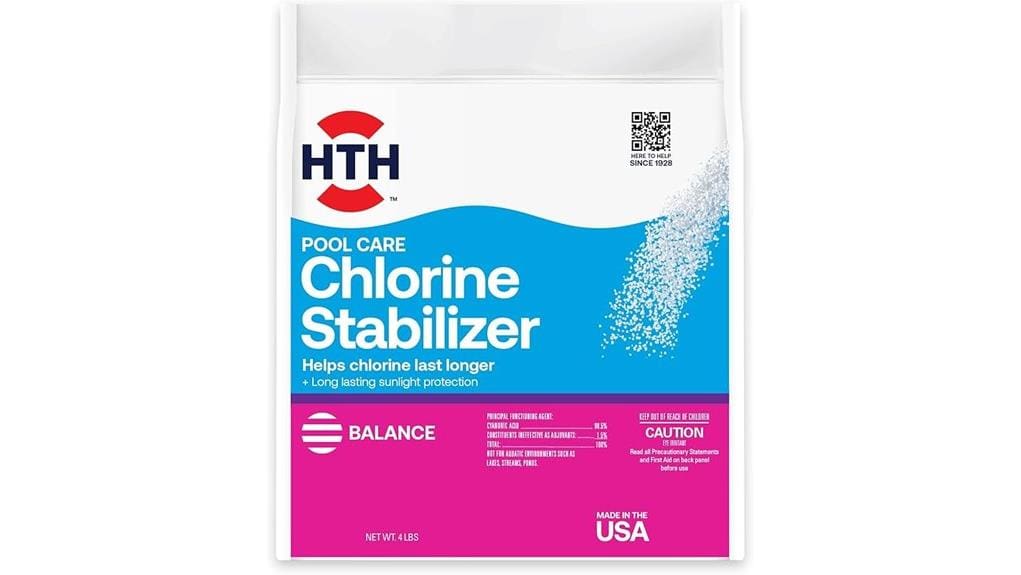
HTH 67061 stabilizer reduces sunlight-driven chlorine loss by raising cyanuric acid to a target 20–25 ppm, so you’ll need fewer chlorine adjustments and steadier sanitizer protection. You shut off the pump, add the measured powder via the skimmer or a mesh bag, restart circulation, and test weekly with HTH 6‑Way strips, adjusting slowly. It won’t replace shock or testing, and high CYA needs dilution; keep going and you’ll find full dosing, testing, and maintenance details.
Some Key Takeaways
- HTH 67061 adds cyanuric acid to protect chlorine from UV, extending sanitizer life and reducing chlorine adjustments.
- Use HTH 6‑Way Test Strips weekly and target cyanuric acid of 20–25 ppm for optimal protection without over‑stabilizing.
- Dose per label by pool volume, place powder in skimmer basket or secured mesh bag, then restart circulation.
- Benefits include simpler maintenance, consistent chlorine levels, and cost savings; it complements but does not replace shocking or testing.
- Monitor weekly and dilute/partial drain if cyanuric acid becomes too high; some users note slow dissolving in certain conditions.
What HTH 67061 Stabilizer Does and Who Needs It
Because sunlight breaks down chlorine, HTH 67061 Stabilizer helps preserve your pool’s sanitizer so it lasts longer and works more consistently. You’ll reduce sunlight degradation by adding stabilizer chemistry designed to shield chlorine from UV, keeping sanitizer levels steadier and swim conditions healthier. If you manage any pool exposed to direct sun, this product simplifies upkeep and lowers how often you adjust chlorine. You’ll fit right in with neighbors who test weekly and aim for 20–25 ppm. Use it if you want predictable sanitizer protection, less guesswork, and a community-minded approach to reliable, shared pool care. Homeowners who enjoy their outdoor spaces often use pool shock treatments and stabilizers together to maintain water quality, making pool shock treatments a common companion product.
How to Add HTH 67061 to Your Pool (Step‑by‑Step)
Start by testing your pool with HTH 6‑Way Test Strips to confirm you need stabilizer and to establish the current cyanuric acid level; you’ll target a maintained range of 20–25 ppm. If reading is low, shut off the pump. Measure dose per label for your pool volume. Add HTH 67061 directly to the skimmer using the skimmer method, placing powder in the skimmer basket or a secured mesh bag to avoid clumping. Make certain proper basket placement so water flows through the stabilizer. Restart circulation and retest weekly, adjusting incrementally until you maintain the 20–25 ppm range. Regular testing with test strips helps homeowners keep pool chemistry balanced.
Performance: Does It Actually Extend Chlorine Life?
Typically, yes — when used at the recommended level (20–25 ppm), HTH 67061’s stabilizer (cyanuric acid) slows chlorine degradation from UV exposure and lets your sanitizer remain effective longer, so you’ll use less chlorine and see more consistent protection between treatments. You’ll notice reduced chlorine decay because cyanuric interaction cushions free chlorine against sunlight, improving sunlight protection without changing basic pool chemistry. That doesn’t replace good dosing or testing, but it makes your routine more forgiving and communal—you and other pool users benefit from steadier sanitizer levels. Monitor levels and adjust chlorine as needed to maintain balanced chemistry. Using a saltwater pool system with proper stabilizer levels can help homeowners enjoy their outdoor spaces with more reliable sanitation.
Target Levels, Weekly Testing, and Long‑Term Maintenance
Regularly test your cyanuric acid level and keep it between 20 and 25 ppm to guarantee peak chlorine protection without over‑stabilizing the water. You’ll use HTH 6‑Way Test Strips for weekly tracking, recording results to spot trends and respond before issues arise. Add HTH 67061 via the skimmer per instructions to slowly raise levels when needed, and dilute or partially drain if levels climb too high. For long‑term maintenance, set a simple schedule: test weekly, adjust after heavy rain or refill, and plan seasonal adjustments as sunlight and bather load change so your pool stays balanced. Consider using a reliable pool thermometer to monitor temperature alongside chemical levels for optimal swimmer comfort and chemical effectiveness, as water temperature influences chlorine activity and stabilization pool thermometer.
Pros, Cons, and Final Recommendation
While it won’t fix every pool issue, HTH 67061 offers a straightforward way to extend chlorine life and reduce sunlight degradation, so you’ll spend less time chasing low chlorine levels. Pros: simple dosing via skimmer, works with all pools, supports consistent chlorine protection, and yields measurable cost savings over time. Cons: you must monitor levels weekly (20–25 ppm) and it doesn’t replace proper sanitization or shock treatments. User reviews generally praise ease and effectiveness but note slow dissolving in some conditions. Final recommendation: if you want lower maintenance and predictable chlorine longevity, this stabilizer is a practical, community-approved choice. It’s especially helpful for homeowners looking to maintain consistent chlorine protection in outdoor pools.
Some Questions Answered
Does HTH 67061 Affect Algae Growth or Require Algaecide Use?
No, it doesn’t directly inhibit algae growth; the stabilizer’s primary role is chlorine protection, not algae inhibition. You’ll still need algaecide if algae appears or during high-risk periods. The stabilizer interaction helps chlorine last longer in sunlight, which indirectly supports algae control by keeping sanitizer levels steadier. Test weekly and maintain 20–25 ppm stabilizer so your chlorine can work effectively alongside any algaecide you use.
Is This Stabilizer Safe for Saltwater Pools and Salt Chlorinators?
Yes — you can use it in saltwater pools; the stabilizer is saltwater compatible and won’t harm pool salt levels. You’ll want to monitor stabilizer concentration because high cyanuric acid can reduce free chlorine’s effectiveness, which affects chlorinator impact. Test weekly with your strips and keep levels 20–25 ppm. If you’re on a community of pool owners, you’ll fit right in by maintaining balanced levels and checking your chlorinator’s output.
Can I Overdose the Pool With HTH 67061 Stabilizer?
Yes — you can overdose the pool with cyanuric acid if stabilizer buildup pushes levels too high. You’ll notice reduced chlorine effectiveness and potential algae issues when cyanuric acid exceeds recommended 20–25 ppm. Test weekly, stop adding stabilizer once you reach target, and dilute or partially drain and refill to lower excessive CYA. You’re part of a community keeping pools healthy; regular testing prevents stabilizer buildup and shared headaches.
Is HTH 67061 Safe for Pool Liners, Plaster, and Equipment?
Yes — you can use it safely: Pool compatibility is broad, and it won’t harm typical liners, plaster, or metal equipment when used correctly. You’ll maintain Material safety by keeping stabilizer levels in the recommended 20–25 ppm and adding via the skimmer as directed. Test weekly with HTH strips, avoid overdosing, and your pool surfaces and gear will stay protected while chlorine effectiveness is extended for healthier, low-maintenance swimming.
How Long Does One 4 Lb Container Typically Last?
A 4 lb container typically lasts one to two seasons for an average backyard pool, depending on pool size, seasonal dosing and water turnover. You’ll usually add stabilizer until you reach 20–25 ppm, then top off as testing shows weekly. If you have high water turnover or larger volume, it’ll run out sooner; for smaller or low-turnover pools you’ll stretch it longer. You’re part of a community keeping pools healthy.