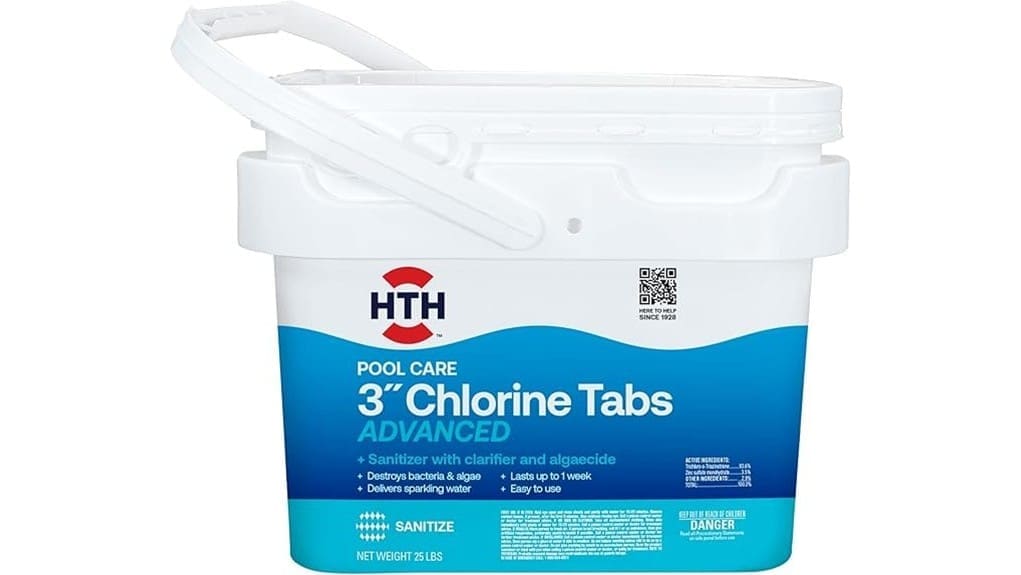
You’ll get steady, week-long chlorination with HTH 42055 3″ tablets when you use properly sized floaters or feeders and maintain circulation. The triple-action formula provides reliable sanitizer residuals, clarifying action, and algae suppression without large chlorine spikes. You’ll need to monitor free chlorine (1–4 ppm), stabilizer, and feeders for clogging, and take care with vinyl liners and salt systems. It’s efficient for low-frequency dosing—keep going to see detailed dosing, safety, and compatibility notes.
Some Key Takeaways
- HTH 42055 delivers steady, slow-release chlorination with week-long 3″ tablets for low-frequency dosing.
- Triple-action formula provides chlorination, clarifying, and algaecidal benefits when circulation and dosing are correct.
- Target free chlorine 1–4 ppm, test twice weekly, and adjust tablet count by pool volume and readings.
- Compatible with vinyl-lined and many saltwater systems, but monitor cyanuric acid and corrosion risk in salt setups.
- Store 25 lb bulk container cool and dry, wear PPE when handling, and avoid mixing with other chemicals.
What the HTH 42055 Chlorine Tabs Do and Who They’re For
The HTH 42055 3″ Chlorine Tabs deliver continuous, slow-release chlorination and secondary clarifying and algaecidal action, so you can maintain a stable sanitizer residual with minimal dosing effort. You’ll use these tablets when you need predictable, low-frequency dosing for residential or commercial pools, including vinyl-lined and saltwater systems. Expect measurable reductions in microbial load and visible clarity gains while conserving labor. For pool maintenance, test water twice weekly and adjust to 1–4 ppm free chlorine. Follow label directions and PPE guidance to guarantee chemical safety; storage and handling procedures are critical to prevent degradation and exposure risks. These tablets are ideal for homeowners who want simple, reliable maintenance with consistent sanitization.
Real-World Performance: Sanitizing, Clarifying, and Algae Control
When you dose HTH 42055 tablets as directed, they deliver a steady residual that effectively sanitizes and suppresses common pool algae while clarifying water clarity; you’ll see consistent free-chlorine readings within the recommended 1–4 ppm range when feeder settings and circulation are correct. In practice, the triple-action formula reduces bacterial load and prevents visible green and black algae; cyan haze incidents are minimized when levels stay stable. Tabs are slow-dissolving, providing week-long chlorine; you won’t get rapid dissolving spikes that waste sanitizer. Performance depends on proper circulation, regular testing, and addressing heavy organic load promptly. These tablets are suitable for homeowners who enjoy outdoor pool spaces and want reliable, low-maintenance sanitization pool shock treatments.
How to Use HTH 42055 Safely and Get the Best Results
If you want consistent, safe results with HTH 42055, dose and monitor methodically: place 3″ tablets in a floater, feeder, or skimmer basket per manufacturer directions, maintain circulation while tablets dissolve, and keep free chlorine between 1–4 ppm. You should follow safety precautions: store dry, avoid skin/eye contact, wear gloves and eye protection when handling, and never mix with other chemicals. Use dosing guidelines based on pool volume and test-strip readings; adjust tablet count to maintain 1–4 ppm. Test and record levels twice weekly, inspect feeders for clogging, and troubleshoot low chlorine promptly to prevent algae and bacterial growth. Many homeowners find simple test kits helpful for routinely monitoring pool chemistry.
Compatibility and Limitations (Pool Types, Salt Systems, and Vinyl Liners)
Although designed for broad use, HTH 42055 tablets have specific compatibility notes you should check before dosing: they’re formulated to work with vinyl-lined pools and saltwater systems and can be used in floaters, feeders, and skimmer baskets, but you must monitor cyanuric acid and chlorine stabilizer levels and avoid prolonged direct tablet contact with vinyl surfaces to prevent localized bleaching or etching. You should confirm vinyl compatibility by avoiding tablet storage or placement directly on liners. For salt systems, note saltwater caveats: monitor residual chlorine and stabilizer to prevent corrosion or crossover effects on metal fixtures. Adjust dosing based on frequent testing. Store pool chemicals in cool, dry conditions and away from other household chemicals.
Buying Verdict: Pros, Cons, and When to Choose HTH 42055
Because you want reliable, low-maintenance chlorination for most residential pools, HTH 42055 is a strong choice. You get slow-dissolving, triple-action tablets compatible with floaters, feeders, and skimmer baskets, supporting 1–4 ppm chlorine and effective algae control. Pros: long-lasting weekly tabs, sun-protected formula, broad compatibility (vinyl, salt systems), and simplified dosing. Cons: 25 lb container bulk requires proper long term storage to prevent degradation; handling bromine-sensitive pools needs caution. In a cost comparison, upfront bulk saves per-tab cost but demands storage space and safety. Choose HTH 42055 if you prioritize efficiency and season-long convenience. Homeowners who enjoy their outdoor spaces will appreciate how these pool opening chemicals simplify spring startup and ongoing maintenance, making seasonal care easier with essential pool opening practices.
Some Questions Answered
Are These Tablets Safe to Handle Without Gloves?
No, you shouldn’t handle them without gloves. Chlorine tablets can cause skin irritation and leave chemical residue; you should wear chemical-resistant gloves and rinse any exposed skin immediately. Use eye protection and avoid inhaling dust. Handle tablets in a well-ventilated area, keep containers closed, and wash hands thoroughly after contact. Following these precautions reduces risk and prevents contamination of other surfaces or swim gear.
Can I Store Unopened Tubs Outdoors Year-Round?
No, you shouldn’t store unopened tubs outdoors year-round. Storage implications include moisture ingress and UV exposure that reduce tablet efficacy and packaging integrity; temperature tolerance is limited—extreme heat accelerates decomposition, cold can cause condensation and clumping. You should keep tubs sealed in a cool, dry, well-ventilated area away from direct sunlight and combustible materials. Inspect seals and labels, and follow manufacturer guidance to maintain chlorine stability and safety.
Do These Tablets Affect Pool Heater or Automatic Dispenser Warranties?
They typically won’t void pool heater or automatic dispenser warranties if you follow manufacturer recommendations and proper use; warranty implications arise if tablets are misused, stored improperly, or cause corrosion from concentrated contact. You should check both your heater/dispenser manual and HTH guidance for compatibility and installation instructions. Maintain recommended chlorine levels, avoid direct tablet contact with metal parts, and document usage to support any warranty claims.
Are They Compatible With DE and Cartridge Filters?
Yes — they’re compatible with DE and cartridge filters when used properly. You should avoid placing tablets directly into DE grids or cartridge housings to prevent localized high chlorine concentrations that can degrade filter media and increase equipment corrosion risk. Use floaters or in-line feeders designed for 3″ tablets, maintain 1–4 ppm free chlorine, and test twice weekly. Proper dosing protects filter integrity and minimizes accelerated wear on metal components.
Can I Use Them the Same Day After Adding Other Shock Products?
You can’t generally use them the same day after adding other shock products without checking chlorine and combined chlorine levels due to potential chemical interaction. Test water after shocking; wait until free chlorine returns to the recommended 1–4 ppm and combined chlorine is near zero. If levels are satisfactory and manufacturer shock instructions allow, you can add the tablets. Always follow product labels and ventilate and avoid mixing concentrated oxidizers directly.