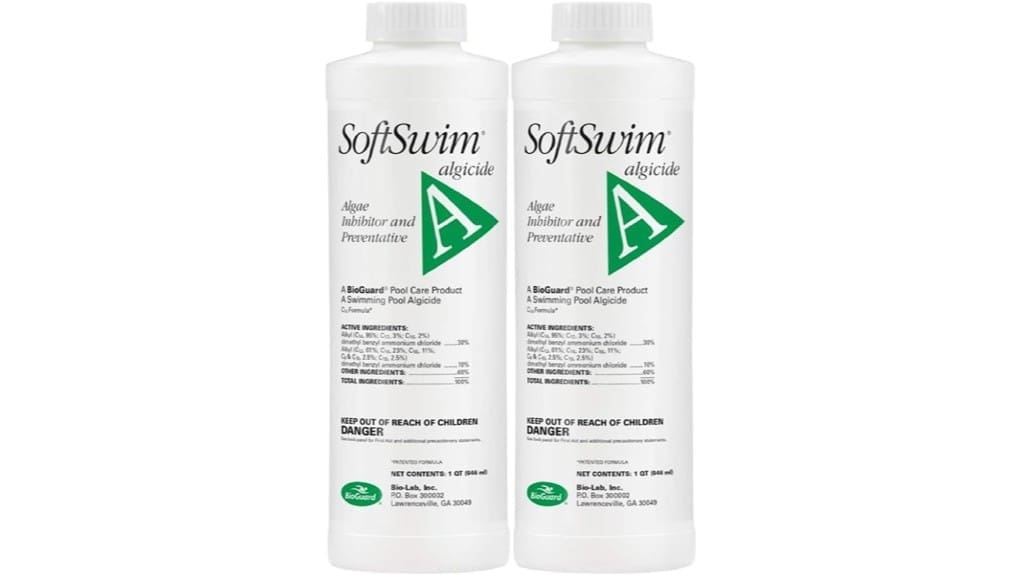
If you run a biguanide (SoftSwim) pool up to 25,000 gallons, this two‑quart BioGuard SoftSwim A pack gives concentrated, UV‑stable algaecide protection with one quart treating about 12,500 gallons. You’ll use it weekly for maintenance, at start‑up and closing, and run your pump ~12 hours after dosing to guarantee distribution. It’s validated for biguanide chemistry, improves water feel versus chlorine, and helps prevent green, black, and mustard algae; keep going to see full usage and compatibility details.
Some Key Takeaways
- Two 1‑quart bottles treat up to 25,000 gallons total, providing a single weekly maintenance dose for most residential pools.
- Formulated for SoftSwim biguanide systems, it’s UV‑stable and compatible with biguanide chemistry.
- Broad‑spectrum algaecide effective against green, black, and mustard algae with measurable weekly prevention.
- Requires good circulation and about 12 hours pump runtime after dosing for uniform distribution and safety.
- Pack offers season‑length convenience for pools under 25,000 gallons; compare per‑quart cost and buy before start‑up.
What BioGuard SoftSwim A Is and Who Should Use It
Because it’s formulated specifically for the SoftSwim system, BioGuard SoftSwim A is a concentrated, broad‑spectrum algaecide you’ll use as the first step in weekly, start‑up, or closing treatments to prevent and remove all types of algae. You’ll appreciate the softswim history showing validation with biguanide chemistry and stability under UV and heat. This product targets both in‑ground and above‑ground pools under 25,000 gallons, especially those with bottom drains and strong circulation. Target users are pool owners and maintenance professionals seeking reliable, evidence‑based algae control compatible with SoftSwim disinfection, simplifying routine care while keeping water clear and gentle. It’s a popular choice for homeowners who enjoy their outdoor spaces and want simple, effective pool care with algaecide products.
How to Use the Pack of 2: Dosage, Timing, and Pool Size Limits
When you use the two 1‑quart bottles of BioGuard SoftSwim A, dose according to pool volume—typically one quart treats up to 12,500 gallons—so a pack of two covers pools up to 25,000 gallons for a single treatment; apply weekly for maintenance, at start‑up, and during closing, and run the pump at least 12 hours after dosing to guarantee complete distribution and contact. Use the dosage chart on the label to match volume precisely. For best results, schedule application timing immediately after filtration starts and before peak bather load. Avoid overdosing; follow label intervals and combine only with compatible SoftSwim chemistry. This product is ideal for homeowners who enjoy their outdoor spaces and want an easy way to maintain water quality with shock treatment tips.
Performance Review: Algae Prevention, Water Feel, and UV Stability
After you’ve dosed SoftSwim A as directed and kept the pump running, you’ll notice its algae prevention works reliably: the formulation provides broad-spectrum protection that stops green, black, and mustard algae from taking hold with weekly maintenance and at start-up. You’ll see measurable algae resistance in routine checks—treated pools resist regrowth between doses. Water feel remains soft; swimmers report improved texture retention on skin and hair versus conventional chlorine. The formula’s UV stability reduces photodegradation, so efficacy lasts longer under sun and heat. Overall, performance data and field use indicate consistent clarity, reduced algae incidents, and durable active concentration. Natural enzymes used in pool care also help maintain water quality by breaking down organic contaminants and supporting a healthier pool ecosystem.
Compatibility & Practical Concerns: Biguanide Systems, Circulation, and Pump Runtime
While SoftSwim A integrates smoothly into biguanide systems, you need to guarantee proper circulation and pump runtime to get consistent algae control and avoid localized dosing issues. You’ll rely on documented biguanide compatibility—SoftSwim A is formulated for SoftSwim chemistry—so don’t mix incompatible sanitizers. Make certain return jets and bottom drains promote uniform distribution; stagnation encourages blooms despite treatment. Operate your pump at recommended pump runtime (about 12 hours daily) to maintain inhibitor concentration and contact time. Measure residuals after application, adjust runtime for pool size and turnover, and follow label dosing to prevent overdosing or underdosing hotspots. Using enzyme-based products can help break down organic contaminants and reduce demand on sanitizer natural enzyme treatments.
Value Summary: Cost, Pack Convenience, and When to Buy Extras
Maintaining proper circulation and dosing sets the stage for cost considerations, since effective use of SoftSwim A directly affects how often you’ll need replacements. You’ll find the pack of 2 (1 qt each) balances upfront cost and storage: buy once per season for typical pools under 25,000 gallons with regular maintenance. For price comparison, check per-quart unit cost versus single larger containers and factor shipping. Purchase timing matters—stock before start-up and during sales to avoid emergency buys after algae blooms. Buy extras only if your pump runtime or circulation is irregular, or if you expect heavy usage periods. Homeowners who keep their water clear often rely on pool clarifiers to reduce chemical use and improve filter efficiency.
Some Questions Answered
Is Softswim a Safe for People With Chloramine Allergies?
Yes — SoftSwim A is generally safe for people with chloramine allergies because it’s biguanide-compatible and doesn’t produce chloramines. You’re less likely to get respiratory sensitivity from chloramine exposure when using this algaecide, though any pool chemical can cause skin irritation or breathing issues in sensitive individuals. You should test cautiously, maintain proper dosing and circulation, and consult a physician if you have severe asthma or chemical sensitivities.
Can Softswim a Be Used With Automatic Chemical Feeders?
Yes — you can use SoftSwim A with automatic chemical feeders, but you’ll need to confirm automation compatibility and adjust feeder calibration. You should feed according to manufacturer dosing, avoid metal parts that catalyze biguanide, and monitor levels frequently. Calibrate feeders to dispense the recommended weekly dose spread over daily cycles, check circulation and pump runtime, and test water often to guarantee algae prevention and stable SoftSwim chemistry.
What Is the Product’s Shelf Life Unopened?
The unopened longevity is typically 2–3 years; check the expiration date on the bottle for the exact cutoff. You’ll store it sealed in a cool, dry place away from direct sunlight to preserve potency. Evidence from manufacturer guidance and common chemical stability indicates algae inhibitors remain effective within that timeframe if unopened. If the expiration date has passed, don’t use it—discard per local hazardous-waste rules.
Does Softswim a Affect Pool Heater or Salt Systems?
No, SoftSwim A won’t harm pool equipment or interfere with heater compatibility when used as directed. You’re adding a biguanide-compatible algaecide formulated to be non-corrosive and stable; it’s safe for in-ground and above-ground systems, including pools with heaters and salt systems. Maintain proper dosing, circulation, and water chemistry, and run the pump per recommendations to guarantee equipment longevity and peak performance.
Are There Specific Storage Temperature Warnings?
Yes — you should store it at room temperature and avoid freezing. You’ll keep the product stable and effective by storing bottles upright in a cool, dry area away from direct sunlight and heat sources. Don’t expose it to prolonged high temperatures or freeze–thaw cycles, which can degrade performance. Follow label precautions, keep caps tight, and store away from children and incompatible chemicals to maintain efficacy and safety.