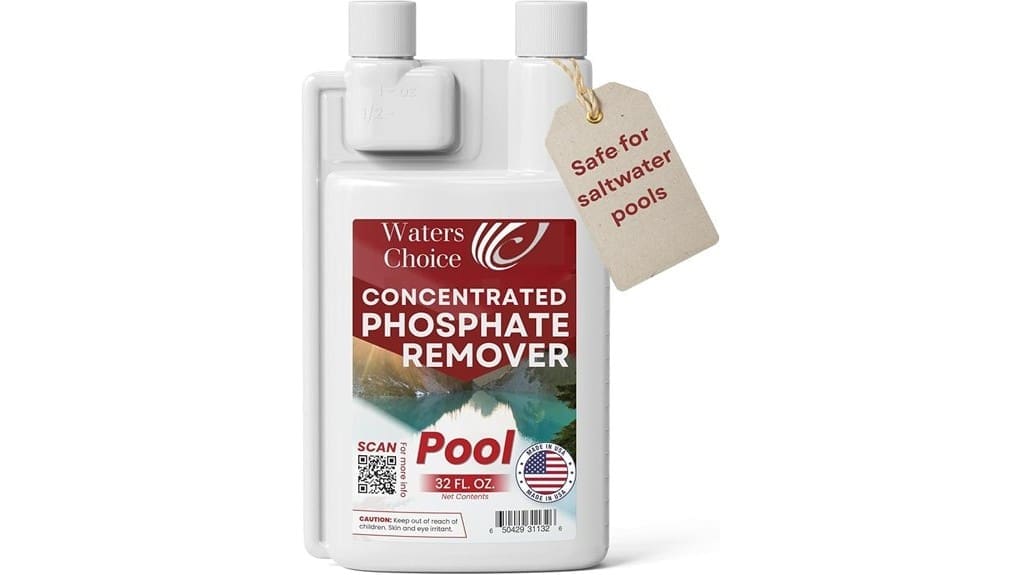
You’ll get a fast, no‑drain phosphate knockdown designed for residential and small commercial pools, treating up to 10,000 ppb in a 10,000‑gallon pool with one 32 oz dose. The concentrated formula chelates and precipitates dissolved phosphates, dropping bioavailable phosphorus, reducing turbidity, and slowing algae growth within hours while filtration runs. Apply around the perimeter with circulation, retest in 24–48 hours, and expect occasional cloudiness; continue for full dosing, timing, and troubleshooting details.
Some Key Takeaways
- Highly concentrated formula removes up to 10,000 ppb phosphate in a 10,000-gallon pool with one 32 oz dose.
- Rapidly chelates and precipitates phosphates, improving clarity and slowing algae growth within hours.
- Easy no-drain application: pour around perimeter while filtering, run pump 24 hours, retest in 24–48 hours.
- Cost-effective for small residential pools; compare oz-per-gallon and dosing frequency when choosing bottle size.
- Pros include fast action and simplicity; cons include possible transient cloudiness, need for testing, and filter monitoring.
Quick Verdict: Who This Phosphate Remover Is Best For
If you manage a residential or small commercial pool and need a fast, concentrated phosphate treatment, Waters Choice 32 oz is ideal: it’s formulated to knock down up to 10,000 ppb in a 10,000-gallon pool with a single, no-drain application, so you’ll minimize downtime and reduce algae risk quickly. You’ll find this product suits owners and service techs who require rapid action, straightforward dosing, and minimal operational disruption. Use it when phosphate spikes threaten water clarity or when proactive algae prevention is critical. It’s optimized for portability, ease of use, and targeted phosphate reduction without complex procedures. Many homeowners use phosphate removers as part of their routine to keep pools sparkling and maintain water quality.
How the Concentrated Formula Performs : Algae Control & Phosphate Removal
Because the concentrated formula is engineered to chelate and precipitate dissolved phosphates rapidly, you’ll see measurable reductions in phosphate levels shortly after application, which directly limits the nutrient supply algae rely on to proliferate. You’ll observe rapid action in lab-grade tests and field use: phosphate readings drop, turbidity falls, and algal replication slows within hours. The treatment creates inert phosphate complexes that settle or filter out, reducing bioavailable phosphorus. When paired with routine maintenance, the product contributes to long term stability of low-phosphate conditions, decreasing recurrence risk and supporting sustained clarity and reliable algae control. This supports homeowners who enjoy their outdoor spaces by helping maintain clear pools with natural enzyme treatments and reduced chemical reliance.
Step-by-Step Use: Dosing, Application, and Pool Sizes (No Draining)
Building on the demonstrated phosphate reduction and algae suppression, you’ll apply the concentrated formula directly without draining the pool. You begin with water testing to determine current phosphate ppm and pool volume. Consult the dosage chart on the bottle: dosage scales to gallons; Waters Choice treats up to 10,000 gallons per full-strength bottle. For application timing, run filtration during and 24 hours after treatment; apply in the evening for reduced sunlight-driven algae activity. Pour measured dose along pool perimeter while circulating. Re-test phosphate after 24–48 hours. Integrate this into routine pool maintenance to prevent recurrence. Keep your pool alkalinity balanced to support overall water health and prevent chemical imbalances, including alkalinity management, as part of regular care.
Value and Cost Effectiveness : Bottle Sizes, Coverage, and When One Treatment Is Enough
When you compare bottle sizes and coverage, focus on gallons treated per ounce and the likelihood that a single application will suffice; evaluate the 32 oz versus 16 oz options by calculating coverage per bottle against your pool volume. You’ll perform a cost analysis: price per ounce divided by gallons treated yields true unit cost. Because the formula removes up to 10,000 ppb in a 10,000-gallon pool, one properly dosed 32 oz bottle often covers multiple treatments for smaller pools. Factor anticipated treatment frequency based on phosphate load and testing cadence to determine replacement interval and overall cost effectiveness. Homeowners who enjoy their outdoor spaces should consider how product selection fits their overall backyard maintenance plan, especially when choosing pool clarifiers that complement phosphate removal.
Real-World Pros and Cons, Common Issues, and Final Buying Recommendation
Although the concentrated formula delivers measurable phosphate reduction quickly, you should weigh practical benefits against routine maintenance needs and pool-specific variables. You’ll appreciate fast shipping, clear dosing instructions, and single-application capability for many pools. Pros: high potency (up to 10,000 ppb removal), no drain/refill, rapid clarity and algae control. Cons: you must monitor filtration, test kits, and follow safety handling; repeat dosing may be required for heavy contamination. Common issues: transient cloudiness, chemical interactions, and unclear scent profile complaints from some users. Recommendation: buy if you need a strong, fast, user-friendly phosphate reducer and reliable support. Homeowners who value easy at-home treatment and clearer water should also consider pool maintenance basics as part of their routine.
Some Questions Answered
Is This Phosphate Remover Safe for All Pool Surface Types?
Yes — it’s generally safe for common pool surfaces, but you should verify. You’ll follow surface compatibility guidelines and perform material testing on a small, inconspicuous area before full use. The concentrated formula is designed for typical plaster, vinyl, fiberglass, and concrete finishes, yet manufacturers vary; test for staining, etching, or discoloration. If adverse effects appear, rinse thoroughly and contact Waters Choice support for warranty and remediation instructions.
Can It Be Used With Saltwater Chlorine Generators?
Yes — you can use it with saltwater chlorine generators; the formula is saltwater compatible when dosed per directions. You’ll want to monitor chlorine output and salinity after treatment, since sudden phosphate binding can alter sensor readings. Maintain routine electrode inspection and cleaning to mitigate potential electrode corrosion risks over time. Follow manufacturer dosing and generator maintenance schedules to guarantee peak performance and minimize corrosion-related issues.
Are There Any Swim Restrictions After Application?
Yes — you can swim after application once dosing is complete and the product is fully dispersed; there are no prolonged swimmer safety restrictions. Avoid immediate bathing for a brief period while the solution mixes and pool filtration runs to circulate and dilute. Minimize direct UV exposure on freshly treated surfaces for several hours. Maintain normal filtration until water clears, and follow label directions for turn-back-on timing and safety precautions.
Will It Affect Pool Chemical Balances Like pH or Chlorine?
No, it won’t cause significant pH shifts or increase Chlorine demand when used per directions. You’ll find the concentrated phosphate remover chelates and removes phosphates without altering alkalinity or pH appreciably; any minor transient changes are typically corrected by your normal pool chemistry routine. Monitor pH and free chlorine after treatment, adjust as needed, and follow dosage based on pool volume to avoid localized concentration spikes.
Is Product Disposal or Container Recycling Guided by the Manufacturer?
Yes — you should follow manufacturer instructions for disposal and container recycling. Check the product label or manufacturer’s website for specific disposal steps, hazardous-waste recommendations, and local regulatory guidance. Rinse and triple-rinse containers if directed, then recycle according to local programs. If instructions are absent, treat residual liquid as chemical waste and contact local waste authorities. Document compliance with manufacturer instructions for liability protection.