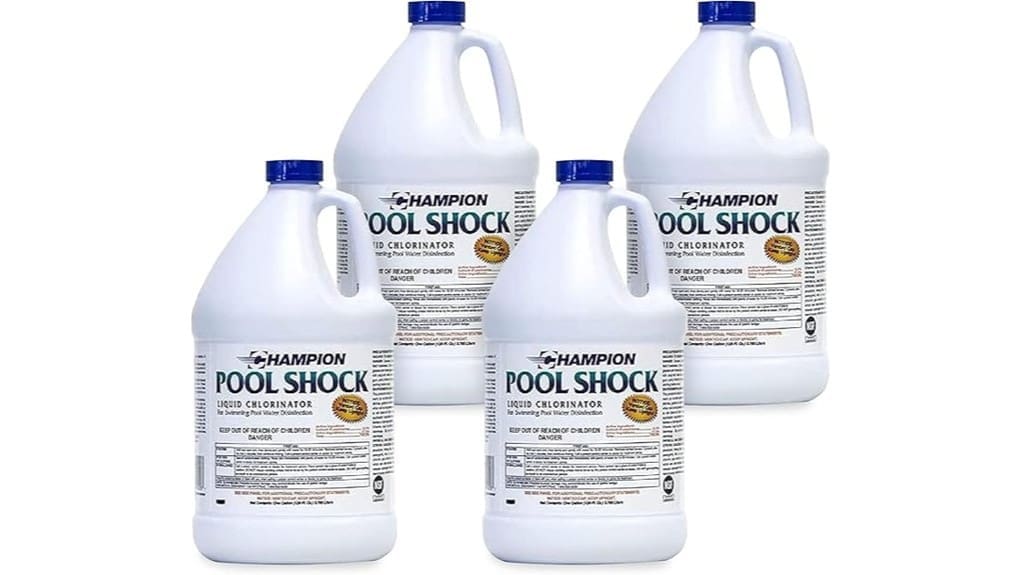
CPDI Champion Pool Shock is a 12.5% liquid chlorine you can pour or feed through a metering pump for fast, reliable sanitation and shock treatments. It brings chlorine levels up quickly, tackles algae when paired with routine care, and clears cloudy water effectively. Jugs are convenient for multiple pools though inspect seals for leaks and factor hazardous shipping into cost. It’s a solid commercial-strength option if you need bulk chlorine, and the full review covers dosing, safety, and buying tips.
Some Key Takeaways
- CPDI Champion is a 12.5% liquid sodium hypochlorite sold in four 1-gallon jugs for ready-to-use pool shock and routine chlorination.
- It delivers fast sanitization, effective algae knockdown, and improved water clarity when used with regular maintenance.
- Suitable for pouring around the pool or feeding through metering/peristaltic pumps for consistent dosing.
- Pros: commercial strength, cost-effective per gallon, and convenient for multi-pool or frequent use; inspect seals for leaks.
- Safety: target routine 1–3 ppm, shock to breakpoint (~10 ppm), wear PPE, never mix with acids, store upright away from children.
Quick Verdict: Is CPDI Champion Pool Shock Liquid Chlorine Worth Buying?
While it’s not flashy, CPDI Champion Pool Shock delivers fast, commercial-strength sanitation you can pour straight into your pool or feed through a metering pump. You’ll appreciate the ready-to-use liquid format, 12.5% sodium hypochlorite strength, and four 1-gallon jugs that simplify dosing for both residential and commercial pools. For practical buyers, it’s dependable for routine chlorination and emergency shock treatments. In a value assessment, consider concentration, NSF/ANSI 60 certification, and pack size versus price and storage needs. If you want straightforward, effective pool chemicals without mixing or fuss, this product’s worth serious consideration. Homeowners who enjoy their outdoor spaces will find maintenance easier with shock treatment tips.
Performance for Sanitation, Algae Control, and Clarity
Moving from overall value to on-water results, CPDI Champion Pool Shock proves reliable at sanitizing, knocking down algae, and clearing cloudy pools. You’ll see fast sanitization that brings chlorine levels up quickly, making water safe for use sooner. For algae prevention and active control, it breaks down blooms and helps stop regrowth when paired with routine maintenance. Clarity improvement is noticeable after treatment cycles, reducing cloudiness and detritus. If you use a metering system, pump compatibility is solid — it feeds well through peristaltic pumps or can be poured directly. Overall, it’s practical and effective for regular pool care. It’s also important to follow chlorine tablet safety guidelines when handling and storing pool chemicals.
Specs and Practical Use: Dosage, Application Methods, and Safety Tips
Because accurate dosing and safe handling determine results, follow clear guidelines when using CPDI Champion Pool Shock Liquid Chlorine: for routine chlorination, add enough product to raise free chlorine to recommended levels (commonly 1–3 ppm for pools; consult your pool’s target), for shock treatments dose to breakpoint chlorination (typically 10 ppm or as your testing protocol indicates), and for algae outbreaks use a higher shock dose per pool volume as outlined by your testing kit. You’ll follow Dosage guidelines based on pool volume and test strips. Apply by pouring around perimeter or feeding a metering pump. Observe Safety precautions: wear gloves, eye protection, never mix with acids, store upright, keep children and pets away. Essential Pool Opening Chemicals for a Sparkling Start includes guidance on selecting appropriate products for homeowners who enjoy outdoor spaces, so consider consulting resources on pool opening when planning your treatment.
Pros, Cons, and Who Should (or Shouldn’t) Buy This 4-Pack
If you need a reliable, no-fuss sanitizing solution for regular or heavy-duty pool maintenance, this 4-pack delivers commercial-strength liquid chlorine that’s easy to use and cost-effective per gallon. You’ll get rapid sanitation, clear water, and algae control without mixing—ideal if you run treatment schedules or a metering pump. Packaging durability is decent for storage but inspect seals; leaking jugs will be your main risk. Don’t buy if you need small quantities, prefer stabilized chlorine, or want documented warranty support. Buy if you manage multiple pools, maintain year-round schedules, or want bulk convenience and consistent strength. Consider pairing liquid chlorine with the right filter powder to help improve overall water clarity.
Buying Guide: Price Comparisons, Alternatives, and Where to Buy
When comparing prices for the CPDI Champion Pool Shock 4-pack, focus on per-gallon cost and any shipping or hazardous-material fees so you can see true value. Check major sellers—Amazon, pool-supply specialists, and big-box retailers—for price comparisons and retailer availability. Factor in bulk discounts, seasonal sales, and return policies; hazardous shipping can add cost or restrict delivery. Consider alternatives like stabilized granular shock or liquid competitors if you need different chlorine strength or storage ease. Buy where you get clear return terms and prompt delivery. Match unit cost, convenience, and handling requirements to your pool size and usage rhythm. Also consider eco-friendly handling and disposal practices for pool chemicals and choose suppliers who provide guidance on sustainable pool care.
Some Questions Answered
Is This Product Safe for Use in Saltwater Pools?
Yes — you can use it in saltwater pools, but be cautious. The product’s sodium hypochlorite works for salt systems, so saltwater compatibility is fine for shock dosing or backup sanitation. You’ll want to monitor free chlorine and salt system settings to avoid overdosing. Also watch for corrosion concerns on metal fittings and equipment; keep pH balanced and rinse metal parts if splashed. Follow manufacturer and salt-chlorine generator guidance.
Can CPDI Be Used to Shock a Hot Tub or Spa?
Yes — you can use CPDI, but you should be cautious: hot tub compatibility depends on concentration and volume. Because it’s 12.5% sodium hypochlorite, you’ll need precise spa dosing to avoid overdosing, damage, or irritation. Calculate required amount for your tub’s gallons, drain or dilute as recommended, and never mix with other chemicals. Test chlorine levels before use; aim for appropriate shock ppm and rinse equipment if necessary.
What Is the Shelf Life Once a Jug Is Opened?
You’ll get limited opened shelf life—expect about 1–3 months of useful residual stability after opening if you store the jug tightly capped, upright, cool and out of sunlight. Chlorine strength declines with heat, light and oxygen exposure, so monitor free chlorine and boost dosing sooner if levels fall. For best results, buy what you’ll use quickly and keep inspection/testing supplies handy to confirm potency.
Are There Temperature Storage Limits for the Jugs?
Yes. You should store the jugs in a cool, well-ventilated area away from heat and direct sunlight; ideal storage temperature is moderate (avoid freezing and temperatures above about 104°F/40°C). During transport, use transport precautions: keep upright, secure from spills, avoid high-heat vehicles, and isolate from acids and organic materials. Inspect containers for leaks after transit. Following these storage temperature and transport precautions helps preserve potency and safety.
Is This Chlorine Compatible With Pool Chemical Automation Systems?
Yes — it’s compatible with most pool automation systems. Because it’s a ready-to-use 12.5% liquid, you can feed it via peristaltic metering pumps for reliable automation compatibility and straightforward controller integration. You’ll want to confirm pump materials resist sodium hypochlorite and program dosing rates for concentration and pool volume. Test residuals after setup and follow manufacturer guidance; that keeps your automated controller delivering consistent, safe chlorine levels.