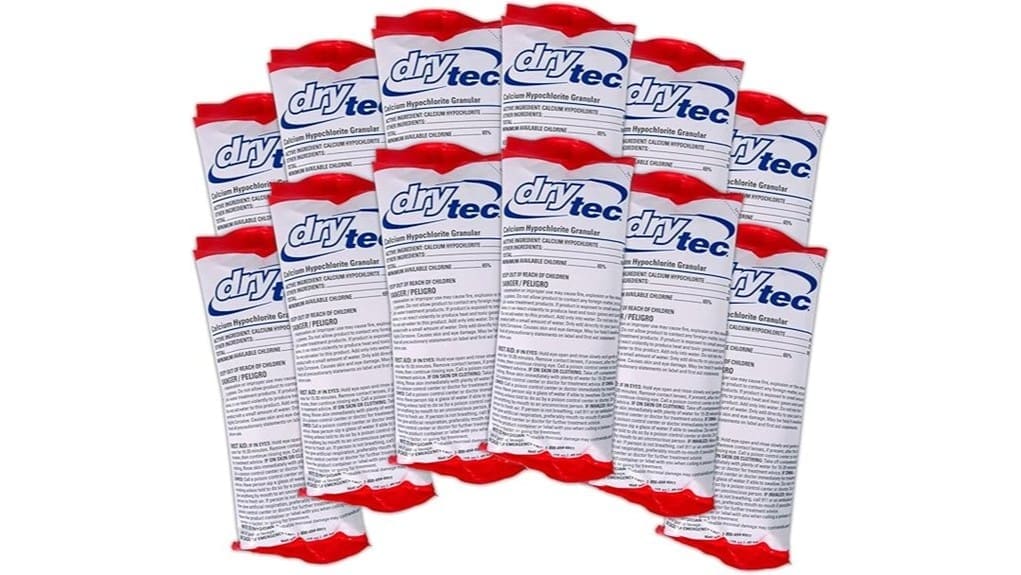
DryTec 1-1901-12 is a one‑pound calcium hypochlorite shock that delivers about 68% available chlorine and is dosed at one bag per 10,000 gallons to raise free chlorine roughly 5–10 ppm. You’ll want your pH at 7.2–7.6 and alkalinity 60–120 ppm before application, use PPE, avoid mixing with acids, and store sealed in a cool dry place. Continue for dosing tips, performance expectations, and safety details.
Some Key Takeaways
- DryTec 1-1901-12 contains pure calcium hypochlorite, delivering about 68% available chlorine per one-pound bag.
- One 1-pound bag treats roughly 10,000 gallons, raising chlorine about 5–10 ppm for immediate shock.
- Packaging is a 12-pack of single-use one-pound bags, convenient for dosing and bulk storage.
- Works best when pool pH 7.2–7.6 and alkalinity 60–120 ppm; test and adjust before shocking.
- Handle and store as a strong oxidizer: use PPE, keep dry, avoid acids/organics, and store cool and ventilated.
What DryTec 1-1901-12 Contains and How Strong Its Chlorine Is
Containing pure calcium hypochlorite, DryTec 1-1901-12 delivers 68% available chlorine per one-pound bag, so each bag supplies a potent oxidizer for pool shock. You get a concentrated active ingredient formulated for predictable chlorine release; manufacturers run stability testing to confirm residual potency over storage. The 12-pack net weight and one-pound bag format give clear packaging options for single-use dosing and bulk storage planning. You’ll appreciate concise specifications: active ingredient identity, available chlorine percentage, and pack count. This lets you assess shelf life, transport requirements, and safe handling without guessing product strength or inventory needs. Homeowners who enjoy managing their outdoor spaces will find this product fits well into regular shock treatment routines.
How to Dose DryTec Shock : One Bag per 10,000 Gallons and Expected PPM
Dose one 1-pound bag of DryTec 1-1901-12 per 10,000 gallons to raise available chlorine by roughly 5–10 ppm. You’ll calculate needed bags by dividing your pool volume by 10,000 and rounding up; use calculation methods that factor current free chlorine to avoid overdosing. For small adjustments, add partial bags using a scale or pre-measured scoops and record added chlorine. If you prefer alternate formulations (liquid bleach or stabilized trichlor), convert based on available chlorine equivalence to match the target ppm. Always distribute granules evenly around the pool while the pump runs for consistent mixing. Opening your pool with the right chemicals and a clear plan helps ensure a safe and sparkling start, especially when using pool opening chemicals.
Preparing Your Pool: pH (7.2–7.6) and Alkalinity (60–120 PPM) Before Shocking
Before you shock, check and adjust your pool so pH sits between 7.2 and 7.6 and total alkalinity is 60–120 ppm; proper levels guarantee the calcium hypochlorite raises available chlorine predictably and reduces corrosion or scaling. You’ll perform water testing across multiple points and at consistent depth, using calibrated strips or a digital meter. If pH is high, add muriatic acid or sodium bisulfate; if low, add soda ash. For alkalinity adjustment, use sodium bicarbonate to raise levels or acid to lower them, applying chemicals gradually and re-testing after circulation to confirm targets before applying DryTec shock. Maintain clear pool water with regular testing and the right products to enjoy your outdoor space, including using pool test strips to monitor levels.
Real-World Performance: What 5–10 PPM Available Chlorine per Bag Means for Results
When you add one DryTec 1-1901-12 bag per 10,000 gallons, expect an immediate boost of roughly 5–10 ppm available chlorine, which is enough to oxidize contaminants and jump-start chlorine residuals without over-chlorinating. You’ll see rapid reduction in combined chlorine and organic load; free chlorine returns to measurable residuals within an hour in properly circulated water. That 5–10 ppm window provides meaningful algae control for early-stage blooms and helps prevent recontamination when pH and alkalinity are within target ranges. Residual persistence depends on bather load, sunlight, and filtration; plan follow-up dosing if levels drop faster than expected. For consistent safety and maintenance, pair shock treatments with regular pool water test routines to monitor chlorine, pH, and alkalinity.
Safety, Storage, and Best Practices When Using Calcium Hypochlorite Shock
Because calcium hypochlorite is a powerful oxidizer, you should handle, store, and use it with strict precautions to prevent fires, toxic gas release, and skin or eye injury. Wear personal protective equipment—gloves, goggles, and a respirator—and avoid mixing with acids, organic materials, or pool shock containing cyanuric acid. Store bags upright in a cool, dry, well-ventilated area away from sunlight and combustible items; keep original packaging sealed. For dosing, follow one 1-pound bag per 10,000 gallons and monitor pH (7.2–7.6) and alkalinity (60–120 ppm). Have an emergency response plan, including eyewash, spill kit, and local emergency contacts. Consider using purpose-built chemical storage containers and lockable cabinets designed for outdoor pool chemicals to improve safety and organization.
Some Questions Answered
Can I Use This Product in a Vinyl or Fiberglass Pool?
Yes — you can use it in vinyl and fiberglass pools with caution. For vinyl compatibility and fiberglass safety, dissolve and broadcast per instructions, one 1‑lb bag per 10,000 gallons to raise 5–10 ppm available chlorine. Monitor and maintain pH 7.2–7.6 and alkalinity 60–120 ppm to prevent material stress. Avoid direct contact with liner or surfaces; circulate thoroughly and wait recommended return‑to‑swim times before reentry.
Is It Safe to Mix With Cyanuric Acid or Stabilized Chlorine?
No — you shouldn’t mix calcium hypochlorite directly with cyanuric acid or stabilized chlorine because unsafe chlorine interaction can occur. You’ll add stabilized products separately, not combine them as powders. Using this shock will raise free chlorine without adding stabilizer; repeated use can cause stabilizer buildup if you also add cyanuric acid regularly. Maintain pH 7.2–7.6 and alkalinity 60–120 ppm, and follow dosage to avoid hazards.
How Long After Shocking Can I Swim Again?
You can usually swim again once chlorine levels return to safe range—typically under 3 ppm—and you confirm swimmer safety with pool testing. After adding one bag per 10,000 gallons, wait time often spans 8–24 hours depending on circulation, sunlight, and initial levels. Test free chlorine and pH (7.2–7.6 target) before entering. Don’t swim if levels exceed recommended limits or if water appears cloudy; retest until safe.
Will This Shock Affect My Pool Plaster or Metal Fixtures?
Yes — if you overdose or don’t control chemistry, you’ll risk plaster etching and metal corrosion. You should dose one bag per 10,000 gallons as directed, keep pH 7.2–7.6 and alkalinity 60–120 ppm, and avoid repeated high chlorine spikes. Rinse metal parts after heavy treatment, circulate and test water frequently, and don’t swim until chlorine and pH return to safe ranges to minimize damage.
Can I Pre-Dissolve the Powder Before Adding to the Pool?
You shouldn’t pre-dissolve this shock in a concentrated slurry. For pre dissolution safety, always add small amounts to plenty of water while stirring, never pour water into chemical. Keep slurry concentration low and work outdoors with PPE, avoiding metals and organics. Add the diluted mixture slowly to the pool at the deep end with the pump running. Monitor chlorine and pH, and wait the recommended time before swimming.