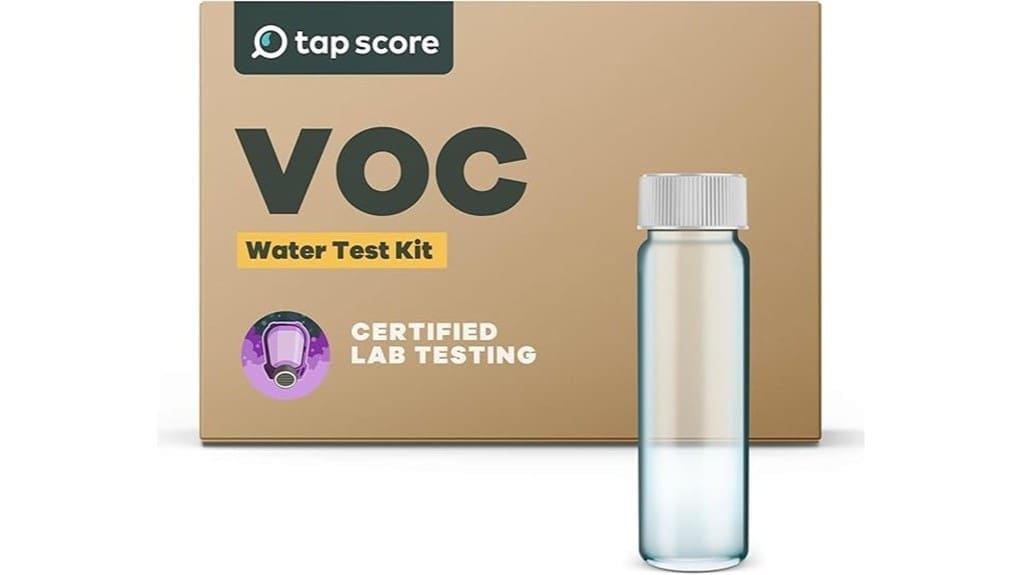
You’ll get lab-grade quantification of common trihalomethanes (THMs) and volatile organic compounds (VOCs) analyzed by EPA/NELAC/ISO-aligned labs using validated GC‑MS and purge‑and‑trap methods. The kit arrives with labeled vials (some preserved), gloves, chain‑of‑custody forms, and a prepaid mailer plus clear sampling steps to preserve integrity. Results report concentrations, detection limits, and health‑based comparisons within about five business days. Keep going to see how to interpret results and choose filtration options.
Some Key Takeaways
- Lab-certified EPA/NELAC/ISO methods provide reliable GC-MS and purge-and-trap quantification of VOCs and trihalomethanes.
- Kit includes pre-labeled glass vials, preservatives, chain-of-custody forms, and prepaid shipping for proper, compliant sampling.
- Clear sampling checklist (purge cold water, avoid aeration, fill to mark, cap immediately, refrigerate) preserves sample integrity.
- Typical lab turnaround is about five business days with documented detection limits and QC for confident interpretation.
- Report compares results to regulatory benchmarks and offers targeted filtration options and health guidance for exceedances.
What This Tap Score Kit Tests and Why Trihalomethanes and VOCs Matter
Because your tap can pick up contaminants both from treatment and from local sources, this Tap Score kit targets common volatile organic compounds (VOCs) and trihalomethanes (THMs) that frequently show up in drinking water. You’ll get quantified detection of frequently encountered VOCs and THMs, letting you assess disinfection byproducts formed during chlorination and contaminants from nearby waste, oil-and-gas, or agricultural activity. The report differentiates treatment-derived THMs from VOCs introduced via plumbing leaching and environmental pollution, enabling evidence-based decisions on filtration or remediation. Labs are EPA/NELAC/ISO-certified, so results meet regulatory analytical standards and turnaround expectations. This kit is designed for homeowners who want to keep their outdoor and indoor water use safe with simple test kits.
What’s in the Box and How to Collect and Ship a Valid Sample
Open the kit and you’ll find everything needed to collect and return a valid VOC/THM sample: labeled glass vials or vials with preservative (as required for VOC analysis), calibrated fill lines, nitrile gloves, detailed step-by-step instructions, chain-of-custody paperwork, and a pre-paid return mailer to an EPA-, NELAC- and ISO-certified lab. Follow unboxing tips: inspect vials for cracks, verify expiry, and confirm paperwork is complete. Use the sampling checklist to run cold water, purge lines, avoid aeration, fill to the mark, cap immediately, and refrigerate if instructed. Complete chain-of-custody, pack securely, and ship same-day per instructions. Store chemicals in cool, dry storage away from sunlight and incompatible materials to maintain sample integrity and safety.
Lab Accuracy, Certification, and Turnaround Time You Can Expect
When you send your VOC/THM sample, certified labs in the network use EPA- and NELAC-approved methods and ISO-aligned quality systems to deliver accurate, quantitative results with documented limits of detection and method detection limits. You’ll receive analyses from EPA certified labs that follow validated GC-MS and purge-and-trap protocols, with calibration, blanks, and QC checks reported. Turnaround is consistent: labs return results in about five business days after receipt, providing Rapid turnaround without compromising QA/QC. Reports include numeric concentrations, detection limits, and chain-of-custody documentation so you can trust data quality for decision-making and follow-up testing. For homeowners looking to integrate testing with broader outdoor systems, consider timers and controls for pool electricity to optimize energy use and coordination with maintenance schedules.
Interpreting Your Report: Results, Health Guidance, and Filtration Recommendations
Although the raw numbers on your lab report can look technical, they give you actionable information about what’s in your water and whether you need to act. You’ll see quantified concentrations for specific VOCs and trihalomethanes, detection limits, and comparisons to regulatory or health-based benchmarks. Use result interpretation to identify exceedances and prioritize contaminants by health concern and exposure. The report includes concise health guidance—who’s at greater risk, short- and long-term implications, and recommended follow-up testing. Filtration options are presented objectively: point-of-use carbon filters, reverse osmosis, or whole-house systems, with removal rates and maintenance expectations to guide your decision. Consider also conservation-minded outdoor practices like reducing pool backwashing and covering pools to minimize water waste and contaminant influx from runoff, which supports overall pool water conservation.
Who Should Buy This Kit, Alternatives, and Final Buying Advice
Who should buy this kit depends on the specific contamination risks you face and how precise you need your results to be. If you’re a homeowner concerned about disinfection byproducts, nearby oil, gas, agricultural runoff, or aging plumbing, this kit gives lab-grade VOC and trihalomethane quantification with certified labs and fast turnaround. For commercial applications or regulatory compliance, consider full-spectrum municipal or industrial testing panels or contract lab services that cover additional analytes and chain-of-custody. If you need quick, evidence-based guidance plus filtration recommendations, buy this kit; seek expanded lab services when legal reporting or wider contaminant lists are required. Homeowners who enjoy their outdoor spaces may also want to consider pool mineral systems as part of an overall strategy to enhance water quality and reduce reliance on harsh chemicals.
Some Questions Answered
Can This Kit Detect Lead or Other Heavy Metals?
No — this kit doesn’t perform lead detection or test for other heavy metals. It targets VOCs and trihalomethanes, not metals like lead, arsenic, or copper. If you need heavy metals testing, you should choose a metal-specific kit or certified lab analysis; those tests use different sampling methods and labs certified for metal analysis. Contact the provider’s support team to get recommendations and a metal-testing option that meets your needs and local regulations.
Are Shipping Fees Covered for Returns From All U.S. States?
Yes — return shipping is covered for most U.S. states, but you should check the return policy for state exceptions. You’ll use the pre-paid return label included in the kit; certified labs receive samples and process them within the stated turnaround. If you’re in a restricted state, the policy will note alternative instructions or charges. Contact their support team for confirmation and any state-specific guidance before mailing your sample.
Can I Test Water From a Well Versus Municipal Supply?
Yes — you can test well water versus municipal supply. You’ll get a municipal comparison that highlights differences: groundwater variability often causes different contaminant profiles than treated systems. Test detects source contamination from nearby agriculture, oil and gas, waste facilities, or decaying plumbing. Use identical sampling procedures for both sources to produce comparable, evidence-based results that pinpoint contamination origins and inform appropriate treatment or filtration choices.
Is Pooling Samples From Multiple Taps Allowed in One Kit?
No — you shouldn’t pool samples from multiple taps into one kit; shared sampling by combining sources invalidates results. Composite testing is useful in some research or screening contexts, but certified VOC/trihalomethane analyses require individual, source-specific samples to trace contamination and meet lab QA/QC standards. If you want broader coverage, collect separate kits or ask the lab about an approved composite protocol; they’ll advise on sampling, chain-of-custody, and interpretation.
Do Results Qualify for Regulatory or Legal Evidence?
No — your results typically won’t qualify as regulatory or legal evidence unless you establish a formal chain of custody and meet specific agency protocols. Tap Score uses third party validation via certified labs for accuracy, but courts and regulators usually require documented sample control, accredited lab acceptance criteria, and sometimes on-site certified sampler credentials. You can pursue confirmatory testing under official procedures to create admissible, legally defensible results.