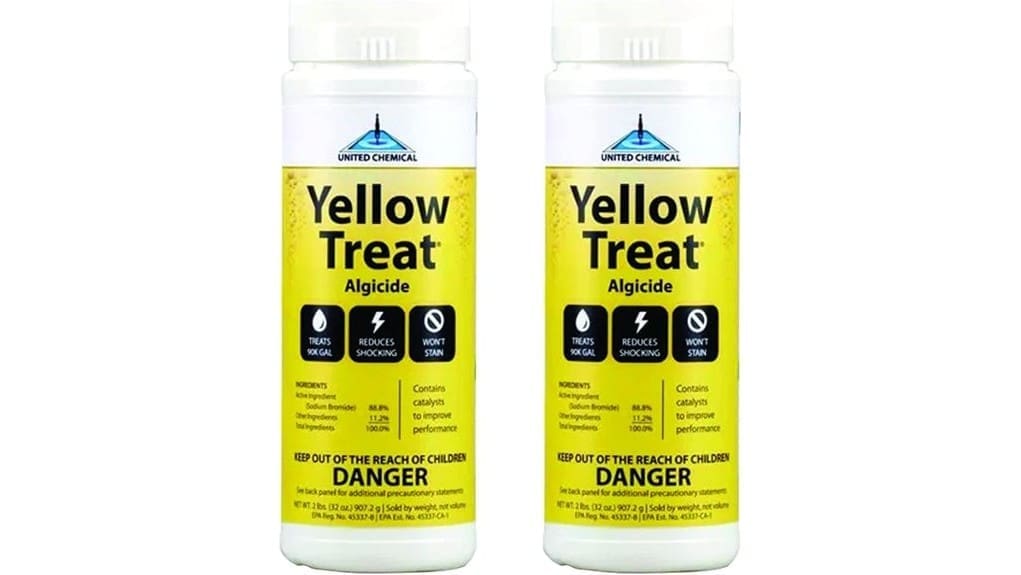
United Chemicals Yellow Treat YT-C12 is a granular, bromide-based rescue product you’ll use for localized mustard (yellow) algae outbreaks, not routine sanitation. You’ll broadcast the measured granules, brush treated areas, then immediately super‑chlorinate to activate bromide into active halogen species; confirm free chlorine ≥3 ppm with OTO before swimmers return. Expect visible decline in days, possible staining, and repeat cycles only if algae persist. Continue for detailed dosing, safety, and alternative options.
Some Key Takeaways
- YT-C12 is a granular, bromide-based rescue treatment formulated specifically to control mustard (yellow) algae in pools and spas.
- Apply 5 oz per 10,000 gallons (pools) or 0.25 oz per 500 gallons (spas), broadcast over affected areas and brush immediately.
- After application, immediately super-chlorinate with an EPA-registered chlorine product per label and confirm free chlorine ≥3 ppm by OTO.
- Visible algae typically detach within days, but repeat treatments may be needed and staining can persist despite algae death.
- Pros: targeted effectiveness for mustard algae; cons: mandatory super-chlorination, pool downtime, and careful chemical handling required.
What Yellow Treat YT-C12 Is and How It Works for Mustard/Yellow Algae
Yellow Treat YT-C12 is a granular rescue treatment formulated to control mustard (yellow) algae in pools and spas; it uses sodium bromide as its active algaecide and is applied directly to the water surface to target stubborn, localized blooms. You’ll find the product designed for targeted intervention against yellow mustardalgae, not routine sanitization. You should treat as a conditional corrective measure: apply as labeled, then follow mandated super-chlorination and testing protocols. The mechanism relies on bromide activation to form active bromine species that act on algal cells. Document treatments, monitor residuals, and repeat only if visible algae persist. It is especially useful for homeowners who maintain saltwater above-ground pools and want a focused solution for isolated mustard algae outbreaks.
How to Use YT-C12 Step-by-Step (Dosage, Timing, and Super-Chlorination)
When you see mustard algae, follow the label steps exactly: broadcast the measured granular YT-C12 over the pool or spa surface at the specified dosage, brush treated areas, then immediately super-chlorinate with an EPA-registered chlorine product and test before allowing anyone to swim. Measure 5 oz per 10,000 gallons (pools) or 0.25 oz per 500 gallons (spas). Apply uniformly; document application timing and pool volume. Use a firm brush technique on walls and floor immediately after application. Super-chlorinate per your chlorine product’s label, then test with OTO, wait five minutes, and confirm 3 ppm before re-entry. Keep records of treatment dates and dosages to maintain proper pool care.
Real-World Performance: Effectiveness, Speed, and When You’ll Need Repeat Treatments
Typically, you’ll see United Chemicals Yellow Treat YT-C12 start working within days on visible mustard algae, but effectiveness depends on correct dosing, thorough brushing, and immediate super-chlorination as required by the label. You should monitor results daily; dead algae will detach after treatment but staining may persist. Speed varies with infestation severity, water chemistry, and adherence to application timing. Repeat treatments are warranted if algae remain visible after the initial cycle or if seasonal recurrence occurs during warm months. Plan conservative reapplication intervals, document treatments, and follow label directives to remain compliant and achieve predictable control. Many homeowners also find combining treatment with regular use of pool stain removers helps maintain stain-free water.
Safety, Testing, and Pool/Spa Compatibility (Chlorine, Bromine, and Swimmers)
Because Yellow Treat uses a bromide-based algaecide and requires immediate super‑chlorination, you must follow label directions, test accurately, and keep swimmers out until chlorine levels are safe. You’ll add the granular dose, then perform an EPA‑registered shock per its label; this oxidizes bromide to hypobromous/hypochlorous species but can change pool chemistry. Monitor pH, total alkalinity, and halogen residual to manage chemical interactions and avoid byproduct formation. Use an OTO or appropriate test, wait five minutes, and confirm chlorine ≥3 ppm before allowing bathers. Prioritize swimmer safety, document readings, and repeat treatment only per instructions. For best results when opening seasonal pools, also ensure you have the essential pool opening chemicals on hand before beginning.
Pros, Cons, and Who Should Buy YT-C12 (Alternatives and Buying Tips)
Although it requires an immediate super‑chlorination step, Yellow Treat YT‑C12 gives a targeted, bromide‑based response for stubborn yellow and mustard algae that many general algicides don’t address, so you’ll see rapid visual reduction when used exactly per label. Pros: effective on mustard algae, granular ease, reputable formulation. Cons: mandatory super‑chlorination, pool downtime, chemical handling precautions. Who should buy: owners facing persistent yellow/mustard algae, operators comfortable with bromide/chlorine protocols. Alternatives: broad‑spectrum algaecides or professional remediation for severe cases. Buying tips: check cost comparison, buy 2‑packs to save; follow storage tips and label storage/handling requirements. Regular use of pool algaecides and proper maintenance is key to keeping your outdoor pool clear and enjoyable, especially when using targeted treatments like YT‑C12 that fit into a broader algaecide maintenance routine.
Some Questions Answered
Can Yellow Treat Damage Pool Liners or Vinyl Surfaces?
You’re unlikely to damage vinyl liners if you follow directions, but surface staining and chemical compatibility matter. Use prescribed dosages, brush and super-chlorinate as instructed, and avoid concentrated contact with liner edges or vinyl steps. Test a small, inconspicuous area if concerned and verify compatibility with the liner manufacturer. Maintain proper chlorine residuals and wait until levels drop to safe limits before reentry to minimize staining or chemical-compatibility issues.
Is YT-C12 Safe for Use With Saltwater Chlorination Systems?
Yes — you can use YT-C12 with saltwater chlorination systems, but you should exercise caution. Verify saltwater compatibility with your system manufacturer because sodium bromide and resulting bromide/bromine chemistry can increase electrode corrosion risk. After treating, follow required super-chlorination and monitor sanitizer levels closely. Test and maintain proper pH, chlorine/bromine residuals, and inspect the cell regularly to comply with manufacturer guidelines and minimize corrosion concerns.
How Long Does Unopened Product Remain Effective (Shelf Life)?
Unopened product typically has no printed expiration; you should assume an expiration timeframe of about 2–3 years from manufacture to avoid potency degradation. Store it sealed, dry, and cool to preserve effectiveness. If the container is swollen, damaged, or shows caking, don’t use it. For regulatory certainty, contact the manufacturer or check batch codes; retain purchase records to document age and support any warranty or safety queries.
Can Yellow Treat Be Used in Koi Ponds or With Aquatic Life?
No — you shouldn’t use Yellow Treat in koi ponds or with aquatic life. Its koi compatibility is poor because the product requires immediate super‑chlorination and contains active bromide chemistry; aquatic toxicity risks to fish and invertebrates are significant. Follow regulatory precautions: avoid treating inhabited waters, remove or relocate livestock before application, and consult label and local environmental authorities for permitted uses to prevent harm and regulatory violations.
Are There Special Storage Temperature Limitations for the Product?
Yes — you should store it within recommended storage temperature and respect thermal limits. Keep the product in a cool, dry, well-ventilated area away from heat, flame, and direct sunlight; avoid freezing and sustained high temperatures. Follow label and local regulatory guidance for chemical storage, secure the container tightly, and segregate from incompatible substances. Maintain temperature monitoring where required and consult the Safety Data Sheet for precise thermal limits and emergency procedures.