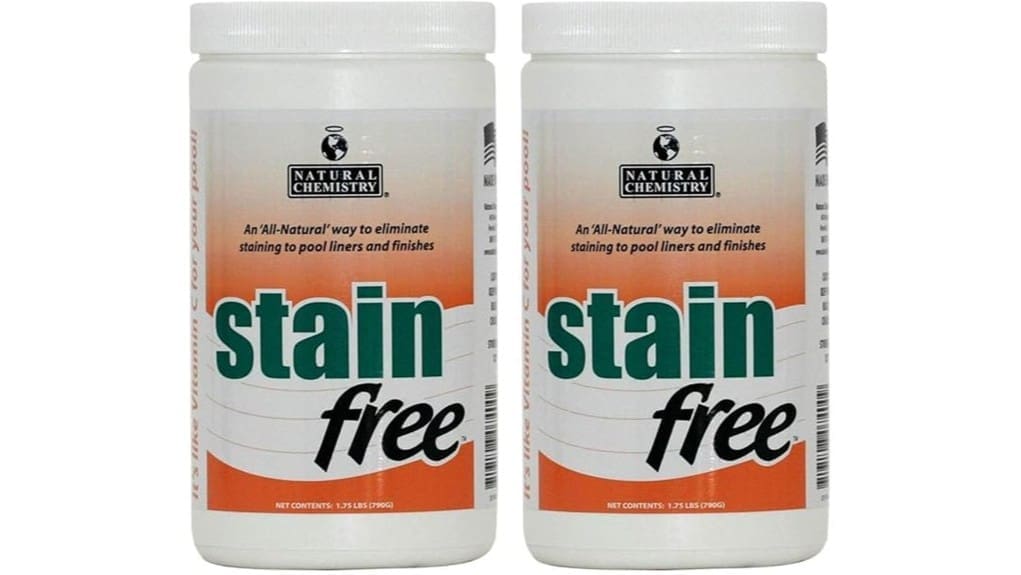
You’ll find Natural Chemistry Stain Free uses 100% citric acid to chelate iron, copper and manganese, converting insoluble oxides into soluble citrate complexes you can filter or vacuum. It’s phosphate-free, sanitizer-compatible, and safe on plaster, fiberglass, vinyl and tile for spot removal or seasonal prevention. Dose one 1.75 lb packet per 10,000 gallons for routine use; increase for heavy stains and run filtration 24–48 hours. Continue for dosing, safety and alternatives.
Some Key Takeaways
- Natural Chemistry Stain Free uses 100% citric acid to chelate and remove iron, copper, manganese, and other metal stains.
- Safe for plaster, fiberglass, vinyl, and tile surfaces when used per instructions and after a spot test.
- Routine dose is 1.75 lb per 10,000 gallons; heavy stains require 3.5–7.0 lb per 10,000 gallons.
- Compatible with any sanitizer and phosphate-free, but monitor pH and run filtration 24–48 hours.
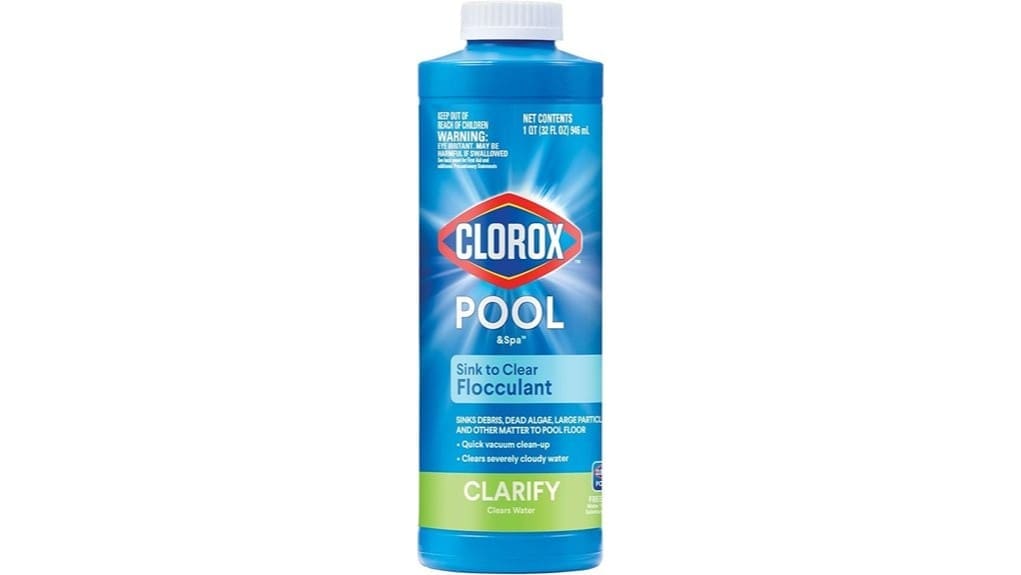
- Best for targeted stain removal or seasonal maintenance; pair with flocculants for improved clarity.
Natural Chemistry Stain Free at a Glance: Quick Verdict and Who It’s For
Cut through metal stains quickly: Natural Chemistry Stain Free uses 100% citric acid to remove and prevent metal-induced discoloration on all pool surfaces. You’ll get a compact, phosphate-free treatment (1.75 lb, pack of 2) that’s safe for any surface and sanitizer. Use it for targeted stain removal or routine seasonal maintenance to reduce metal buildup risk. Customer reviews highlight straightforward dosing, predictable results, and compatibility with varied systems. You’ll appreciate the technical simplicity: measured applications, minimal handling, and lower hazard compared with harsher agents. It’s suited for pool owners seeking efficient, proven stain control without complex protocols. Many homeowners pair this with flocculants to help clear suspended particles and improve overall water clarity.
How Stain Free Works: Citric Acid Formula and What It Removes
When metal ions bind to pool surfaces or form complexes in the water, they cause visible discoloration; Stain Free uses 100% citric acid to chelate those metal ions, breaking the bonds that produce stains and solubilizing the metals for easy removal. You get targeted metal chelation: citric acid coordinates iron, copper, manganese and other polyvalent ions, disrupting stain binding to plaster, tile, or liners. The process converts insoluble oxides/hydroxides into soluble citrate complexes you can filter or vacuum. Because it’s a citric-acid formula, it avoids phosphates and harsh oxidizers while remaining compatible with standard sanitizers. Homeowners who enjoy outdoor pool spaces often use clarifiers and treatments to maintain clear pool water.
Using Stain Free: Dosing, Application Steps, and Prevention Tips
Before treating stains, measure your pool volume and calculate dose precisely: add 1.75 lb (one packet) of Stain Free per 10,000 gallons for routine prevention or 3.5–7.0 lb per 10,000 gallons for heavy existing metal staining, dispersing the granules in a bucket of water and broadcasting evenly around the pool while the pump runs to guarantee full circulation. You should spot test on an inconspicuous area before full application. Application timing: add during stable water chemistry and run filtration continuously 24–48 hours. Brush affected areas, monitor metal levels, repeat treatment at manufacturer intervals for prevention, and record dosing. For winterizing and protecting plumbing, consider also using pool antifreeze in exposed lines and fittings to prevent freeze damage during cold months.
Safety, Compatibility, and Surface Coverage You Can Expect
Although citric-acid based, Stain Free is formulated to be gentle on all common pool surfaces and compatible with any sanitizing system, so you can treat metal discoloration without risking surface etching or sanitizer imbalance. You’ll find documented surface compatibility across plaster, fiberglass, vinyl, and tile; the 100% citric acid formulation chelates metals without harsh oxidizers. For user safety, wear gloves and eye protection, avoid inhalation, and follow dosing instructions to prevent localized acidity spikes. Coverage per 1.75 lb unit handles typical residential treatments; apply evenly, monitor pH, and rinse residue where instructed to guarantee effect and safety. Many homeowners also use routine shock treatment schedules to maintain clarity and prevent future staining.
Value and Buying Guidance: Pack Sizes, Cost Per Treatment, and Alternatives
If you’re comparing pack sizes and cost per treatment, the 1.75 lb two-pack of Natural Chemistry Stain Free gives predictable dosing and straightforward math: each 1.75 lb unit covers a typical residential treatment, so divide the pack price by two to estimate per-treatment cost and adjust for pool volume or repeated applications. You’ll evaluate price comparisons by calculating grams of citric acid per gallon treated; that yields objective cost-per-ppm removal. Look for bulk discounts if you manage multiple pools or seasonal repeat treatments. Alternatives include single-ingredient citric acid by weight or chelating stain removers — compare active concentration and total dose required. Keep your pool sparkling by choosing phosphate removers and related products that match your maintenance routine and pool size, especially when considering phosphate removers available for homeowners.
Some Questions Answered
Can Stain Free Be Used in Indoor Spas With Jets Running?
Yes — you can use Stain Free while jets are running. You should expect jet operation to enhance circulation effects and distribution of the citric solution, improving stain removal. For indoor safety, make certain adequate ventilation and avoid direct inhalation or splashes. Monitor sanitizer and pH to prevent adverse chemical interaction with other pool chemicals. Follow dosage and contact-time guidelines for effective, safe treatment.
How Long After Treatment Can Swimmers Re-Enter the Pool?
You can usually let swimmers re-enter after the treated water returns to normal chemistry, typically 30–60 minutes; follow product directions for exact wait time. You’ll perform safety testing (pH, sanitizer) to confirm levels are back in range before allowing use. Maintain circulation while testing, and don’t allow re-entry if residue or strong odor remains. If unsure, extend waiting period and retest to guarantee swimmer safety.
Does Stain Free Affect Pool Water pH Long-Term?
No, it won’t cause significant long-term pH drift if you dose correctly. You’ll see a transient pH drop because citric acid lowers alkalinity and challenges buffer capacity, but once the product disperses and you adjust total alkalinity, the pool’s buffer capacity restores stability. Monitor pH and alkalinity after treatment, and add alkalinity increaser if needed. Proper dosing and routine testing prevent persistent pH drift and maintain long-term balance.
Will Stain Free Remove Organic Stains Like Algae or Tannins?
No — it won’t remove algae or act as a primary algae removal treatment. You’ll use it to chelate metal ions that cause discoloration; it excels at tannin prevention by keeping metals sequestered and reducing staining potential. For active algae you should apply algaecide and oxidize with shock; combine those steps with proper filtration and sanitizer levels. Use Stain Free for metal-related issues, not as a substitute for algae removal.
Is Stain Free Safe for Vinyl Liners and Inflatable Pools?
Yes — you can use it on vinyl liners and inflatable pools. You’ll get vinyl compatibility because the citric-acid formula is gentle compared with harsher acid treatments, so it won’t degrade plastic surfaces when used per directions. You’ll also preserve inflatable durability since it’s phosphate-free and formulated for broad-surface safety. Always dilute and spot-test, follow dosing instructions, and avoid prolonged high-concentration contact to prevent material stress.