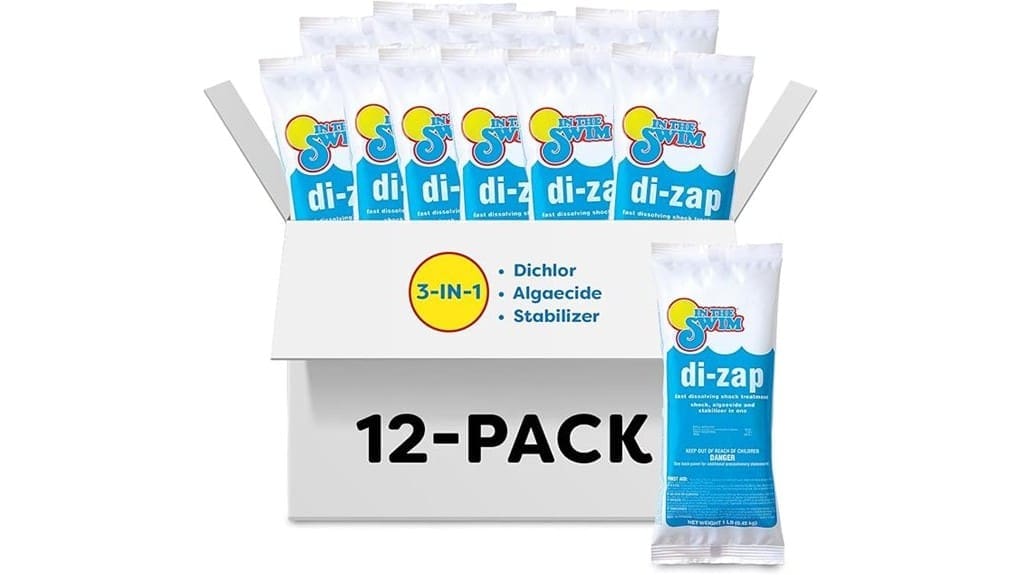
You’ll like In The Swim’s Premium 3‑in‑1 Pool Shock if you want fast oxidation, built‑in algaecide, and a UV stabilizer in one dose. One 1 lb bag treats up to 10,000 gallons weekly, clears cloudy water quickly, and holds chlorine longer in sun. Use with pump running, keep pH 7.2–7.6, and avoid mixing chemicals. Wear gloves and eye protection. Keep swimmers out until safe levels return — learn more about dosing and troubleshooting below.
Some Key Takeaways
- Combines 99% sodium dichlor oxidizer, an algaecide, and UV stabilizer for oxidation, algae control, and extended chlorine life in one dose.
- One 1 lb bag treats up to 10,000 gallons; weekly dosing recommended or after heavy use for consistent protection.
- Clears cloudy water quickly and rapidly oxidizes contaminants and combined chlorine when pH is 7.2–7.6.
- UV stabilizer reduces sunlight loss, extending residual chlorine and lowering reapplication frequency after sun exposure.
- Safe for pools and spas when label directions followed; avoid mixing with other chlorines or acids and wear PPE when dosing.
Quick Verdict and Key Specs for In The Swim Premium 3-in-1 Pool Shock
Although you’ll want to follow label directions, In The Swim’s Premium 3‑in‑1 Pool Shock delivers fast, reliable sanitation by combining 99% sodium dichlor oxidizer with an algaecide and UV stabilizer in a single dose. You’ll get fast results clearing cloudy water and oxidizing contaminants; one 1 lb bag treats up to 10,000 gallons and weekly dosing maintains protection. The UV stabilizer reduces sunlight loss so you’ll reapply less, saving time and delivering cost savings. It kills algae and bacteria without residue, is safe for pools and spas, and supports safe swim conditions when you follow handling and dosing instructions. Homeowners who enjoy outdoor spaces can keep their pools sparkling year-round with regular shock treatment and proper maintenance pool shock treatments.
How the 3-in-1 Formula (Sodium Dichlor + Algaecide + Stabilizer) Performs in Real Pools
You’ll notice the 3‑in‑1 blend takes care of multiple problems at once: the sodium dichlor rapidly oxidizes contaminants and combined chlorine, the algaecide kills and prevents visible growth, and the UV stabilizer helps the residual chlorine last longer in sunlight. In real pools you’ll get fast clearing and measurable chlorine longevity, so you won’t chase low readings after sunny afternoons. Algae prevention is effective for routine shocks and marginal outbreaks, reducing brush-and-vac cycles. It’s safe for typical pool materials when used as directed; always test and adjust pH after treatment to maintain sanitizer efficacy and swimmer safety. Homeowners who enjoy their outdoor spaces will appreciate how the product integrates into regular pool maintenance routines.
Step-by-Step Dosing, Timing, and Troubleshooting for Best Results
When treating your pool, follow precise dosing and timing to get fast clearing and long-lasting protection: add one 1‑lb bag per 10,000 gallons weekly or after heavy use, pour the granules evenly around the deep end with the pump running, wait at least one hour before testing free chlorine (expect rapid oxidation and clearer water), and retest every 4–6 hours until levels stabilize; always check and adjust pH to 7.2–7.6 before shocking, keep swimmers out during treatment and until chlorine returns to safe range, and consult troubleshooting steps if cloudiness or algae persist after 24 hours.
For best results, schedule weekly timing or pre dawn dosing for minimal UV loss, confirm granular dissolution by visual inspection and pump circulation, and perform pH adjustment beforehand. If cloudy or algae remain, boost circulation, repeat shock, and sweep or vacuum debris; document readings and contact support if unresolved.
Keep your routine simple and consistent to enjoy your outdoor space all season, and consider regular pool maintenance habits to prevent problems before they start.
Safety, Compatibility, and Maintenance Tips for Pools, Spas, and Fountains
Because this 3‑in‑1 shock combines a powerful oxidizer with algaecide and stabilizer, handle and store it like concentrated pool chemicals: keep bags sealed and dry, wear gloves and eye protection when dosing, avoid breathing dust, and never mix with other chlorine products or acids. You’ll follow label dosages and wait recommended contact times before allowing swimmers. For spas and fountains, pre-dissolve in a bucket to prevent surface bleaching and check pumps, heaters, and seals for equipment compatibility. Maintain regular testing, adjust pH to 7.2–7.6, and rotate shocks only as directed. Dispose of empty bags per local chemical storage rules. Homeowners can find convenient pool water test kits to help maintain safe chemical levels and monitor treatment effectiveness.
Who Should Buy This Product and Where to Get the Best Value
If you manage an outdoor pool, spa, or decorative water feature and want a single, time-saving treatment that oxidizes contaminants, kills algae, and adds UV protection, this 3‑in‑1 shock is a strong fit. You’ll benefit if you’re a budget conscious owner wanting predictable weekly dosing (1 lb per 10,000 gallons) and reduced sunlight loss thanks to the stabilizer. Seasonal preparers will like quick clearing and low-residue results before events. Buy multi-pack 1 lb bags from reputable retailers or In The Swim for best per-bag value; compare shipping and local hazardous-material rules to keep handling safe. Regular use of compatible clarifiers can help maintain clear pool water and extend the benefits of the shock.
Some Questions Answered
Can This Shock Be Used With Saltwater Pool Chlorine Generators?
Yes — you can use this shock with saltwater pool chlorine generators. Its sodium dichlor formulation is saltwater compatibility friendly, and it won’t harm the cell when used as directed. You should monitor generator maintenance more frequently after shocking, since higher combined chlorine and stabilizer can affect cell performance. Run the generator and test free chlorine, cyanuric acid, and salt levels; follow recommended dosages and manufacturer maintenance intervals.
Is It Safe to Swim Immediately After Treatment?
You shouldn’t swim immediately after treatment; wait times matter to avoid skin irritation. After adding one 1 lb bag per 10,000 gallons, wait until free chlorine returns to safe levels (typically 1–3 ppm) and the water is clear—usually a few hours, but check with a test kit. If levels are elevated or cloudy, wait longer. Following labeled instructions and confirming chlorine and pH guarantees safe, irritation-free swimming.
How Should Leftover Bags Be Stored Long-Term?
Store sealed in original packaging, ventilated area, Cool, dry and away from direct sunlight. You’ll keep leftover bags tightly closed to prevent moisture pickup and clumping. Place them off the ground on a pallet or shelf, separated from acids, fuels, and combustible materials. Label date opened and rotate stock so you use oldest first. Check periodically for discoloration or odor; if compromised, dispose per local hazardous-waste rules.
Will It Bleach Swimsuits or Pool Liners?
It can cause color fading and fabric weakening if you don’t rinse suits quickly after use. The 3-in-1’s sodium dichlor releases chlorine that’s effective at oxidizing contaminants but can lighten dyes and weaken fibers over time. Avoid prolonged contact, remove suits promptly, rinse with fresh water, and follow dosage directions to minimize residual chlorine. For liners, maintain proper dilution and weekly dosing to reduce bleaching risk and material degradation.
Is It Effective Against Mustard or Black Algae?
Yes — it helps, but you shouldn’t rely on it alone for stubborn growth. You’ll get effective mustard mitigation and good control of black algae because the sodium dichlor oxidizes contaminants and kills algae. For black algae you’ll also need scrubbing, brushing, and possibly a targeted algaecide or repeat treatments. Follow dosing, guarantee proper circulation, and wear gloves/goggles — it’s effective when combined with mechanical cleaning and safe handling.