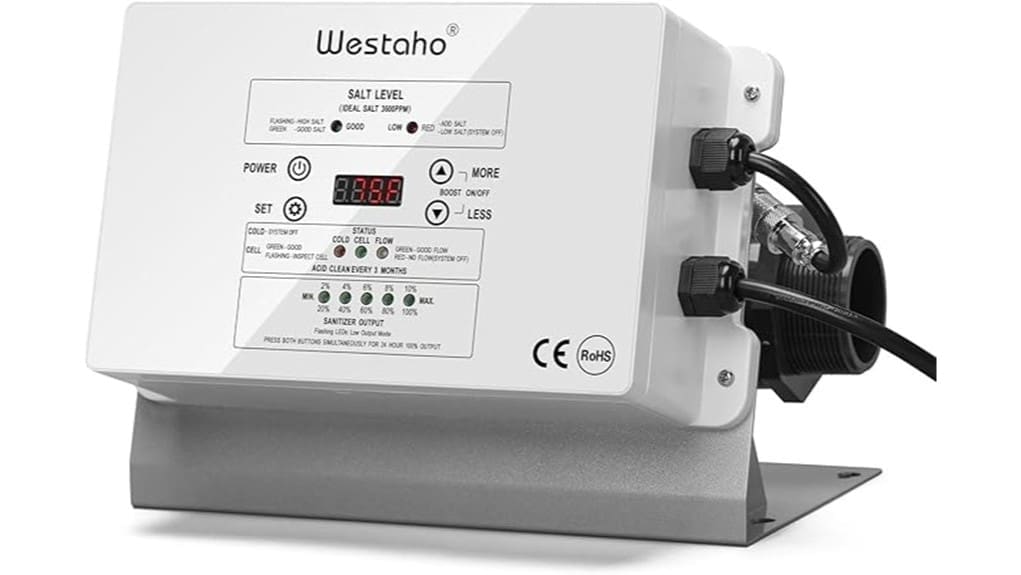
You’ll get steady, low‑maintenance chlorination for Intex and other above‑ground pools with Westaho’s three US‑made titanium cells, sized for up to 15,000 gallons and featuring automated output to hold free chlorine and reduce chloramines. The IP66 control box, magnetic flow switch, and low‑temperature shutdown protect cells and guarantee reliable electrolysis; install takes under an hour for compatible setups and routine upkeep is minimal. Continue onward to see detailed specs, costs, and real‑world notes.
Some Key Takeaways
- Effective for above-ground pools (up to 15,000 gallons), providing steady, low-level chlorine output via three titanium cells.
- Control panel shows salt, temperature, cell hours, voltage, and current for easy monitoring and adjustment.
- Built-in magnetic flow switch, IP66 enclosure, and automatic low-temperature shutdown improve durability and protect cells.
- Installation is straightforward (about an hour); routine maintenance includes occasional cell cleaning and salt/ppm adjustment.
- Main drawbacks: replacement cell cost and limited warranty details; best for Intex and low-maintenance seasonal pools.
What the Westaho Salt Chlorine Generator Does and Who It’s For
The Westaho Salt Chlorine Generator converts dissolved pool salt into a steady, low-level supply of chlorine to keep above-ground pools—especially Intex models—sanitized and comfortable for swimmers. You’ll use it to maintain consistent sanitization for pools up to its capacity, reducing manual chlorine dosing and chemical handling. It stabilizes free chlorine levels, improves water clarity, and supports pool aesthetics by minimizing chloramine odors and staining. Target user demographics include homeowners with seasonal above-ground pools, caretakers seeking lower maintenance, and small community facilities prioritizing swimmer comfort and operational simplicity. Installation and routine monitoring remain necessary for reliable performance. Many homeowners pair these systems with UV sanitizers to further reduce pathogens and chemical use.
Key Specs That Matter: Cells, Capacity, Controls, and Durability
Now that you know what the Westaho system does and who benefits, let’s examine the specifications that determine performance and longevity. You get three US-made titanium cells rated to about 2,800 hours, delivering stable electrolysis and predictable titanium longevity. Capacity suits pools up to 15,000 gallons; cell runtime and system sizing match that envelope. The control panel provides salt level, temperature, total cell hours, voltage and current readouts for precise control diagnostics. Magnetic flow switch and IP66 enclosure reduce mechanical failure and environmental risk. Automatic low-temperature shutdown protects cells, minimizing premature wear and maintenance interventions. This system is especially useful for homeowners who want to keep their outdoor pool warm throughout the season.
Real-World Performance: Sanitization, Temperature Protection, and Flow Reliability
Although you won’t need constant monitoring, the Westaho system reliably keeps free chlorine levels steady for typical above-ground pools up to 15,000 gallons by sustaining consistent electrolysis through its three titanium cells. You’ll observe strong sanitization consistency: automated output adjusts to maintain target residuals while the control panel reports cell voltage and usage hours. Low-temperature protection halts production below 52°F to prevent cell damage, so you don’t waste run-time or degrade performance. The magnetic flow switch and flow diagnostics alert you to inadequate circulation, preventing false production and ensuring the generator only operates under safe hydraulic conditions. It also integrates well with heat pump pool heaters to help extend your outdoor swimming season by maintaining comfortable water temperatures.
Installation, Maintenance, and Running Costs for Intex/Above-Ground Pools
Typically, installing the Westaho salt chlorine generator on an Intex or similar above-ground pool takes under an hour if you’ve got basic tools and a compatible pump. You connect the magnetic flow switch inline, mount the control box near a GFCI outlet, and set salt to the recommended ppm. Installation tips: verify pump flow, orient cell for access, and pre-dissolve salt if needed. For cost breakdown, consider initial unit, salt, replacement cells, and minimal electricity. Monthly maintenance includes cell inspection, occasional cleaning, and salt/pp adjustments. For seasonal shutdown, lower salt slightly, drain per manual, and store indoors. Many homeowners also pair such systems with solar pool heating options to extend their swimming season.
Should You Buy It? Pros, Cons, and the Best Use Cases
After covering installation and ongoing costs, you can evaluate whether the Westaho salt chlorine generator fits your needs by weighing performance, durability, and operating trade-offs. You’ll get reliable sanitization for pools up to 15,000 gallons, three titanium cells with ~2,800-hour lifespan, intelligent monitoring, and IP66 protection—reducing chemical purchases and maintenance effort. Consider buying timing: purchase before peak season to precondition water and extend cell life. Downsides include cell replacement cost and limited warranty details. Best use cases are Intex and above-ground owners seeking low-maintenance, steady chlorination. Factor potential resale value improvement against replacement schedule before committing. For homeowners focused on enjoying their outdoor spaces, integrating a saltwater system can enhance pool usability and lower long-term upkeep for outdoor living.
Some Questions Answered
Is It Safe for Swimmers With Sensitive Skin or Allergies?
Yes — it’s generally safe, but you should take precautions. You’ll get lower free chlorine irritants than traditional dosing, reducing skin sensitivity for many users. Still, chlorine exposure can affect sensitive skin or trigger reactions. You should perform allergy testing and patch exposure before extended swimming, monitor salt and chlorine levels via the control panel, and maintain manufacturer-recommended cell operation to minimize byproducts and avoid unexpected irritation.
Can It Integrate With Pool Automation Systems?
Yes — you can integrate it with pool automation via its control outputs and monitoring data, enabling smart integration for centralized management. You’ll connect the generator’s signals (salt level, temperature, cell status) to your automation controller or relay inputs; guarantee protocol compatibility or use interface relays/ converters. You’ll get remote status, automated shutdowns, and alerts. Check your automation system’s I/O and voltage specs to confirm seamless Pool automation integration.
What Warranty and Customer Support Options Are Available?
You get a standard warranty duration of one year covering defects; extended options may be available through the retailer. For support channels, you can contact manufacturer phone support, email, and an online FAQ/manual; some dealers offer chat or in-person service. You’ll need proof of purchase and serial number for claims. Response times and coverage terms vary, so check warranty duration specifics and documented exclusions before relying on service.
How Loud Is the Unit During Normal Operation?
You’ll hear only a low motor hum and mild air bubbles during normal operation. The unit’s pump and three titanium cells run quietly; the motor hum is steady, not intrusive, and the magnetic flow switch avoids mechanical clatter. IP66 sealing and stable mounting reduce vibration transmission. Expect background noise comparable to other salt systems — noticeable when nearby but unlikely to disturb routine pool use or nearby conversations.
Are Replacement Cells Readily Available Separately?
Yes — replacement cells are generally available separately; you’ll find OEM and aftermarket options that support replacement availability. Check compatibility specs closely, since aftermarket compatibility can vary by model and connector type. You’ll want cells matching the original three-titanium-cell configuration and electrical ratings to preserve performance and lifespan. Verify vendor return policies, warranty terms, and measured cell hours (up to 2,800) before purchasing to assure reliable, long-term operation.